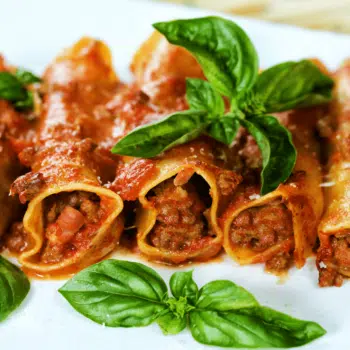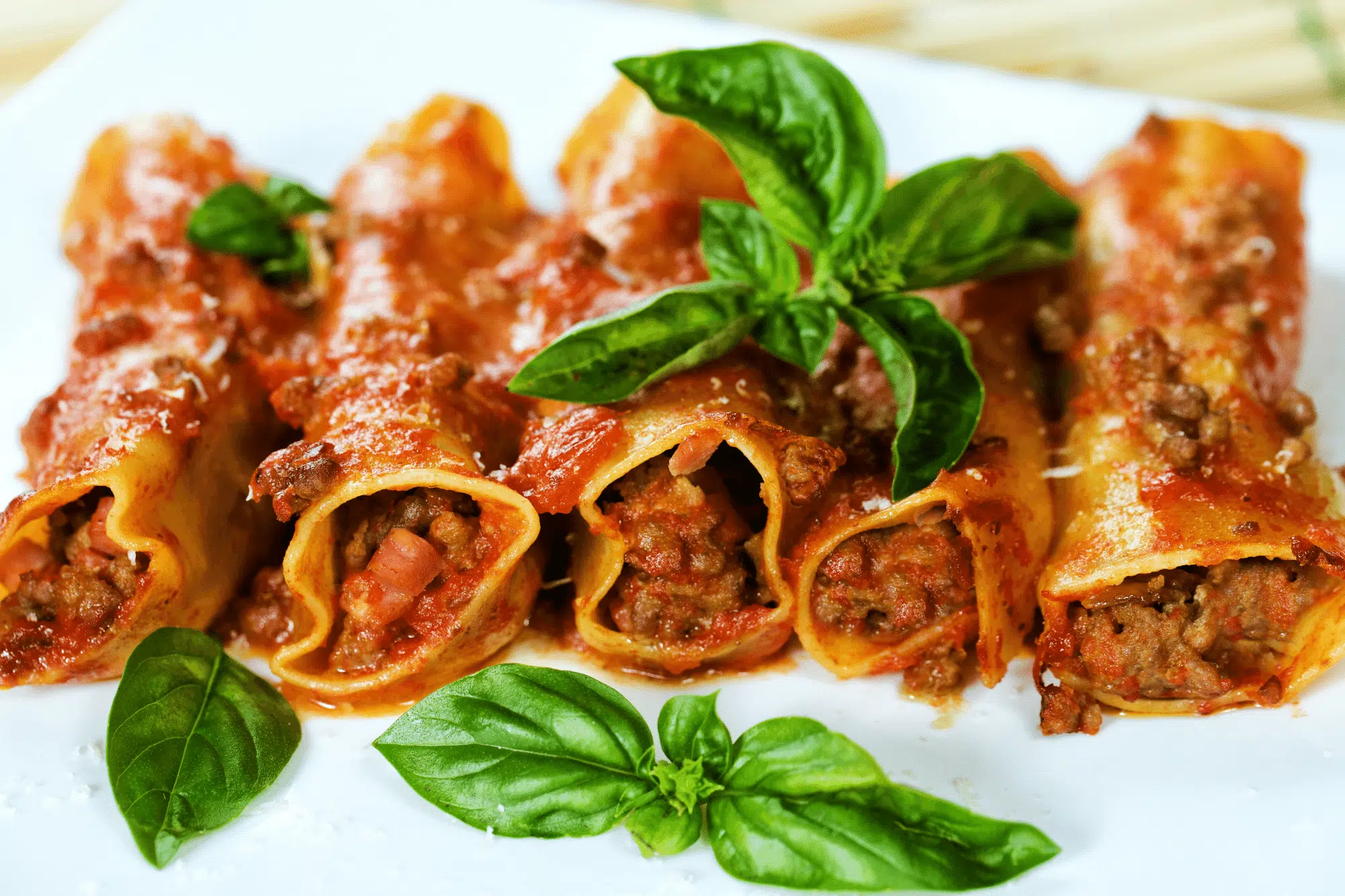
The hearty and satisfying Italian Cannelloni Al Forno is a beloved baked pasta dish that has found an especially cherished place in Catalan cuisine, particularly as a traditional meal on Christmas Day. With a light yet flavorful filling of ground chicken, mushrooms, herbs, and a creamy tomato-Parmesan topping, this version of cannelloni strikes a delightful balance between rustic comfort and refined simplicity. More than just a delicious meal, it carries a rich cultural lineage, tracing its historical influences from classic Italian cookery to regional adaptations in Spanish cuisine. Let’s explore the story, heritage, and culinary significance of this beloved baked pasta dish.
A Glimpse into Cannelloni’s Italian Roots
The origins of cannelloni can be traced back to Italy, where pasta first defined itself as a cultural emblem of culinary tradition. “Cannelloni” means “large reeds” in Italian, aptly describing the tubular-shaped pasta traditionally stuffed with meaty or cheesy fillings. Though the exact birthplace of cannelloni is disputed, many food historians suggest that the dish gained prominence in southern Italy, particularly in Naples and Sicily, where filled pasta was often baked in tomato or béchamel sauce.
Cannelloni, in many ways, shares a structural resemblance with lasagna, another Italian favorite that involves layering pasta sheets with fillings and sauces, then baking to golden perfection. Cannelloni, however, is unique in that each tube is individually stuffed, offering a more compartmentalized and bite-specific experience.
It wasn’t until the 19th century that baked pasta dishes began to surface more commonly in Italian households. Advances in agriculture and the increased availability of flour allowed more families to produce fresh pasta. Paired with tinned or homemade tomato sauce, which became widely used after tomatoes were introduced from the Americas, dishes like cannelloni became the epitome of home-cooked warmth.
The Catalan Connection
Though Italian in origin, Cannelloni al Forno took on a new identity when it made its way across the Mediterranean to the Catalonia region of Spain. During the late 19th and early 20th centuries, Barcelona was deeply influenced by French and Italian culinary traditions – a direct result of cosmopolitan travel and cultural exchange. While local Catalan chefs adopted many Italian techniques, they also infused them with regional flavors and customs.
Cannelloni became particularly significant in Catalonia as a post-holiday dish known as canalons (Catalan for cannelloni). Traditionally, it was prepared on December 26th, or St. Stephen’s Day, as a way to repurpose leftovers from the Christmas feast. Roasted meats such as beef, pork, or chicken would be finely minced and mixed with herbs, bathed in a béchamel or tomato sauce, then stuffed into pasta tubes and baked with cheese. Though this “second-day” custom was born out of practicality, it became a festive and nostalgic favorite in its own right.
Contemporary versions, like the Chicken and Mushroom Cannelloni Al Forno described in the recipe, pay homage to this Catalan tradition with a slightly modern touch—lighter ingredients, more delicate flavors, and a nod to health-conscious cooking without sacrificing authenticity.
The Ingredients: A Harmonious Blend of Tradition and Nutrition
One of the standout features of this particular Cannelloni Al Forno is the use of ground chicken as the base protein. Typically, richer red meats like veal or beef might be used, but opting for chicken breast not only lightens up the dish but showcases a cleaner canvas for the other flavors—particularly the earthy mushrooms and aromatic herbs.
Mushrooms contribute an umami depth that evokes the richness of meat while still maintaining a soft texture that integrates seamlessly with the chicken. The addition of fresh tarragon and parsley imparts a sweet, slightly licorice-like note to the filling, lifting its profile and balancing the heaviness of baked pasta.
Another distinct element in this recipe is the use of tomato ketchup or tomato sauce. In Australia and the UK, “ketchup” often refers to a smoother, sweeter tomato purée that serves as a convenient base. While purists might prefer a homemade passata or slow-simmered tomato sauce, the ketchup variation offers both convenience and a subtly sweet counterbalance to the savory filling.
Finally, the crowning glory: freshly grated Parmesan cheese. As the dish bakes, the cheese forms a bubbling, golden crust that signals comfort and indulgence. Parmesan not only enhances the overall flavor but also binds the dish together with its nutty, salty, umami-rich depth.
The Method Behind the Magic
Much of the charm of Cannelloni Al Forno lies in its process—a deliberate sequence that invites mindfulness into cooking. From preparing the filling (mincing, mixing, seasoning) to carefully piping it into each cannelloni tube, the dish reveals itself through both tactile engagement and sensory satisfaction.
Using a piping bag for filling the pasta tubes might remind modern cooks of pastry work or intricate desserts, but in this instance, it’s the most practical way to ensure an even, clean stuffing with minimal mess. Once arranged tightly together in the baking dish and dressed with sauce and cheese, the cannelloni bake until the top bubbles and caramelizes, sealing in moisture and unifying the separate components into one harmonious whole.
This dish also lends itself beautifully to make-ahead preparations. The filling can be made in advance and refrigerated for a day, while the assembled cannelloni can be stored in the fridge and baked as needed—ideal for festive gatherings or busy weeknights alike.
Cultural Significance Today
Part celebration, part comfort food, Cannelloni Al Forno has earned its place as a treasured dish across both Italian and Spanish culinary traditions. In Italy, you might find variations stuffed with spinach and ricotta, veal, or a rich ragu. In Catalonia, no Christmas season is complete without some form of canalons gracing the table, representing both time-honored tradition and familial warmth.
What makes this recipe especially versatile is its cross-cultural appeal. While remaining loyal to its Mediterranean roots, it embraces modern dietary preferences and economical accessibility. Chicken instead of heavy meats, familiar pantry ingredients like ketchup instead of elaborate sauces, and a garnish of parsley rather than intricate toppings—all signal that this dish is made not just for special occasions, but for everyday enjoyment as well.
Conclusion: More Than Just Pasta
At first glance, Cannelloni Al Forno seems like just another baked pasta dish, but when considered in context, it reveals layers of cultural memory, cross-border influence, and culinary adaptability. Whether enjoyed at a Christmas feast in Barcelona or served with a simple salad for dinner in your own kitchen, this dish represents the joy of sharing, the comfort of familiar flavors, and the timeless pleasure of baking with love.
Try making this Satisfying Italian Cannelloni Al Forno yourself—not just as a recipe, but as an invitation to take part in the culinary journey of a dish that has transcended borders to become a classic in many homes. Garnished with parsley, served bubbling hot and golden from the oven, it’s more than just a meal—it’s a celebration of flavor, tradition, and the enduring power of food to nourish both body and soul.

Satisfying Italian Cannelloni Al Forno
Ingredients
450 grams ground chicken (minced chicken) - breast
225 grams mushrooms
3 cloves garlic - crushed
2 tablespoons parsley - chopped- 1 tablespoon tarragon - chopped
1 medium egg - beaten
1 medium lemon juice- 16 tubes cannelloni pasta
475 ml ketchup (tomato sauce Australia and UK)
50 grams Parmesan cheese - freshly grated
1 teaspoon salt
1 teaspoon ground black pepper
1 sprig parsley - to garnish
Instructions
- Preheat the oven to 200 degrees Celsius.
- Place the mushrooms, garlic, parsley, and tarragon in the food processor and blend until finely minced. Add to the chicken mixture.
- Thoroughly beat the mushroom mixture into the chicken, add the egg, salt and pepper and lemon juice to taste, and mix well.
- If necessary, cook the cannelloni in plenty of salted boiling water according to the instructions on the packet, then drain well on a clean dishtowel.
- Put the filling in a piping bag fitted with a large plain nozzle. Use this to fill each cannelloni tube once they are cool enough to handle.
- Lay the filled cannelloni tightly together in a single layer in a buttered shallow ovenproof dish. Spoon over the tomato sauce and sprinkle with Parmesan cheese. Bake in the oven for 30 minutes or until brown and bubbling. Serve garnished with a sprig of parsley. Enjoy!