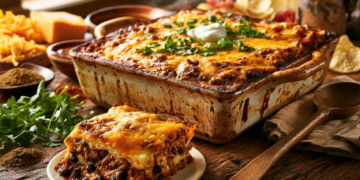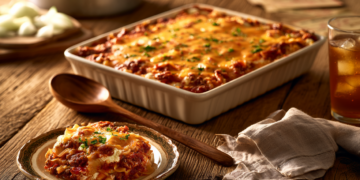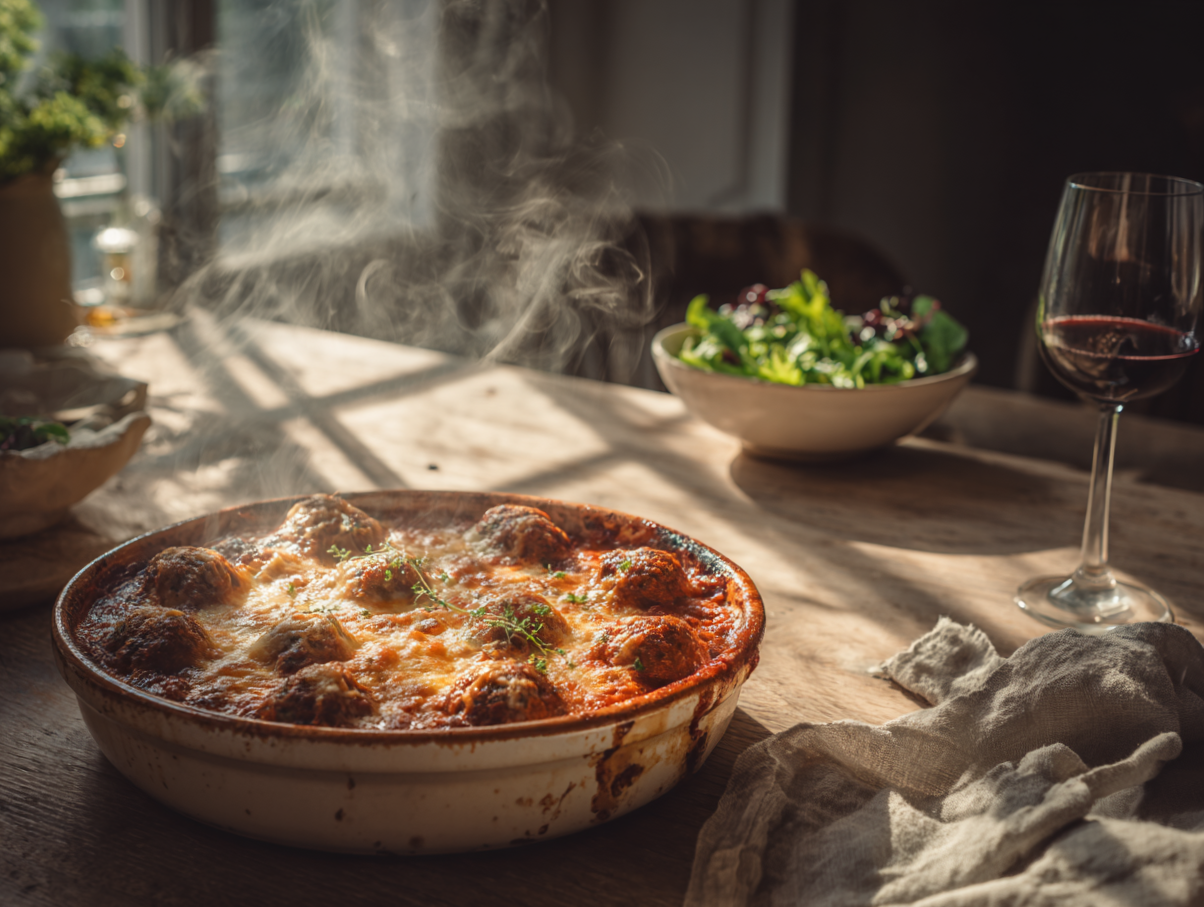
This is a baked meatball dish: seasoned lean beef and bacon meatballs browned on the stovetop, then finished in a tomato-olive sauce under a layer of melted cheddar. It takes about an hour start to finish and makes four solid servings. The main reason to make it is that it reheats extremely well, so the effort pays off across more than one meal.
The short version of why this works
Two things matter here. First, browning the meatballs before they go into the oven. That crust locks in moisture and adds flavor the sauce alone cannot provide — skip it and you get pale, soft meatballs that fall apart when served. Second, the sauce needs a few minutes of stovetop simmering before it goes into the dish. Raw passata and canned tomatoes straight from the tin are too thin and watery; a short simmer concentrates them just enough so the sauce clings to the meatballs rather than pooling at the bottom of the gratin dish.
Ingredient notes
- 5% fat ground beef: The low fat content is deliberate — it keeps the meatballs firm enough to hold their shape through browning and baking. Higher-fat beef works but the meatballs will shrink more and the sauce can turn greasy.
- Passata: This is smooth sieved tomato with no seeds or skins. If you only have tomato paste, use one tablespoon thinned with two tablespoons of water — it is more concentrated, so don’t use it straight.
- Black olives: The recipe calls for 16 small ones, chopped into the sauce. Skip the garnish-style whole olives on top — not worth the extra dish. The chopped olives in the sauce are what actually add the briny contrast.
- Reduced-fat cheddar: It melts and browns fine. Regular cheddar works too; just use the same 80g weight.
- Worcestershire sauce: Adds a savory depth that straight tomato sauce lacks. Don’t leave it out.
If something goes sideways
- Meatballs falling apart in the pan: The egg is the binder — make sure it is fully beaten before mixing in. If the mixture still feels too loose, refrigerate it for 15 minutes before shaping. Cold fat holds the shape better during browning.
- Cheese not browning after 25 minutes: Switch the oven to broil for the last 2–3 minutes. Keep the dish on the middle rack and watch it closely — reduced-fat cheese can go from pale to burnt faster than full-fat.
- Sauce too thin after baking: This usually means the stovetop simmer was too short or the lid was left on. Next time, simmer uncovered. If it happens mid-bake, remove the foil or lid for the final 10 minutes.
- Meatballs dry in the center: Ground beef at 160°F (71°C) is safe and should still be juicy if the fat content is right. Overcooking during the stovetop browning stage is usually the cause — brown the outside, not cook them through. The oven finishes the job.
- Olives too dominant in flavor: Reduce to 10–12 pieces rather than removing them entirely. Rinsing brined olives before chopping also tones down the saltiness without losing the flavor.
Leftovers and meal prep
This dish keeps well. Store cooled leftovers in an airtight container in the fridge for up to 3 days. The sauce thickens overnight, which actually improves the texture when reheated — add a splash of water before microwaving to loosen it. For longer storage, freeze individual portions in sealed containers for up to 2 months; thaw overnight in the fridge before reheating. The meatballs themselves can be made and browned up to 2 days ahead and kept refrigerated, which cuts the day-of cooking time to roughly 30 minutes. If you are doubling the batch for the week, use two gratin dishes side by side rather than one deep casserole — the meatballs heat more evenly in a single layer.

Hearty Italian Meatball Gratin

Ingredients
Meatball Ingredients
 400 grams ground beef (minced beef) - 5% fat
 1 medium yellow onion - very finely diced
 2 cloves garlic - finely diced
 3 rashers bacon - smoked, trimmed of all fat and finely diced
 1 tablespoon dried basil
 1 tablespoon dried oregano
 1 teaspoon thyme
 1 tablespoon passata or crushed tomatoes (tomato puree with seeds removed)
 1 medium egg - beaten
Sauce Ingredients
 1 tin tomatoes - chopped
- 6 tablespoon passata or crushed tomatoes (tomato puree with seeds removed)
 50 ml red wine
 1 tablespoon Worcestershire sauce
- 1 teaspoon chilli powder
- 1 teaspoon dried basil
- 1 teaspoon dried oregano
 16 small black olives - chopped
 80 grams cheddar cheese - reduced-fat and grated
Instructions
- Fry the bacon in oil until crisp. Add the remainder of the meatball ingredients to a bowl and plenty of cracked black pepper. Mix well.
- Shape the mixture into meatballs just larger than a walnut. Using the same pan as for the bacon, fry the meatballs until browned on all sides – you may need to do this in two batches – then cover and set aside.
- Preheat the oven to 190 degrees Celsius. Put all of the sauce ingredients in a saucepan and bring to a boil. Reduce the heat and simmer for a few minutes until the sauce has thickened slightly.
- Cover the base of a casserole or gratin dish with the meatballs, aligned evenly, leaving space in between each one. Pour the sauce obto meatballs, ensuring that it fills all the gaps.
- Sprinkle the cheese, then place in the oven for 20 to 25 minutes, or until the cheese on top is browned. Serve with a large green salad.
Nutrition
Frequently asked questions
Can I use regular ground beef instead of 5% fat?
Yes, but expect slightly different results. Higher-fat beef produces more grease in the pan and a richer sauce, and the meatballs may shrink a bit more during cooking. Drain excess fat from the pan after browning before you add the sauce ingredients.
How do I know when the meatballs are fully cooked?
Ground beef needs to reach an internal temperature of 160°F (71°C). After 20–25 minutes in a 190°C (375°F) oven following stovetop browning, meatballs of walnut-plus size will be cooked through. A meat thermometer inserted into the center of the largest meatball is the reliable check.
Can I assemble this the night before and bake it the next day?
Yes, and it works well for weeknight cooking. Assemble the dish fully — browned meatballs, sauce, cheese — cover tightly with foil, and refrigerate overnight. Add 5–8 extra minutes to the bake time since everything starts cold.
What can I use instead of red wine?
Beef stock is the most straightforward swap, used in the same 50ml quantity. It keeps the sauce savory without adding sweetness. A small splash of balsamic vinegar (about a teaspoon) added alongside the stock gives back some of the acidity the wine would have contributed.
Can I freeze this before baking rather than after?
Freezing before baking is possible but not ideal here — the cheese can turn grainy when frozen raw and then baked from thawed. It is more reliable to bake first, cool completely, then freeze in portions. Reheat covered in a 180°C (350°F) oven for 20–25 minutes or until the center reaches 74°C (165°F).
What to cook next
- Beef Ricotta Lasagna Rolls
- Ultimate Cheesy Beef Bake
- Olive Beef Polpette Perfection
- Hearty Beef Cauliflower Bake