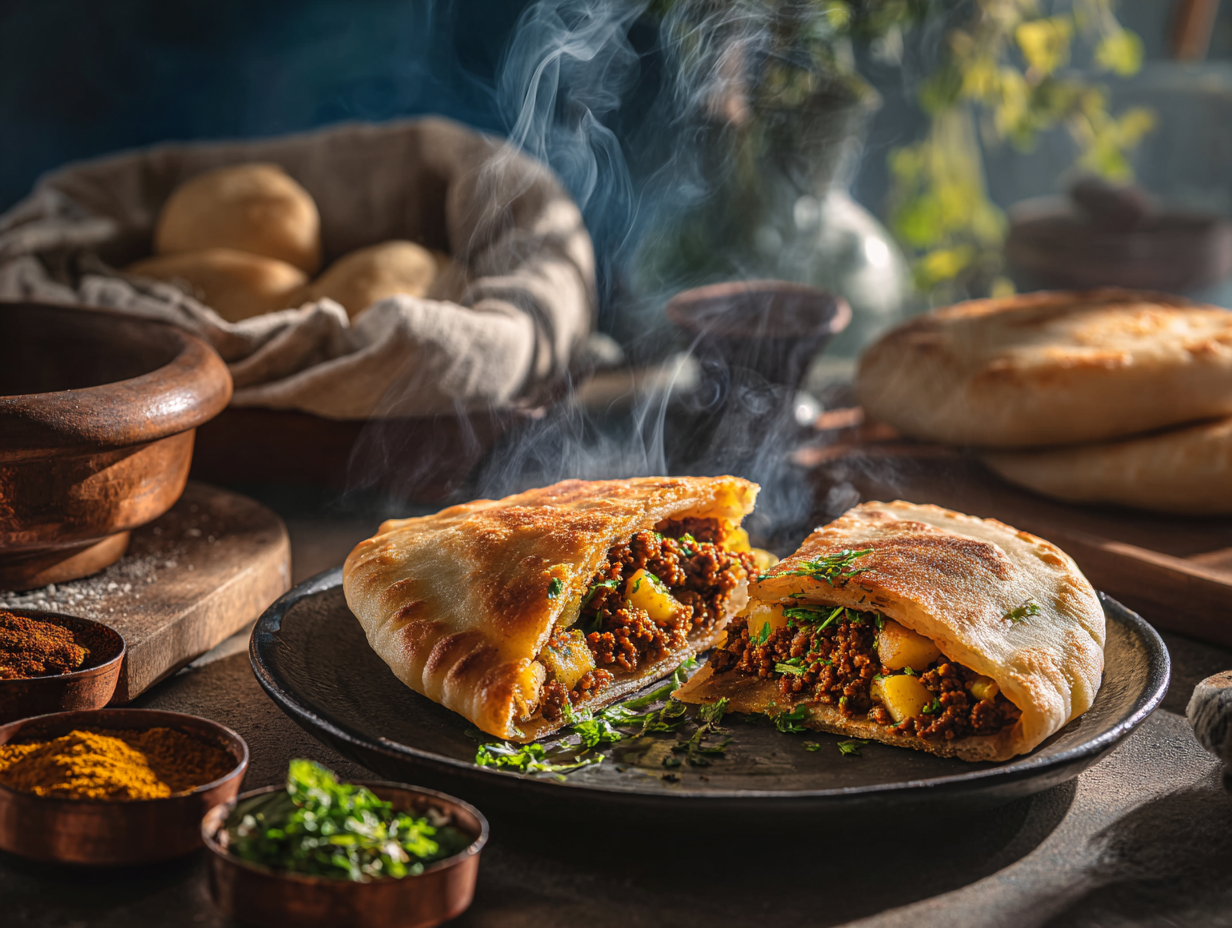
Keema roti is a spiced minced meat filling sealed inside a yogurt-and-ghee flatbread, then cooked on a hot skillet until golden and flaky. It is a complete meal in your hand — protein, starch, and fat all in one. If you have ground meat in the freezer and flour in the pantry, you are most of the way there.
Ingredient notes
- Ghee: Adds flakiness to the dough and a nutty flavor. Melted unsalted butter works fine as a direct swap — the texture difference is small.
- Curd (yogurt): Plain full-fat yogurt is ideal. Low-fat yogurt works but makes the dough slightly less tender. Sour cream in the same quantity is a reasonable substitute.
- Ginger-garlic paste: Equal parts fresh ginger and garlic blended together. If you only have garlic powder and ground ginger, use half a teaspoon of each — the flavor is less bright but it holds up.
- Boiled potatoes: These bulk out the filling and bind it so it stays put inside the dough. Leftover mashed potato works perfectly here — skip the re-boiling step.
- Ground meat: The recipe works with beef, lamb, or chicken. Ground chicken must reach 165°F (74°C) internally; beef and lamb are safe at 160°F (71°C). Skip the garnish of fresh coriander if you do not have it — not worth a special trip to the store.
The technique that matters
The single step that determines whether this works or falls apart is how dry your filling is before you stuff the dough. If the keema mixture holds any excess moisture, it will steam the dough from the inside and make it gummy rather than flaky, and it will tear through the bread as you roll it out. After cooking the meat, spread the filling on a plate and let it cool for at least 10 minutes — this lets steam escape and firms the mixture up. Press it with the back of a spoon; it should hold its shape without releasing liquid. Only then should you portion it into the dough balls. A dry, compact filling also means you can roll the stuffed bread thinner, which gives you a better ratio of crust to filling and speeds up cooking on the skillet.
Common problems and fixes
- Filling bursts through the dough while rolling: You are either overfilling or rolling too aggressively from the center outward. Use slightly less filling and roll with gentle, even pressure, rotating the bread a quarter turn after each pass.
- Dough tears at the seam: The dough was not rested long enough, so the gluten is tight and resists stretching. Cover and rest for at least 20 minutes before shaping.
- Bread is cooked outside but raw-tasting inside: The skillet is too hot. Lower the heat to medium and cover the pan with a lid for 30–40 seconds after flipping — the trapped steam finishes the dough through without burning the outside.
- Filling tastes flat after stuffing and cooking: The spices were added to the meat but not bloomed in oil first. Next time, fry the dry spices in a little oil for 30 seconds before adding the onions — it makes a noticeable difference to depth of flavor.
- Bread sticks to the skillet: The pan was not hot enough when the bread went in. Let the dry skillet heat for a full minute on medium-high before adding the first roti, then brush with ghee or butter once it is in the pan.
Leftovers and meal prep
Cooked keema roti keeps well in the fridge for up to 3 days — stack them with a small piece of parchment between each one so they do not stick, then seal in an airtight container. To reheat, a dry skillet on medium heat for 2 minutes per side brings back most of the original texture; a microwave works but softens the bread. The filling alone freezes well for up to 2 months in a zip-lock bag — thaw overnight in the fridge and it is ready to stuff fresh dough on demand. The dough does not freeze well once made, so prep that fresh each time. If you are cooking for the week, making a double batch of filling and freezing half is the most efficient use of your time.
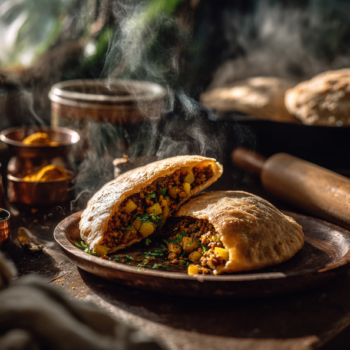
Flaky Minced Meat Stuffed Flatbread

Ingredients
Dough Ingredients
 250 grams flour
- 1 tablespoon curd
 2 tablespoons ghee
 1 teaspoon sugar
 1 teaspoon salt
Filling Ingredients
 1 tablespoon butter
- 1 teaspoon ginger garlic paste
 1 medium onion
 250 grams ground beef (minced beef)
- 1 pinch salt
 ½ teaspoon ground black pepper
 ½ teaspoon chili powder (chilli powder in British English)
 ½ teaspoon turmeric powder
 ½ teaspoon cumin
 2 medium potatoes - boiled
- ½ teaspoon sugar
 1 tablespoons cilantro (coriander)
Instructions
Dough Instructions
- Take a large mixing bowl to add the ghee or butter onto it, then add the curd, sugar, and salt and blend it well to a fine cream.
- Fold in the all-purpose flour on the bowl and knead it into a soft dough by adding water little by little.
- Finally, rest the dough for about an hour.
Filling Instructions
- Begin with boiled potatoes, wash and cut them into halves, add some salt and pour in some water. Next, pressure cook them or cook them until they are boiled.
- When they are done, drain off the water and chop the potatoes into small pieces.
- Add beef into the pressure cooker and add in 1 teaspoon of lemon juice, a pinch of salt and 1 teaspoon of turmeric powder and cook.
- Heat a pan, and add the butter. When it’s melted, add in ginger-garlic paste, onion and all the dry ingredients and toss it well.
- Next, add the mashed potatoes and mix until well-combined; add the minced beef into the curry and mix well.
- Finally, add in the coriander leaves and turn off the flame.
- Take the dough to divide it into three equal balls; take a ball, keep the filling at the centre and roll them into flatbread on a floured surface. Or, take the dough and portion it into three equal balls. Roll them into flatbread circles, place the curry in one half and leave some at the edges.
- Fold the other half to form a half-moon shape and press down along the edges to seal them firmly.
- Finally, heat up and cook until golden brown on both sides, and serve hot.
Nutrition
Common questions
Can I use store-bought flatbread or tortillas instead of making the dough?
You can, but the result is closer to a quesadilla than a stuffed roti. The homemade dough, enriched with yogurt and ghee, has a different texture and flavor that store-bought flatbread does not replicate — if you are short on time, it is still worth making the dough since it only takes about 15 minutes of active work.
What is the best ground meat to use for the filling?
Lamb or beef with around 15–20% fat content gives the most flavor and stays moist after cooking. Leaner ground meat dries out quickly in the pan, so if that is what you have, add a tablespoon of oil to the filling while cooking.
Can I make the filling the night before?
Yes, and it actually improves — the spices have more time to settle into the meat. Store the cooked filling in a sealed container in the fridge for up to 24 hours, then bring it to room temperature for 15 minutes before stuffing so it is easier to handle and does not chill the dough.
My dough keeps shrinking back when I roll it — what am I doing wrong?
The gluten needs more rest time. Cover the dough balls and leave them for at least 20–30 minutes before rolling; 45 minutes is better. If they still spring back, let them sit another 10 minutes — rushing this step is the most common reason the dough fights you.
Can I bake these in the oven instead of cooking on the stovetop?
You can bake them at 425°F (220°C) on a preheated baking sheet for about 10–12 minutes, flipping once halfway. They will not get the same charred spots or flakiness you get from a hot skillet, but it is a practical option if you are making a large batch and want to cook several at once.
Try these next
- Levantine Lamb Za’atar Flatbread
- Levantine Spiced Beef Flatbreads
- Spiced Pork Mince Flatbreads
- Savory Lebanese Lamb Pastries