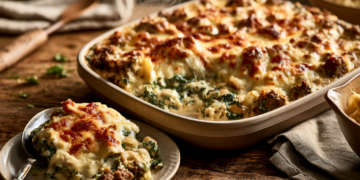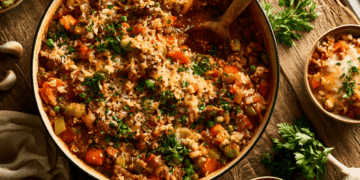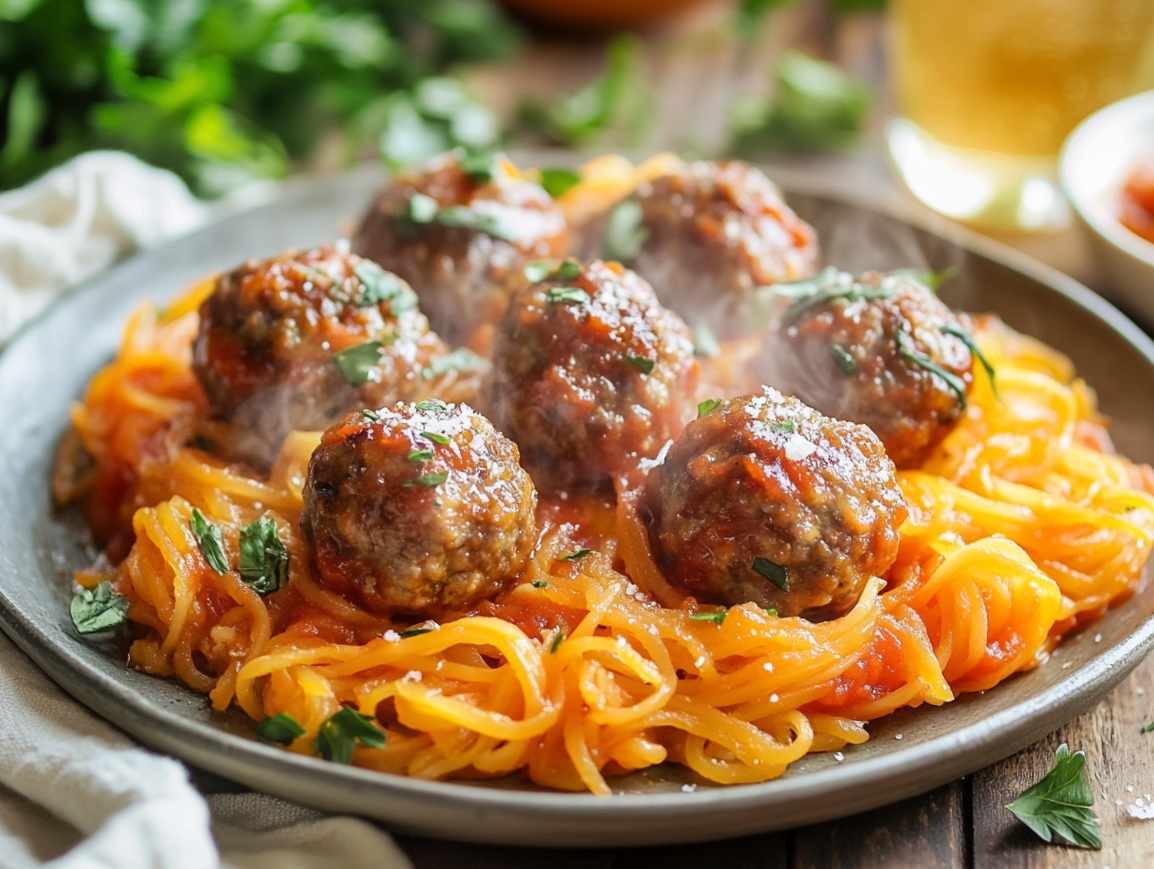
These are baked ground beef meatballs seasoned with garlic, oregano, and onion powder, bound with beef gelatin instead of breadcrumbs, and served over spiralized squash or zucchini with a compliant marinara. They’re fully Whole30-compliant, and the real reason to make them is that the ingredient list is short, the oven does most of the work, and cleanup is minimal.
Before you start
The one step that actually matters here is letting the meat mixture rest for 3–5 minutes after mixing. Beef gelatin needs a short window to hydrate and begin binding; skip the rest and your meatballs will be looser and more likely to crack during rolling. Beyond that, make sure your hands are cold or lightly oiled when you form the balls — warm hands start melting the fat in the beef, which makes the surface sticky and uneven. Both steps take under five minutes total and make a real difference in the finished texture.
Common problems and fixes
- Meatballs flatten on the bottom: This usually means the sheet pan was overcrowded or the foil lining shifted. Space them at least an inch apart so heat circulates underneath, and press the foil flat before you lay them down.
- Dry, dense texture: Ground beef with too low a fat content — anything leaner than 90/10 — will bake out dry without breadcrumbs or dairy to compensate. An 80/20 or 85/15 blend gives better results here.
- Meatballs not reaching safe internal temperature: At 375°F, 2-inch meatballs typically need the full 20 minutes. Use an instant-read thermometer and pull them only when the center reads 160°F (71°C). Color alone is not reliable.
- Gelatin clumping into dry pockets: Measure the gelatin and sprinkle it evenly over the meat before mixing rather than dumping it in one spot. Mix thoroughly so no dry streaks remain before the rest period.
- Squash noodles turning watery: Butternut squash releases more liquid than zucchini. Cook it in a hot, dry pan first for 60 seconds before adding oil — skip the garnish on top, not worth the extra dish — then season at the end rather than the beginning to limit moisture draw.
Shopping notes
- Beef gelatin: This is the one ingredient worth tracking down specifically. Look for unflavored, unsweetened beef gelatin — Great Lakes and Vital Proteins are two widely available brands. Pork gelatin works mechanically but is not compliant for those avoiding pork. Collagen peptides are not a substitute; they don’t gel the same way.
- Compliant marinara: Most jarred marinara contains added sugar. Check the label — arrabbiata is a reliable starting point since it’s typically just tomatoes, oil, and chili, but verify the brand. Rao’s Homemade Arrabbiata is Whole30-compliant and widely stocked.
- Butternut squash noodles: Pre-spiralized bags from the produce section save time and mean one less piece of equipment to wash. Zucchini is a direct swap and cooks faster.
Storage and reheating
Cooked meatballs keep in a sealed container in the fridge for up to 4 days. For freezing, lay them on a lined tray until solid — about 2 hours — then transfer to a freezer bag; they’ll keep for up to 3 months. Reheat from frozen in a 350°F oven for 15–18 minutes or until the center hits 160°F again. From the fridge, 8–10 minutes in the oven works well; the microwave is faster but softens the exterior. Store the squash noodles and sauce separately — they don’t freeze well and are better made fresh each time.
Easy Whole30 Meatballs (Baked, No Breadcrumbs)

Equipment
Ingredients
For the meatballs
 1 pound ground beef (minced beef) - 450g, minced beef, 80/20 or 85/15
 2 tablespoons tomato paste - 30g
- 2 tablespoons unflavoured beef gelatin - 14g
 1 teaspoon garlic powder
 1 teaspoon dried oregano
 1 teaspoon onion powder
 1 teaspoon sea salt
 ½ teaspoon ground black pepper
- 1 tablespoon olive oil spray - or 1 tablespoon extra-virgin olive oil, for greasing meatballs
For the squash noodles
 1 medium butternut squash - spiralized, about 4 cups / 450g — or substitute 2 medium zucchini, spiralized
- 2 tablespoons extra-virgin olive oil - for cooking noodles
- ½ teaspoon garlic powder
 1 pinch salt - to taste
- 1 pinch ground black pepper - to taste
- 1 cup Whole30-compliant marinara sauce - 240ml, for serving
Instructions
- Preheat the oven to 375°F / 190°C (170°C fan-forced). Line a large rimmed sheet pan with aluminium foil or parchment paper.
- In a large mixing bowl, combine the ground beef, tomato paste, beef gelatin, garlic powder, dried oregano, onion powder, salt, and black pepper. Mix with clean hands until just combined — avoid overworking the meat. Let the mixture rest for 3–5 minutes so the gelatin hydrates and begins to bind.1 pound ground beef (minced beef), 2 tablespoons tomato paste, 2 tablespoons unflavoured beef gelatin, 1 teaspoon garlic powder, 1 teaspoon dried oregano, 1 teaspoon onion powder, 1 teaspoon sea salt, 1/2 teaspoon ground black pepper
- With cold or lightly oiled hands, roll the mixture into 12 meatballs, each about 2 inches (5cm) in diameter. Place them on the prepared sheet pan, spacing them about 1 inch apart. Lightly spray or brush each meatball with olive oil.1 tablespoon olive oil spray
- Bake for 15–20 minutes, or until the meatballs are golden brown on the outside and reach an internal temperature of 160°F / 71°C. Let them rest on the pan for 2–3 minutes before serving.
- While the meatballs bake, heat 2 tablespoons of extra-virgin olive oil in a 10-inch skillet over medium heat. Add the spiralized butternut squash noodles and cook for 2–3 minutes, tossing occasionally, until they begin to soften. Season with ½ teaspoon garlic powder, a pinch of salt, and black pepper to taste. Continue cooking to your preferred tenderness — 1–2 more minutes for al dente, 3–4 for fully soft. In a separate bowl or small saucepan, warm the Whole30-compliant marinara sauce.1 medium butternut squash, 2 tablespoons extra-virgin olive oil, 1/2 teaspoon garlic powder, 1 pinch salt, 1 cup Whole30-compliant marinara sauce
Notes
Nutrition
FAQ
Can I use ground turkey instead of ground beef?
Yes, but cook it to 165°F (74°C) instead of 160°F, and don’t expect it to look the same — turkey meatballs won’t brown as deeply. Turkey is also leaner, so the gelatin becomes even more important for holding moisture; don’t reduce it.
Do I have to use beef gelatin, or can I leave it out?
You can leave it out, but the meatballs will be more fragile and slightly drier. Without a binder, handle them gently when transferring to the pan and avoid turning them mid-cook.
Can I make these ahead and reheat them for meal prep?
Yes — they reheat well and hold their texture better than most baked meatballs. Batch-cook on the weekend, refrigerate for up to 4 days, and reheat in the oven rather than the microwave if you want the outside to stay firm.
More mince recipes to try
- Spicy Beef Stuffed Peppers
- Hearty Beef Cauliflower Bake
- Hearty Beef Kale Soup
- Olive Beef Polpette Perfection