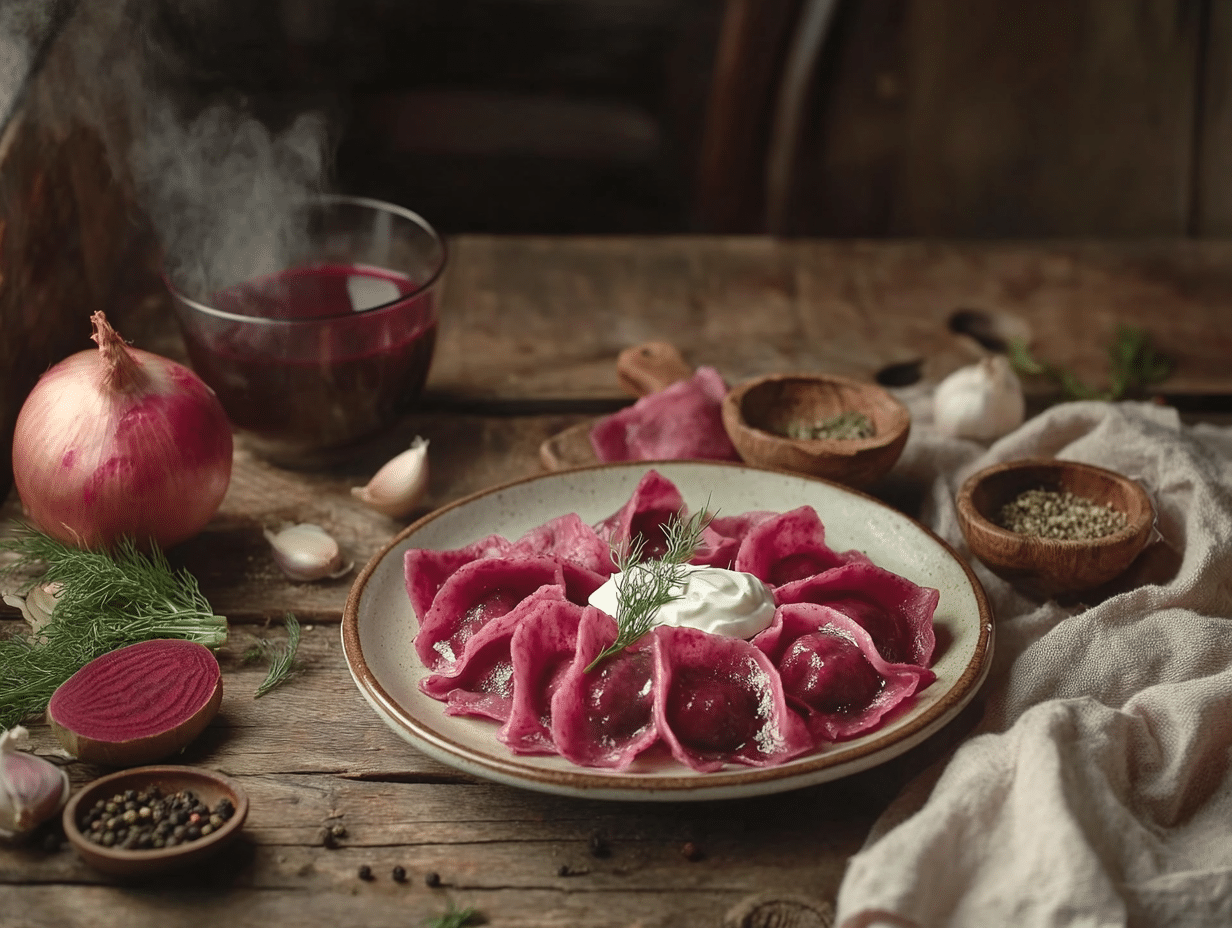
These are boiled beef dumplings with a beet-juice dough — the dough turns a deep pink-red, and the filling is a simple seasoned ground beef and onion mixture. The whole project takes about two hours, most of which is hands-off resting time. If you have a bag of flour, an egg, and canned beets in the pantry, you are most of the way there.
The short version of why this works
Two things determine whether these dumplings succeed or fall apart. First, the dough needs a full 30-minute rest after kneading — skipping it makes the dough fight you when you roll it, and you end up with uneven thickness that causes blowouts in the pot. Second, the filling must be cooled before you wrap it. Warm filling softens the dough from the inside, making it sticky and hard to seal. Cook the beef mixture first, spread it on a plate, and let it sit while the dough rests. Both steps cost you nothing extra and fix the two most common problems with homemade dumplings.
Mistakes to avoid
- Using store-bought beet juice with added sugar: Many shelf-stable beet juices are sweetened. Check the label — if sugar is listed, the dough will brown unevenly and taste off. Use juice from canned plain beets blended and strained, or roast a small beet and squeeze it through a cloth. Both work fine.
- Rolling the dough too thick: At 3–4mm the dumpling wrapper becomes doughy and gummy after boiling. Aim for 2mm — thin enough that you can almost see your hand through it. A wine bottle works as a rolling pin if you don’t have one.
- Overfilling: A heaped teaspoon of filling per dumpling is enough. More than that and you cannot get a clean seal, and the dumpling opens in the water.
- Boiling too hard: A rolling boil knocks the dumplings around and breaks the seals. Keep the water at a gentle boil — small steady bubbles. They are done when they float and have been in the water for 3–4 minutes after surfacing.
- Not verifying the beef is cooked through: Ground beef must reach 160°F (71°C) internally. Since you cook the filling in a pan before wrapping, this is easy to confirm — the meat should show no pink and the juices should run clear before you cool it down.
Make-ahead notes
The filling can be made up to two days ahead and kept in a sealed container in the fridge. Assembled uncooked dumplings freeze well — lay them flat on a floured tray, freeze until solid (about two hours), then transfer to a zip-lock bag where they keep for up to two months. Cook straight from frozen in gently boiling salted water; add two to three extra minutes to the cooking time and confirm the filling is piping hot throughout before serving. Already-cooked dumplings keep in the fridge for up to three days in an airtight container; reheat by pan-frying in a little oil over medium heat until warmed through, which also gives them a better texture than re-boiling. Skip the dill garnish on anything you’re storing — not worth the extra dish, and it wilts to nothing anyway.
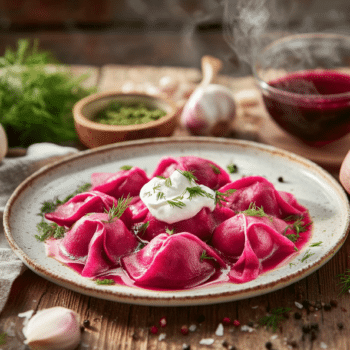
Beef Mince Borscht Dumplings

Ingredients
For the Dumpling Dough
 2 cups all purpose flour (plain flour Australia and UK) - plus extra for dusting
 1 large egg - room temperature
- ½ cup beet juice - fresh, for color and flavor
 ½ teaspoon salt
For the Filling
 250 grams ground beef - preferably organic and grass-fed
 1 small onion - finely chopped
 2 cloves garlic - minced
 1 tablespoon sunflower oil - or any neutral oil
- 1 teaspoon salt - to taste
 ½ teaspoon ground black pepper - freshly ground
- 1 teaspoon dill - fresh, chopped, for garnish (optional)
Instructions
- Dumpling Dough Preparation: In a large mixing bowl, combine all-purpose flour and salt. Create a well in the center and crack in the egg, followed by the beet juice. Gradually incorporate the flour into the wet ingredients using your hands or a wooden spoon. Knead the dough on a floured surface for 8-10 minutes until it achieves a smooth, elastic texture. Cover with a damp cloth and let rest for 30 minutes.
- Filling Preparation: While the dough is resting, heat sunflower oil in a pan over medium heat. Sauté the onions and garlic until translucent and aromatic, about 5 minutes. Add the ground beef, season with salt and pepper, and cook until browned and cooked through, an additional 8-10 minutes. Allow to cool slightly before using.
- Assembly: Roll out the dough to a thin sheet, about 2mm thick, on a floured surface. Cut into circular shapes using a cookie cutter or the rim of a glass. Place a spoonful of filling in the center of each dough circle, then fold over and seal the edges tightly, pressing down with a fork for added decoration.
- Cooking: Bring a large pot of salted water to a gentle boil. Carefully place the dumplings in the water, cooking in batches if necessary. Boil until they float to the surface, approximately 3-5 minutes. Use a slotted spoon to remove and drain.
Notes
Nutrition
Common questions
Can I use canned beets instead of fresh beet juice?
Yes — drain a can of plain beets, blend them, and strain through a fine sieve or cloth to get the juice. Make sure the canned beets have no added sugar or vinegar, which would affect the dough flavor and color.
What can I use instead of sunflower oil for the filling?
Any neutral cooking oil works — vegetable, canola, or light olive oil all do the same job here. Avoid extra-virgin olive oil or butter for this step since you’re cooking onions over medium heat for several minutes and want a stable fat.
My dough is sticky and won’t come together — what do I do?
Add flour one tablespoon at a time and keep kneading. Beet juice varies in water content depending on the source, so the dough sometimes needs a little more flour than the recipe calls for. Stop adding flour when the dough no longer sticks to your hands.
Can I use a different ground meat instead of beef?
Ground pork works well and is often cheaper. If you use ground poultry, cook it to 165°F (74°C) in the pan — no pink at all — before cooling and using as filling.
How do I seal the dumplings if they keep popping open?
Wet the edge of the dough circle with a little water on your fingertip before folding — dry dough edges do not bond reliably. Press firmly along the entire seam, then crimp with a fork as a backup.
What can I serve these with if I don’t have sour cream?
Plain full-fat yogurt is the closest substitute and works well. Melted butter with a pinch of salt is the simplest option if that’s all you have on hand.
What to cook next
- Savory Beef Carrot Turnovers
- Savory Beef Kolachki Pastries
- Spiced Lamb Pumpkin Dumplings
- Golden Colombian Beef Empanadas