These are savory crepes filled with seasoned ground meat — thin, flexible wrappers around a simple but satisfying filling. The honest reason to make them: one pan for the filling, one pan for the crepes, and you end up with something that works equally well as a weeknight dinner or a casual party spread. The batter and filling can both be ready ahead of time, so actual mealtime is just assembly.
The short version of why this works
Two things make or break this recipe. First, resting the batter — even 20 minutes on the counter lets the flour fully hydrate, which gives you crepes that flex instead of tear when you fold them around the filling. Second, cooking the ground meat until it’s genuinely done (160°F / 71°C for beef or pork, 165°F / 74°C for poultry) and then letting any excess liquid cook off before you fill the crepes. A wet filling turns the crepes soggy fast. Get those two things right and the rest is straightforward.
Common problems and fixes
- Crepes sticking to the pan: Usually the pan isn’t hot enough before you add the batter, or it wasn’t greased between crepes. Let the pan heat for a full minute, then wipe it with a lightly oiled paper towel before each pour.
- Filling is watery after cooking: Ground meat releases liquid as it cooks. After the meat is fully cooked through, turn the heat up briefly and stir until the liquid evaporates — this takes 2 to 3 minutes and makes a real difference to the finished texture.
- Crepes tearing when folded: If the batter rested and they’re still tearing, they’re probably too thin or slightly overcooked. Pull them off the heat while they still look just barely set on top — they firm up as they cool.
- Filling falls out when eating: Don’t overfill. A couple of tablespoons per crepe is enough. Roll or fold tightly and place them seam-side down on the serving plate so they hold their shape.
- Bland filling: Ground meat needs seasoning added while it’s still in the pan and hot, not after. Taste before you fill the crepes — cold filling always tastes less seasoned than it actually is, so adjust while it’s warm.
Storage and reheating
Assembled crepes keep in the fridge for up to 3 days in an airtight container. If you’re storing them unassembled, stack the plain crepes with a small piece of parchment between each one and refrigerate for up to 3 days or freeze for up to 2 months — thaw overnight in the fridge before using. The cooked meat filling keeps separately in the fridge for 3 days. To reheat assembled crepes, a dry non-stick pan over medium-low heat for 2 to 3 minutes per side works better than the microwave, which makes them rubbery. Skip the garnish — not worth the extra dish.
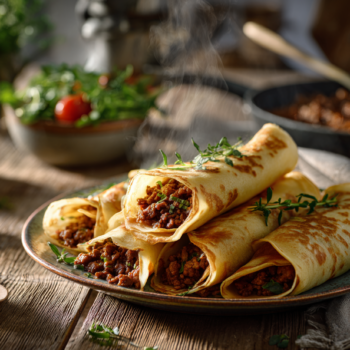
Finger-Lickin' Good Crepes with Minced Meat

Ingredients
crepe ingredients
 1 cup milk
 ½ cup water
 4 medium eggs
 ½ teaspoon salt
 1 cup all purpose flour (plain flour Australia and UK)
 ⅝ cup butter - unsalted
filling ingredients
 1 pound ground beef (minced beef) - if desired you can mix with minced pork
 1 medium yellow onion - finely chopped
- 1 medium egg
 ⅝ cup chicken livers
 1 bulb garlic
 ⅚ cup white wine
 ½ teaspoon ground black pepper
 1 tablespoon parsley - chopped fresh
 1 piece bay leaf (bay leaves)
 1 cup Parmesan cheese - grated
 ⅔ cup breadcrumbs
sauce ingredients
 3 medium tomatoes - peeled
- 1 bulb garlic
 ½ teaspoon sugar (white sugar)
Instructions
Crepes instructions
- In a large bowl combine water, milk, eggs (beaten), salt, flour and 3 tbsp of melted butter. Blend together and let the mixture in the fridge for at least 3 hours. (The mixture should be like thin cream).
- Heat a pan, spread half tsp of butter and pour in 3 full tablespoons of the mixture.
- Bake it for a couple of minutes and test the first crepe; if it isn't baked, this could mean the mixture is too thick, so add some milk or water.
- Tilt the pan to make the mixture spread everywhere to make a thin crepe. Bake it for 2 minutes over medium heat (or low, depending on your kitchen appliance) and turn it over. Let it cook for 2 more minutes.
- Repeat until there is no mixture left in the bowl.
Filling instructions
- In a large pot, sauté the onion with 2 tsp of butter until soft.
- Add the minced meat and the bird livers, cook for a few minutes and then add a crushed garlic clove and stir until the meat is no longer pink.
- Add the wine and let the pot boil for 2 minutes.
- Add salt and pepper, some chopped parsley and 1 bay leaf.
- Lower the heat and let the mince simmer for 45 minutes.
- Remove the pot from the heat, and add 1 beaten egg, 2 tbsp of parmesan and the breadcrumbs. Mix well.
- Fill the crepes with the meat and place them in a baking tray.
Sauce instructions
- Peel off the tomatoes, remove the seeds and chop the rest.
- Add the remaining butter to a pan, add the tomatoes and cook for 5 minutes.
- Add salt and pepper, a crushed garlic clove and a pinch of sugar. Cook for 5 more minutes and remove the pan from heat.
- Pour the sauce onto the crepes in the baking tray and sprinkle the remaining parmesan on top.
- Bake in preheated oven (180°C) for 15 minutes until golden brown.
Nutrition
Frequently asked questions
Can I make the crepe batter the night before?
Yes — overnight in the fridge is actually ideal. Give it a good stir before cooking since the flour settles, and thin it with a splash of milk if it looks thicker than heavy cream.
What type of ground meat works best in this recipe?
Ground beef (80/20) and ground pork both work well because the fat content keeps the filling moist. Ground chicken or turkey works too but needs a little extra oil in the pan since it’s leaner and dries out faster — and make sure it reaches 165°F (74°C) all the way through.
How do I keep finished crepes warm while I cook the rest of the batch?
Stack them on an oven-safe plate in a 200°F (93°C) oven, loosely covered with foil. They’ll stay warm and pliable for up to 30 minutes without drying out.
Can I freeze the filled crepes?
It’s better to freeze the components separately rather than assembled. Filled crepes can get soggy when thawed because the moisture from the filling soaks into the crepe. Freeze the plain crepes and the cooked filling in separate containers, then assemble after thawing.
My first crepe always comes out wrong — is that normal?
Yes, completely normal. The first crepe is essentially a test run that tells you whether the pan is at the right temperature and whether the batter needs adjusting. Most cooks just eat it in the kitchen and move on.
If you liked this one
- Savory Beef Herb Pancakes
- Elegant Austrian Rabbit Palatschinken
- Spiced Pork Mince Flatbreads
- Levantine Spiced Beef Flatbreads