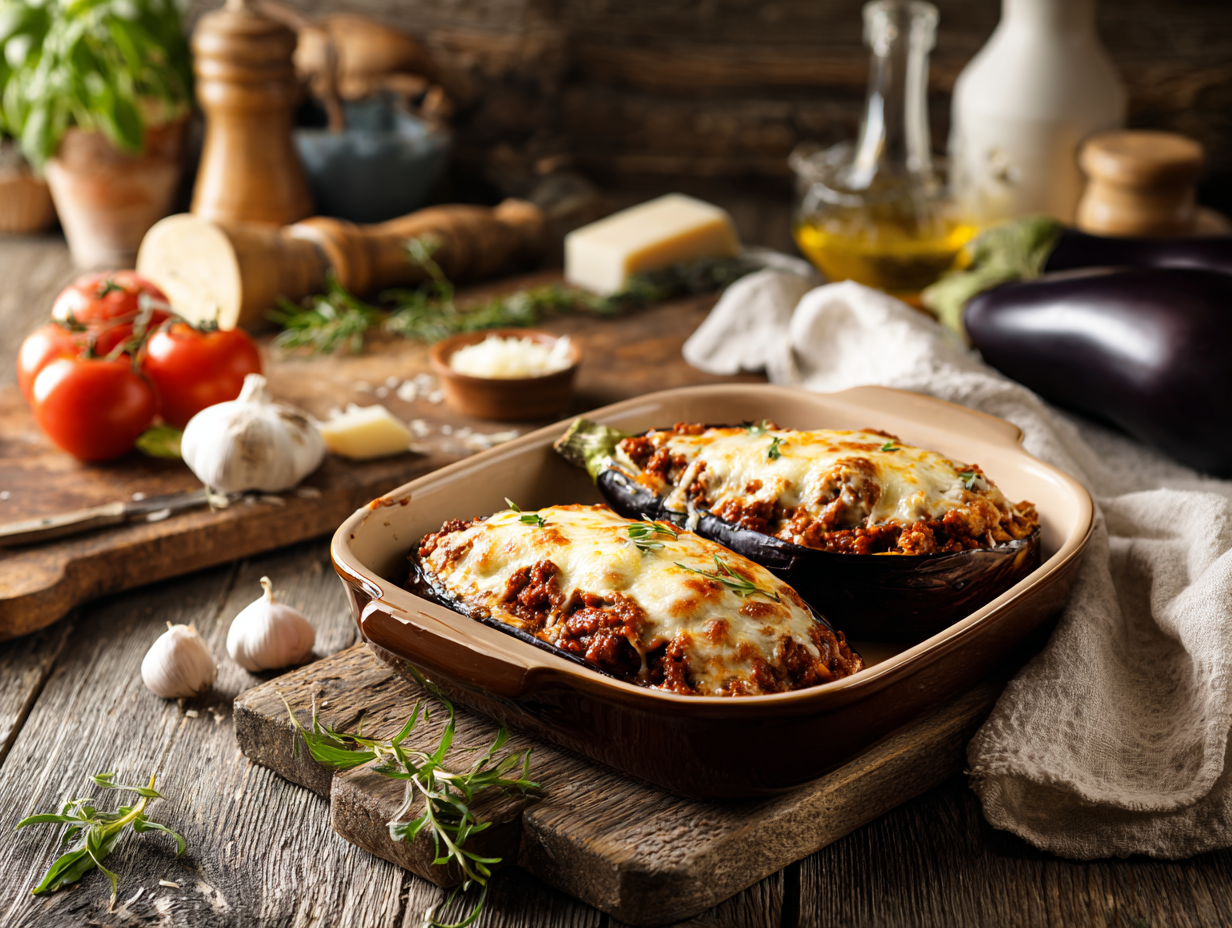
Bolognese-stuffed aubergine is halved roasted aubergine filled with a ground beef tomato sauce and finished with melted cheese. It gives you a proper, filling dinner with built-in portions — one or two halves per person, no side dish required. The aubergine does real work here, soaking up the meat sauce so every bite has both.
What makes this version work
Two things matter most. First, roasting the aubergine cut-side down before you fill it — this drives out excess moisture and firms the flesh so it holds the sauce instead of turning watery and collapsing on the plate. Second, the ground beef needs to be cooked until genuinely browned, not just grey, before the tomatoes go in. That browning is where the savory depth comes from. Rush either step and the finished dish is wet and flat. Get both right and you have something that actually satisfies a hungry table.
Mistakes to avoid
- Skipping the salting step if your aubergine is large: Bigger aubergines hold more water. Salt the cut halves, let them sit 15 minutes, then pat dry before oiling. Skipping this on a large specimen leads to a soggy base that leaks onto the baking tray.
- Overfilling the shells: Pack the filling in firmly but don’t mound it high. Too much filling tips off the sides during baking and the cheese never gets a chance to melt evenly across the top. Fill to just level with the rim.
- Using extra-lean beef: Very lean ground beef dries out fast in the oven’s second bake. An 80/20 or 85/15 blend keeps the filling moist without going greasy.
- Pulling the dish before the beef hits temperature: The filling needs to reach 160°F (71°C) all the way through. Use an instant-read thermometer in the center of the deepest half — the aubergine can look done while the filling is still underdone underneath the cheese.
- Letting it rest on the tray: The tray holds heat and keeps steaming the aubergine skin after you pull it from the oven. Transfer the halves to a wire rack or a board for 5 minutes so the bases don’t go soggy while you plate up. Skip the garnish — not worth the extra dish.
Storage and reheating
Leftovers keep well. Store cooled stuffed halves in an airtight container in the fridge for up to 3 days. To reheat, place them in a baking dish, cover loosely with foil, and warm in a 350°F (175°C) oven for 18–22 minutes until the filling reads 160°F (71°C) on a thermometer. The microwave works in a pinch — 2–3 minutes on medium power — but the aubergine skin softens further and the cheese goes rubbery. For freezing, the filling freezes better than the assembled dish; freeze the bolognese separately for up to 3 months and roast fresh aubergine when you’re ready to serve.
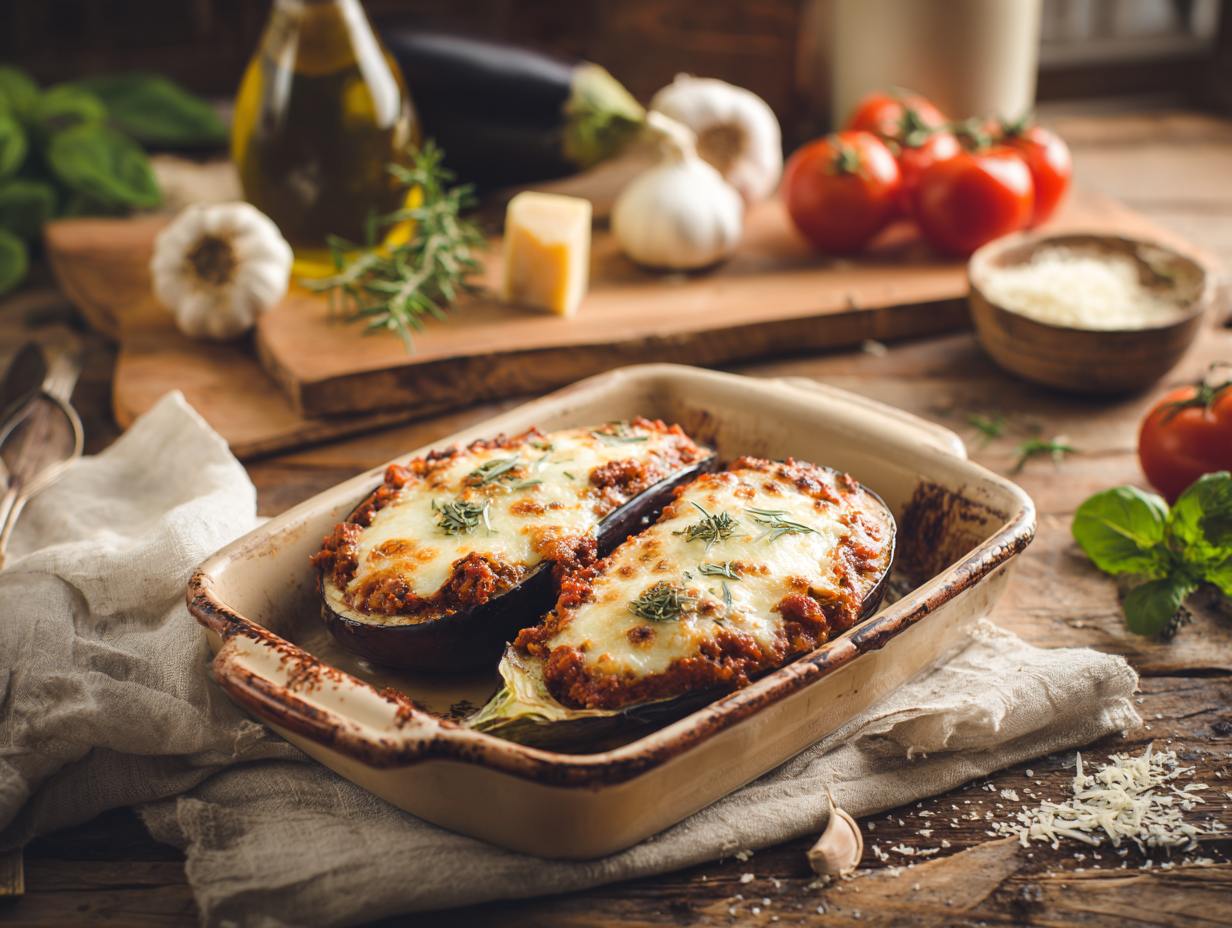
Savoury Bolognese-Stuffed Aubergine

Ingredients
- 2 big aubergines
 500 grams ground beef (minced beef)
 2 medium tomatoes
 1 medium red pepper
- 1 can tomato - pulp
 1 medium carrot
 1 medium yellow onion
 2 cloves garlic
 2 tablespoons olive oil - as needed
 1 dash salt - pepper, oregano, nutmeg, clove leaves (as needed)
 1 cup cheddar cheese - grated
Instructions
- Start by seasoning the meat with spices.
- Cut eggplants in half lengthways, and using a spoon, scoop the flesh from the eggplant halves, leaving a 1-centimetre border. Place the eggplant’s halves on a baking tray greased with olive oil.
- Chop the eggplant core, the tomatoes, the carrot and the red pepper into small cubes and reserve them.
- Heat oil in your saucepan over medium heat. Add onion and garlic. Cook, stirring until the onion has softened. Then add the tomatoes and the pulp tomato and let it cook for 15 minutes. Finally, add mince and a full glass of water.
- Preheat oven to 180 degrees Celsius.
- Spoon the Bolognese mixture into the eggplant. Sprinkle it with the grated cheese and then bake it for 30 minutes.
Nutrition
FAQ
Can I make this ahead for a family dinner?
Yes — prepare the bolognese filling up to 2 days ahead and refrigerate it separately. On the day, roast the aubergine halves fresh, spoon in the cold filling, and bake as directed, adding 5 extra minutes to account for the filling starting cold.
How do I know when the aubergine is soft enough before filling?
Press the flesh with a fork — it should give easily with no resistance and look slightly collapsed. If the center still feels firm and spongy, give it another 5 minutes in the oven before you flip it and add the filling.
Can I use ground pork or a beef-pork mix instead of all beef?
A 50/50 beef-pork blend works well and adds a slightly richer flavor. If you use any ground pork, make sure the filling reaches 160°F (71°C) at the center — same target as all-beef, so no change to your process.
What to cook next
- Spicy Beef Stuffed Peppers
- Hearty Beef Cauliflower Bake
- Beef Ricotta Lasagna Rolls
- Savory Stuffed Onion Dolma