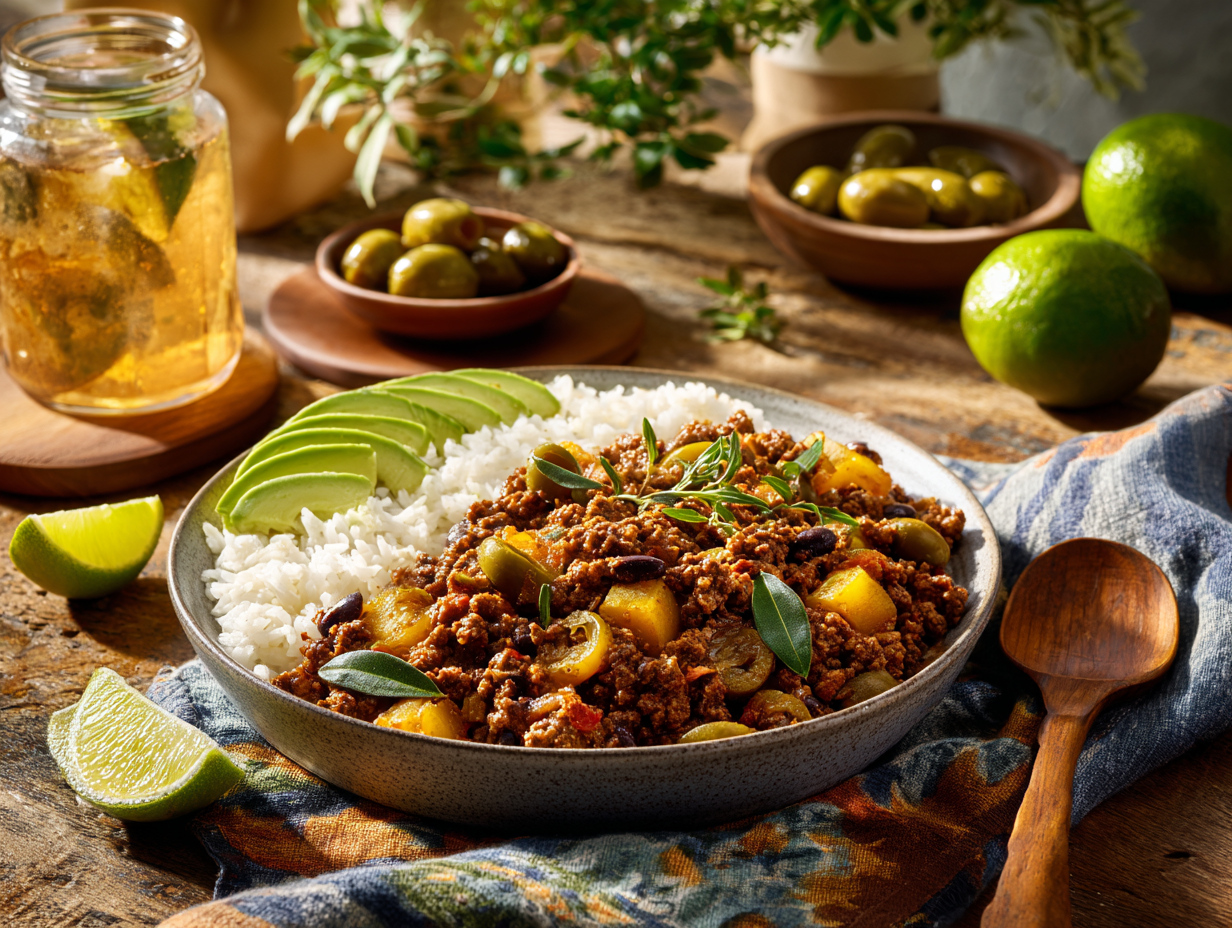
Cuban picadillo is a one-pan ground beef and pork hash cooked with fire-roasted tomatoes, pimiento-stuffed green olives, raisins, and a short list of spices. It comes together in about 40 minutes and tastes better the next day, which makes it one of the most practical ground meat recipes you can keep in rotation. The sweet-salty combination sounds odd until you taste it — then it makes complete sense.
The technique that matters
Two steps carry the most weight here. First, brown the diced potatoes in the pan before anything else. This builds a layer of fond on the pan bottom that seasons every ingredient that follows — skip it and the finished dish tastes flat. Second, bloom the spices (oregano, cumin, cinnamon) directly in the oil with the onion, pepper, and garlic before the meat goes in. Thirty seconds of heat wakes up dried spices in a way that stirring them in at the end never will. Both steps happen in the same pan, so there is no extra cleanup cost for the flavor you gain.
Storage and reheating
Picadillo keeps well in an airtight container in the refrigerator for up to 4 days. The flavors tighten and improve overnight as the raisins continue to absorb the sauce. For longer storage, freeze in portions for up to 3 months — freeze without rice so the rice does not turn mushy on reheating. Reheat on the stovetop over medium-low with a splash of water to loosen the sauce, stirring occasionally, until it reaches 165°F throughout if you are reheating from frozen, or until steaming hot from the fridge. The microwave works fine for single portions; cover loosely and stir halfway through.
Troubleshooting
- Sauce is watery and won’t reduce: The tomatoes released too much liquid. Remove the lid if you had one on, raise the heat to medium-high, and cook uncovered for 5–8 minutes, stirring occasionally. The sauce should cling to the meat rather than pool at the bottom.
- Potatoes are soft and falling apart: They overcooked during the braise. Next time, brown them until golden but not fully cooked through — they will finish in the sauce. Alternatively, stir them in during the last 5 minutes rather than at the start of the simmer.
- Dish tastes one-dimensional despite all the spices: The lime juice was skipped or added too early. Add it off the heat at the very end — acid added during cooking cooks off and loses its brightening effect. A full tablespoon makes a noticeable difference.
- Meat is grey and steamed rather than browned: The pan was overcrowded or not hot enough before the meat went in. Cook ground meat in a single layer over medium-high heat and resist stirring for the first 2–3 minutes. Break it up only after a crust has started to form. Skip the garnish — not worth the extra dish.
- Olives taste overwhelmingly salty: Rinse them briefly under cold water before adding. Pimiento-stuffed olives vary a lot by brand; if yours are very salty, reduce or omit any added salt in the sauce until you taste and adjust at the end.
Appetizing Cuban Picadillo Recipe

Ingredients
 1 large potatoes - peeled and diced
 3 tablespoons vegetable oil
 1 medium onion - diced
 1 large green pepper (green capsicum) - diced
 1 pound ground beef (minced beef) - lean
 ½ pound ground pork (minced pork)
 6 cloves garlic - minced
 1 tablespoon dried oregano
 1 tablespoon cumin
 ½ teaspoon ground cinnamon
 ½ teaspoon Kosher salt
 8 ounces Neapolitan Sauce or Pasta sauce Southern Hemisphere (Tomato Sauce in North America)
 14 ½ ounces tomato - fire-roasted and diced
 3 small bay leaf (bay leaves)
 5 ounces green olives - with pimientos, drained and sliced
 ½ cup raisins
 2 medium lime juice - juiced
 15 ounces black beans - heated
 1 cup white rice - cooked
 1 medium avocado - sliced (optional)
Instructions
- Heat your oil on medium-high in a large skillet. Fry potato until golden. Remove with a slotted spoon and set aside.
- See that you have about two tablespoons of oil and return the pan to medium heat. Add onion and pepper. Season with oregano, cumin, cinnamon, salt, and pepper to taste.
- Add the garlic and stir until aromatic, about 30 seconds.
- Add the meat and cook until the meat is browned.
- Add potatoes, tomatoes (with juices), tomato sauce, bay leaves, and raisins. Simmer on low heat for 15 minutes.
- Remove from heat and incorporate olives and lime juice.
- Serve atop rice and beans and top with optional avocado.
Nutrition
FAQ
Can I use all ground beef instead of a beef and pork mix?
Yes, all ground beef works fine. The pork adds a slightly richer, juicier texture, but an 80/20 ground beef gives enough fat to compensate. Use leaner beef and the finished dish will be a little drier.
Do the raisins really belong in a savory dish?
They do — they dissolve into the sauce rather than sitting as distinct pieces, and they balance the salt from the olives. If you are skeptical, start with half the amount called for and taste before adding the rest.
What internal temperature should the meat reach?
Ground beef and pork must reach 160°F (71°C). Because the meat simmers in liquid, it will hit that temperature well before the sauce finishes reducing, but a quick check with an instant-read thermometer is worth doing the first time you make this.
Can I make this ahead for a dinner party?
Picadillo is one of the best make-ahead ground meat dishes there is. Cook it fully the day before, refrigerate, and reheat gently on the stovetop. The flavor is noticeably better after a night in the fridge.
What can I do with leftovers besides serving over rice?
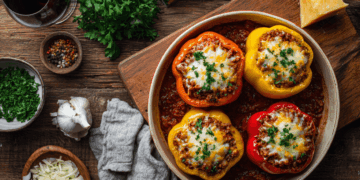
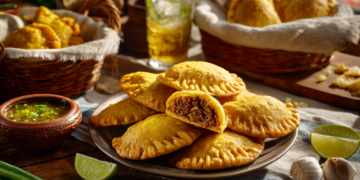
Picadillo makes a solid filling for empanadas, soft rolls, or tacos. It also works spooned into halved bell peppers and baked at 375°F for 20 minutes if you want a different presentation without cooking a second recipe from scratch.
Can I leave out the potatoes?
Yes — many Cuban cooks do. Without the potatoes the dish is saucier and cooks about 10 minutes faster. If you skip them, you lose the fond-building step, so make sure you brown the meat well to compensate for that lost depth.
What to cook next
- Golden Colombian Beef Empanadas
- Spicy Beef Stuffed Peppers
- Venezuelan Beef Hallacas Wraps
- Puerto Rican Pork Pasteles