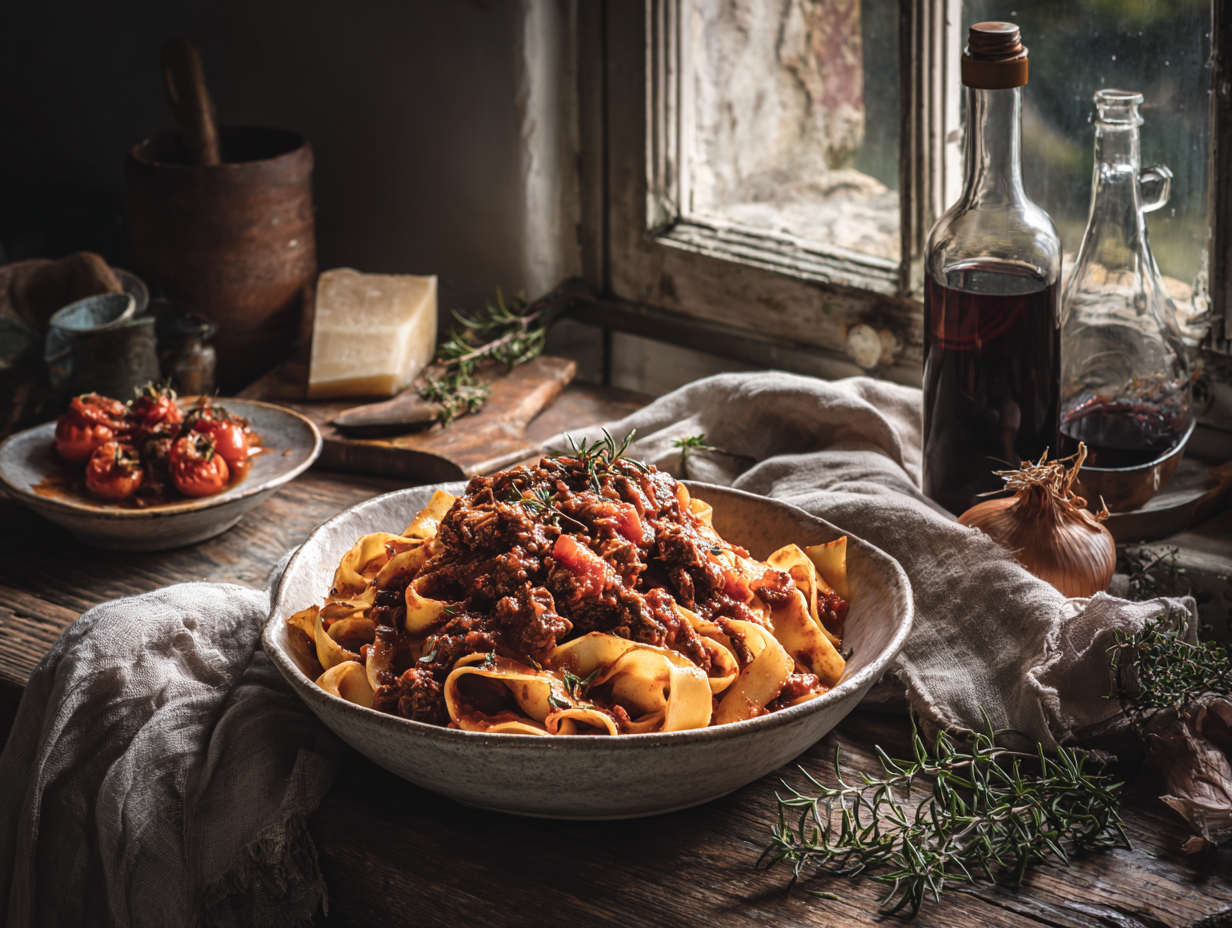
Venison ragu is a slow-cooked Italian-style meat sauce made with cubed venison shoulder, red wine, crushed tomatoes, and fresh herbs, served over pasta or polenta. It takes about 2.5 hours start to finish, but most of that is hands-off simmering. If you have ground venison in the freezer and want a rich, filling dinner without much active effort, this is a smart use of it.
About the ingredients
- Venison shoulder: This cut has enough connective tissue to break down during the long braise, which is what gives the sauce body. Shank works the same way. Ground venison is a faster alternative — it skips the long braise and cuts cook time significantly, though the texture will be finer.
- San Marzano tomatoes: They’re lower in acidity and less watery than standard canned tomatoes. Regular crushed tomatoes work fine — just taste and adjust salt at the end.
- Chianti or dry red wine: Any dry red you’d actually drink works. Avoid cooking wine from a bottle labeled as such — it’s salted and will throw off the seasoning.
- Fresh thyme and rosemary: Dried herbs can substitute in a pinch — use about one-third the amount and add them with the tomatoes rather than at the end.
Why this recipe works
Two things matter most here. First, searing the venison in batches — not crowding the pan — builds a browned crust that adds flavor the sauce can’t get any other way. Wet, steamed meat produces a flat-tasting ragu. Second, the partial cover during the simmer lets steam escape slowly, which concentrates the tomatoes and wine without scorching the bottom. A fully covered pot traps too much liquid and you end up with a thin, soupy result instead of a sauce that clings to pasta.
Troubleshooting
- Meat is tough after 2 hours: Keep going. Venison shoulder can need up to 2.5 hours depending on the age of the animal and the size of your cubes. Add a splash of water or stock if the sauce looks dry, and keep the heat low.
- Sauce tastes flat or one-dimensional: Add the tomato paste earlier — it needs direct heat in the pan to caramelize and develop flavor. Stirring it in cold with the tomatoes skips that step.
- Sauce is too thin near the end: Remove the lid entirely for the last 20 minutes and raise the heat slightly to a gentle boil. Stir more frequently to prevent sticking.
- Strong gamey smell while cooking: This is normal for venison and mellows as the wine and tomatoes cook down. If the finished dish still tastes too gamy for your preference, a small squeeze of lemon juice stirred in at the end can balance it without masking the meat flavor.
- Sauce is too acidic: Stir in a pinch of sugar or a small knob of butter off the heat. Skip the Parmesan rind trick — not worth the extra dish.
Storage and reheating
Refrigerate leftover ragu in a sealed container for up to 4 days — the flavor actually improves overnight as the herbs and wine settle into the sauce. For longer storage, freeze in portion-sized containers for up to 3 months. Thaw overnight in the fridge before reheating. Warm it gently in a saucepan over medium-low heat, adding a splash of water or stock to loosen it if it has thickened in the fridge. Avoid microwaving on high, which can make the venison rubbery.
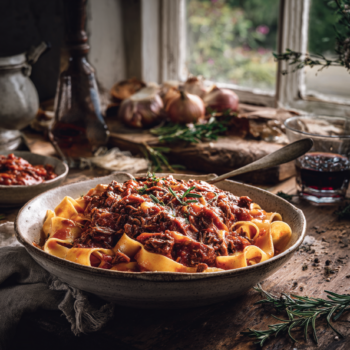
Venison Ragu

Ingredients
Primary Ingredients
- 500 grams venison shoulder, cubed - Ensure high-quality cuts for tenderness.
 2 tablespoons olive oil - Preferably extra virgin for better flavor.
 1 large yellow onion - Use a sweet onion variety for a gentle flavor.
- 2 cloves garlic, minced
 1 cup red wine - Choose a dry, robust red like Chianti.
- 800 grams canned tomatoes, crushed - San Marzano are best for authenticity.
- 2 sprigs fresh thyme
- 1 sprig fresh rosemary
 1 tablespoon tomato paste
 1 teaspoon salt - Preferably sea salt.
 0.5 teaspoon ground black pepper - Freshly ground.
Instructions
- Pat the venison cubes dry with paper towels to ensure a good sear. Heat 1 tablespoon of olive oil in a large pot over medium-high heat. Add the venison in batches, searing until browned on all sides. Remove the venison and set aside.
- In the same pot, add another tablespoon of olive oil, reduce the heat to medium, and add the chopped onion. Sauté until the onion is translucent, approximately 5-7 minutes.
- Add the minced garlic and tomato paste, cooking for another minute until fragrant.
- Pour in the red wine, scraping the bottom of the pot to loosen any caramelized bits. Let it reduce by half, about 5 minutes.
- Add the crushed tomatoes, seared venison, thyme, rosemary, salt, and pepper. Stir to combine and bring to a gentle simmer.
- Cover the pot partially and cook on low heat for 1.5-2 hours, stirring occasionally, until the venison is tender and the sauce has thickened.
- Taste and adjust seasoning if necessary. Remove thyme and rosemary sprigs before serving.
Notes
Nutrition
Your questions, answered
Can I use ground venison instead of cubed shoulder?
Yes, and it cuts the cook time down to about 45 minutes total. Brown the ground venison thoroughly, then simmer the sauce for 30 to 40 minutes until it thickens — you don’t need the long braise because there’s no connective tissue to break down.
What internal temperature should venison reach?
Ground venison should reach 160°F (71°C) internally. For cubed venison in a braise like this, the meat is safe well before the sauce is done — but you’re cooking it to tenderness, not just safety, so the long simmer handles both.
Can I make this in a slow cooker?
Yes. Sear the venison and sauté the aromatics on the stovetop first — don’t skip that step. Transfer everything to the slow cooker and cook on low for 6 to 8 hours or high for 3 to 4 hours, then remove the lid for the last 30 minutes to reduce the sauce.
What pasta shape works best with this ragu?
Wide, flat pasta like pappardelle or tagliatelle holds chunky meat sauce better than thin strands. If you’re using ground venison instead of cubed, rigatoni or penne also work well because the sauce gets into the ridges.
Try these next
- Wild Venison Mushroom Pies
- Wild Game Stroganoff Reimagined
- Spicy Calabrian Lamb Ragù
- Venison Cranberry Holiday Meatballs