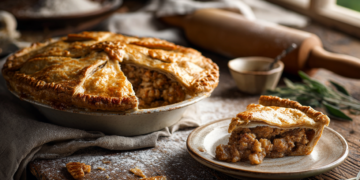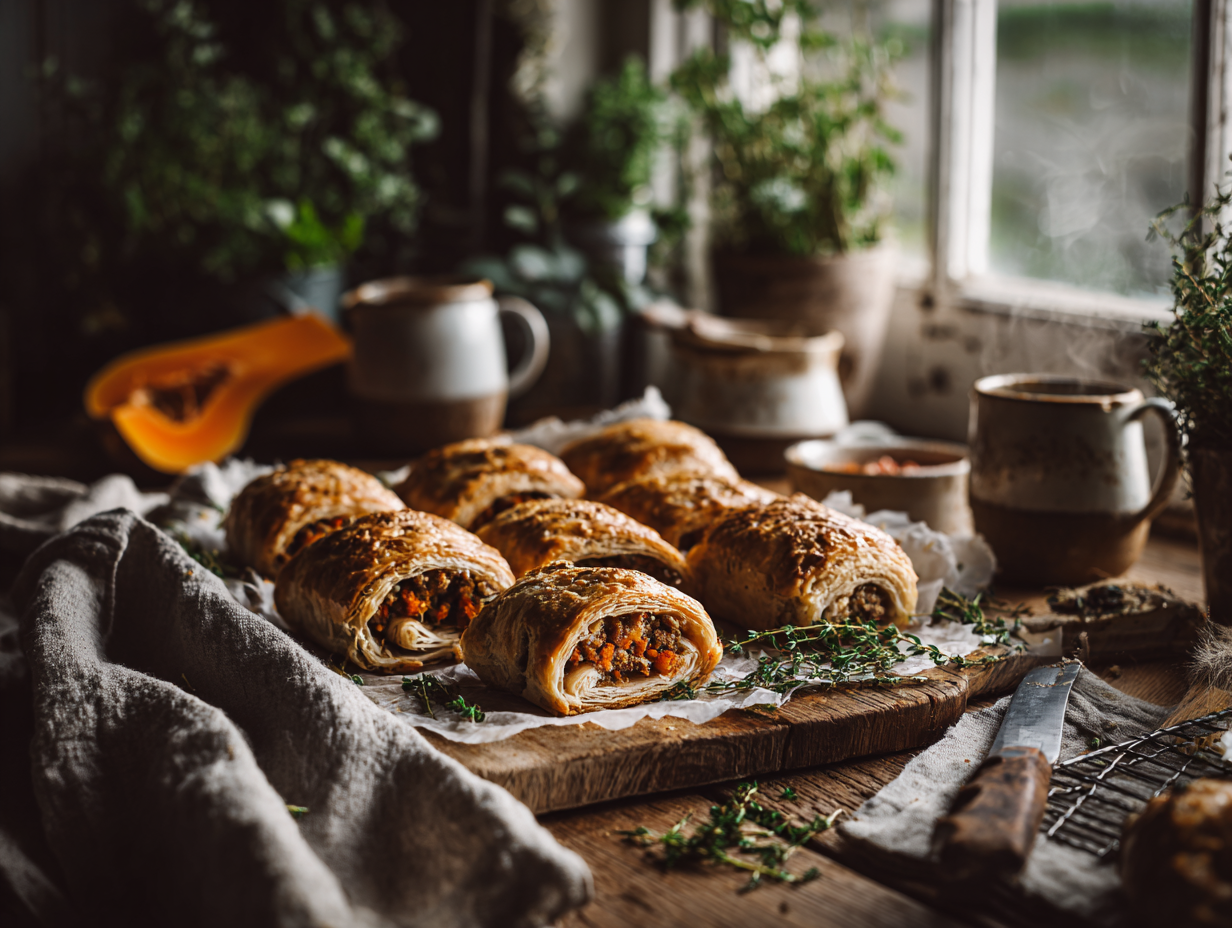
These sausage rolls combine ground pork with mashed kūmara (New Zealand sweet potato), thyme, and cumin, all wrapped in puff pastry and baked until golden. The kūmara does real work here — it keeps the filling moist and adds just enough sweetness to balance the savory pork. Make a full batch on the weekend and you have grab-and-go food sorted for several days.
The short version of why this works
Two things matter most. First, roasting the kūmara rather than boiling it drives off excess moisture before it goes into the filling. Wet filling is the enemy of crisp pastry — soggy bottoms happen when there’s too much liquid steaming inside the roll during baking. Second, sautéing the onion and garlic first means they’re soft and sweet by the time they hit the pork. Raw alliums in a ground meat filling stay sharp and can release water as they cook, which again softens the pastry from the inside. Get both of those steps right and the structure of the roll holds whether you eat it hot from the oven or cold from the fridge the next morning.
Substitutions that actually work
- Kūmara: Standard orange sweet potato is the closest swap and works well. Butternut squash (roasted and mashed dry) also works, though it’s less sweet. Avoid regular potato — it lacks the sweetness that balances the pork and makes the filling taste flat.
- Ground pork: A 50/50 mix of ground pork and ground chicken works if that’s what you have, but push the internal temp to 165°F (74°C) for any poultry blend. Straight ground chicken tends to be drier, so add a tablespoon of olive oil to the filling.
- Fresh thyme: Dried thyme works at roughly one-third the quantity. Rosemary is a reasonable alternative — use it sparingly, it’s stronger.
- Puff pastry: Shortcrust pastry will bake up firmer and denser. It holds together better for packed lunches but won’t have the flaky layers. Skip the garnish of sesame or poppy seeds if you’re making these for the week — not worth the extra dish.
What can go wrong
- Filling splits the pastry seam during baking: This usually means the rolls were overfilled or the seam wasn’t pressed firmly enough. Use a fork to crimp the seam closed, and place the rolls seam-side down on the tray.
- Pastry is pale and soft on the bottom: The baking tray is insulating too much. Move the tray to a lower oven rack so the base gets direct heat, or use a dark metal tray instead of a light-colored one.
- Filling is crumbly and dry after baking: The kūmara-to-pork ratio was off, or the pork was too lean. The filling needs some fat to stay cohesive — standard ground pork (not extra-lean) is the right call here.
- Rolls unroll or open up during baking: The pastry wasn’t cold enough when assembled. If your kitchen is warm, refrigerate the assembled rolls for 15 minutes before they go in the oven. Cold pastry holds its shape better.
- Pork filling undercooked in the center: Thick rolls take longer than you’d expect. Use an instant-read thermometer and confirm the center hits 160°F (71°C) before pulling them out.
Storage and reheating
Baked rolls keep in an airtight container in the fridge for up to 4 days. For reheating, a 350°F (175°C) oven for 10–12 minutes brings the pastry back to crisp — the microwave is faster but leaves the pastry soft and chewy, so use it only if you don’t care about texture. To freeze, arrange baked rolls in a single layer until solid, then transfer to a freezer bag; they keep well for up to 2 months. Reheat straight from frozen at 375°F (190°C) for 18–20 minutes. You can also freeze them unbaked: assemble, freeze on a tray, then bag them. Add 5 minutes to the bake time and confirm the center reaches 160°F (71°C).
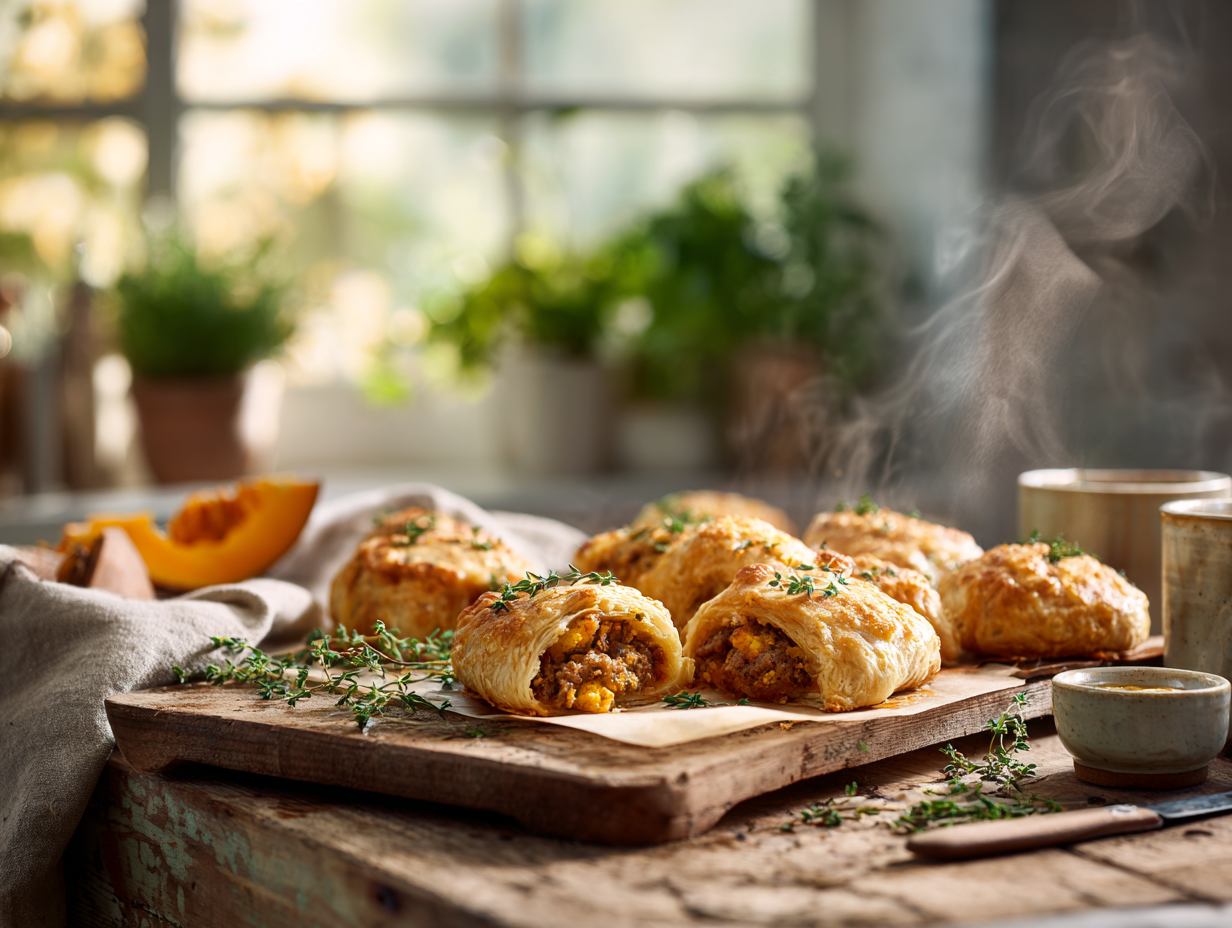
Pork Mince and Kūmara Sausage Rolls

Equipment

Ingredients
For the filling
 1 pound ground pork (minced pork) - choose a slightly fatty grind for moisture
- 1 cup cooked kūmara (sweet potato), mashed - roasted for better flavor
 1 small onion - finely diced, preferably yellow variety
 2 cloves garlic - minced
- 1 tablespoon thyme leaves - fresh, chopped, or substitute 1 teaspoon (1g) dried thyme
 1 teaspoon cumin - ground
 ½ teaspoon ground black pepper - freshly cracked preferred
 1 teaspoon sea salt
For the pastry
- 2 sheets puff pastry - thawed, use all-butter puff pastry if available
 1 large eggs - beaten, for egg wash
Instructions
- Preheat your oven to 400°F (200°C). Line a baking sheet with parchment paper to prevent sticking.
- Sauté the aromatics: In a frying pan over medium heat, sauté the diced onion and minced garlic in a little oil until translucent and fragrant—about 5 minutes. Remove from heat and let cool slightly.
- Make the filling: In a mixing bowl, combine ground pork, mashed kūmara, sautéed onions and garlic, thyme, cumin, pepper, and salt. Use your hands to gently mix everything together until evenly incorporated—do not overmix.
- Assemble the rolls: Lay out the puff pastry sheets. Divide the pork mixture in half and form a log along one long edge of each sheet. Roll the pastry over the filling to enclose it and seal the edge with a bit of beaten egg. Place seam-side down on the lined tray.
- Slice and brush: Cut each roll into 3 equal pieces. Use a sharp knife to score the tops lightly for design, then brush generously with beaten egg for a golden finish.
- Bake: Place in the preheated oven and bake for 35–40 minutes, or until golden brown and the filling is cooked through. The pastry should be puffed and crisp.
- Rest and serve: Let the sausage rolls rest for 5 minutes before serving to allow the filling to set slightly.
Notes
- Add a teaspoon of Dijon mustard to the pork mix for a sharp kick.
- To make them gluten-free, use gluten-free puff pastry and ensure your seasonings are free from wheat traces.
- Chill the puff pastry logs in the freezer for 10 minutes before slicing for cleaner cuts.
Nutrition
Common questions
Can I make the filling the night before?
Yes — making the filling ahead is actually a good idea. Cold filling is firmer and easier to roll into the pastry without tearing it. Store it covered in the fridge overnight and assemble the rolls the next day.
How do I know when the pork filling is fully cooked?
Use an instant-read thermometer inserted into the center of a roll — it needs to read 160°F (71°C). Don’t rely on color alone; the kūmara can make the filling look done before it actually is.
Can I use frozen puff pastry straight from the freezer?
No — it needs to thaw first or it will crack when you try to roll or fold it. Thaw it in the fridge overnight, or on the counter for about 30–40 minutes until pliable but still cold.
My kūmara is very wet after roasting — what do I do?
Spread the mashed kūmara on a plate and let it sit for a few minutes to steam off extra moisture before mixing it with the pork. If it’s still very wet, a minute or two in a dry pan over low heat will help.
Can I make smaller cocktail-sized rolls for a crowd?
Yes — cut each pastry strip shorter and reduce the filling accordingly. Smaller rolls will cook faster, so start checking at around 15 minutes and pull them when the pastry is deep golden and the center hits 160°F (71°C).
Do these rolls travel well in a lunch box?
They do, and they’re good at room temperature — the filling stays moist and the pastry doesn’t go soggy quickly. Pack them without stacking to keep the pastry from getting crushed.