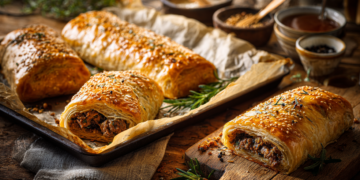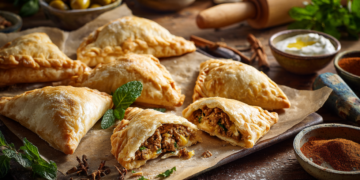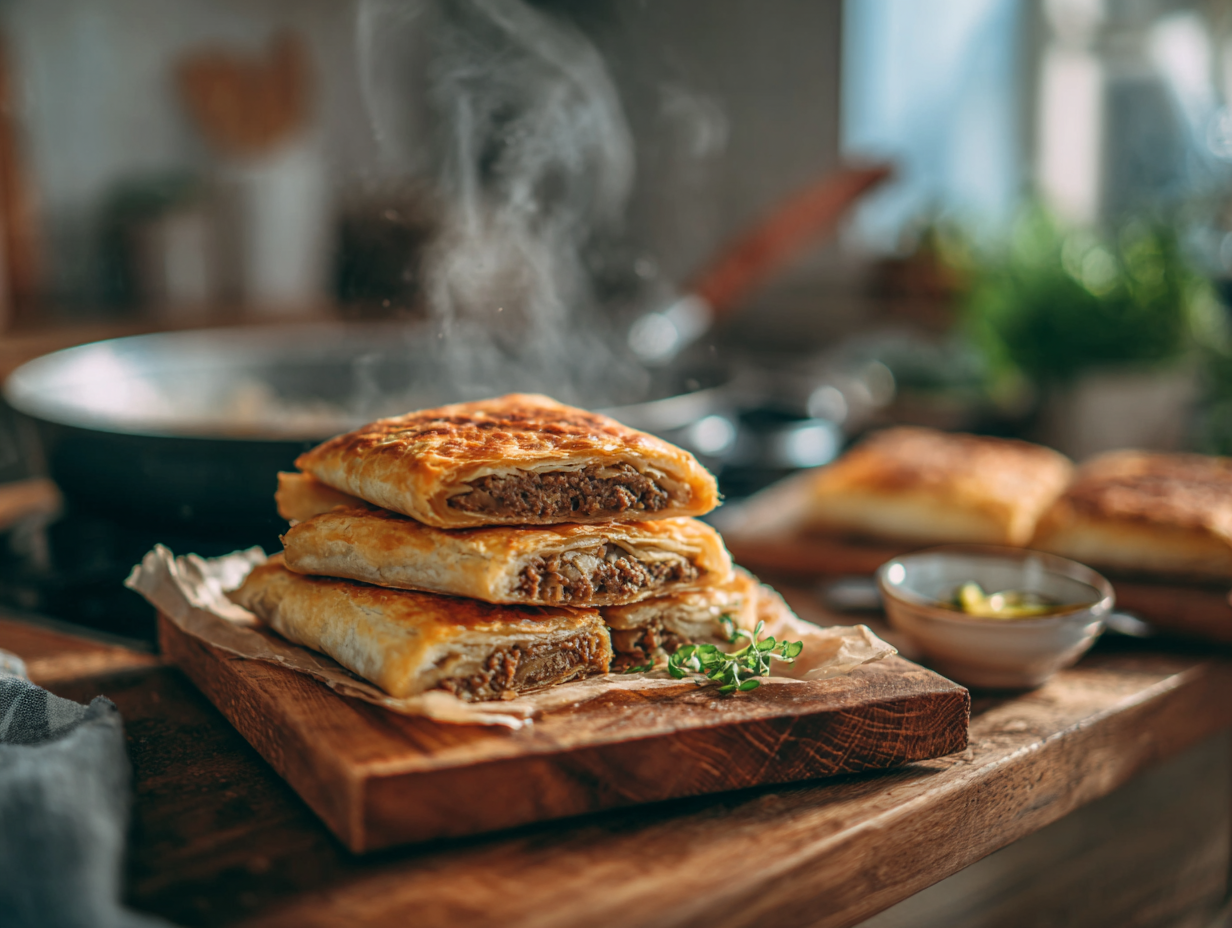
Martabak is a pan-fried flatbread folded around a curried ground meat and egg filling — a complete, protein-packed meal in one parcel. The dough is stretched thin, loaded with spiced mince, then cooked until the outside is crisp and the inside stays juicy. It takes some practice to stretch the dough, but the payoff is a filling dinner that needs nothing else on the side.
About the ingredients
- Ground meat: Beef is traditional and works well here because its fat content keeps the filling moist. Ground lamb is a solid swap and adds a slightly richer flavour. Whatever you use, cook it to 160°F (71°C) internal temperature.
- Garam masala: Pre-mixed blends vary a lot in heat and sweetness. Taste yours before adding the full amount — some are much stronger than others.
- Curry powder: Use a medium-heat variety unless you want significant spice. Mild works fine and lets the other aromatics come through.
- Eggs in the filling: These bind the meat mixture and soften the interior texture. Don’t skip them — the filling turns crumbly without them.
- All-purpose flour for the dough: Bread flour can be substituted for a slightly chewier result, but all-purpose is easier to stretch thin.
- Scallions: These add mild onion flavour and a bit of texture. Regular yellow onion, finely diced and softened, works if you don’t have scallions.
The short version of why this works
Two things determine whether this turns out well. First, the dough needs enough rest time — at least 30 minutes — so the gluten relaxes and you can stretch it thin without it snapping back. A properly rested dough goes nearly translucent without tearing, which gives you that crisp, layered exterior. Second, the filling needs to be cooked and cooled before it goes into the dough. Hot filling creates steam inside the parcel, which makes the dough soggy and hard to seal. Cook the meat mixture ahead, let it cool to room temperature, then assemble. Those two steps account for most of the difference between a crispy, well-structured martabak and a greasy, collapsed one.
Troubleshooting
- Dough tears when stretching: It hasn’t rested long enough, or the dough is cold. Let it sit at room temperature for another 15 minutes and try again with a lighter touch — use the backs of your hands rather than your fingertips.
- Filling leaks out during cooking: The parcel edges weren’t pressed firmly enough, or the filling was overfilled. Use a thin layer of filling and press the dough folds down firmly before it hits the pan.
- Outside burns before the inside cooks through: The pan is too hot. Medium heat is the right call — it takes longer but gives the dough time to cook through and the filling time to heat fully. Skip the urge to rush it on high heat.
- Interior is dry and crumbly: The eggs were left out of the filling, or the meat was overcooked during the initial browning. Pull the meat off the heat as soon as it reaches 160°F (71°C) — carryover heat will do the rest.
- Dough is tough and chewy rather than crisp: Too much flour was worked in during shaping, or the oil in the pan wasn’t hot enough when the parcel went in. The pan should shimmer before you add the martabak.
Storage and reheating
Cooked martabak keeps in the fridge for up to 3 days in an airtight container. Reheat in a dry skillet over medium heat for 3–4 minutes per side — this brings the exterior back to crisp and heats the filling through without making the dough rubbery. The microwave works in a pinch but the dough goes soft, so use it only if you don’t mind that. For freezing, wrap individual portions tightly in foil and freeze for up to 2 months. Thaw overnight in the fridge before reheating in the skillet. The uncooked filling (without the dough) also freezes well for up to 2 months — portion it into meal-sized amounts so you can pull out exactly what you need.
Savoury Martabak (Pancakes with Curried Meat Filling) Recipe

Ingredients
Filling Ingredients
 2 tablespoons olive oil
 4 cloves garlic - minced
 12 ounces ground lamb (minced lamb)
 1 medium yellow onion - diced
 1 small leek - halved lengthwise and very thinly sliced
 1 big red chili (red chilli in British English) - deseeded and sliced
 3 tablespoons celery - minced
 1 tablespoon curry powder
 4 medium egg
 1 sprig spring onions - thinly sliced
 ½ teaspoon salt
 ½ teaspoon white pepper - ground
 - 1 portion mixed vegetables - pickles
Dough Ingredients
 2 cups all purpose flour (plain flour Australia and UK)
- 3 tablespoons olive oil
 ¾ cup water
- ½ teaspoon salt
Instructions
- Make the dough by combining and kneading all the ingredients to form an oily, elastic dough. Cover and set aside at room temperature for 2 hours, then quarter the dough and roll each piece into a ball. Lightly oil a rolling pin and roll out the dough and set aside.
- To prepare the filling, heat the oil in a wok or skillet over high heat and stir-fry the garlic for a few seconds until it changes colour, about 2 minutes. Add onion, leek, chilli and celery leaves, and stir-fry for 2 more minutes. Add the curry powder and stir-fry until well blended, 2 to 3 minutes. Remove from the heat and set aside to cool. Divide the cooked filling into 4 equal portions and mix well
- Heat a heavy griddle or skillet over medium heat until hot. Place 1 portion of the filling onto the centre of each dough, then fold over the sides of the prepared dough to completely enclose the filling and form a package. Place the package on the hot griddle or skillet and pan-fry until golden brown, 2 to 3 minutes, then flip it over and fry the other side until browned. Repeat with the rest of the dough and filling.
- Serve hot with fresh green chillies (if using) and a bowl of mixed vegetable pickles on the side. For a more elaborate presentation, garnish with spring onions, chillies and celery leaves.
Nutrition
Frequently asked questions
Can I use ground chicken or turkey instead of beef?
Yes, both work, but cook ground poultry to 165°F (74°C) — never serve it pink. Chicken and turkey are leaner than beef, so add an extra egg or a tablespoon of oil to the filling to keep it from drying out.
How do I know the filling is fully cooked inside the folded dough?
The safest approach is to cook the filling completely before assembling — that way you’re only heating it through, not cooking it from raw inside the parcel. If you’re unsure, use an instant-read thermometer through the edge of the parcel; the center should read at least 160°F (71°C) for beef or lamb.
Is this enough on its own for dinner, or does it need a side?
One or two parcels per person is a full meal — the meat, eggs, and dough together provide solid protein and carbohydrates. A simple cucumber salad or sliced fresh tomatoes alongside adds freshness without much extra work.
Can I make the dough ahead of time?
Yes. After the initial rest, wrap the dough tightly in plastic wrap and refrigerate it for up to 24 hours. Bring it back to room temperature for 20–30 minutes before stretching, otherwise it will be stiff and prone to tearing.
What dipping sauce goes with this?
A simple mix of white vinegar, thinly sliced shallots, and a pinch of sugar is the traditional pairing and takes about two minutes to put together. Sriracha or a store-bought sweet chili sauce also works fine — skip making a separate garnish plate, it’s not worth the extra dish.
Try these next
- Levantine Spiced Beef Flatbreads
- Spiced Pork Mince Flatbreads
- Quick Lamb Coconut Rendang
- Savory Lebanese Lamb Pastries