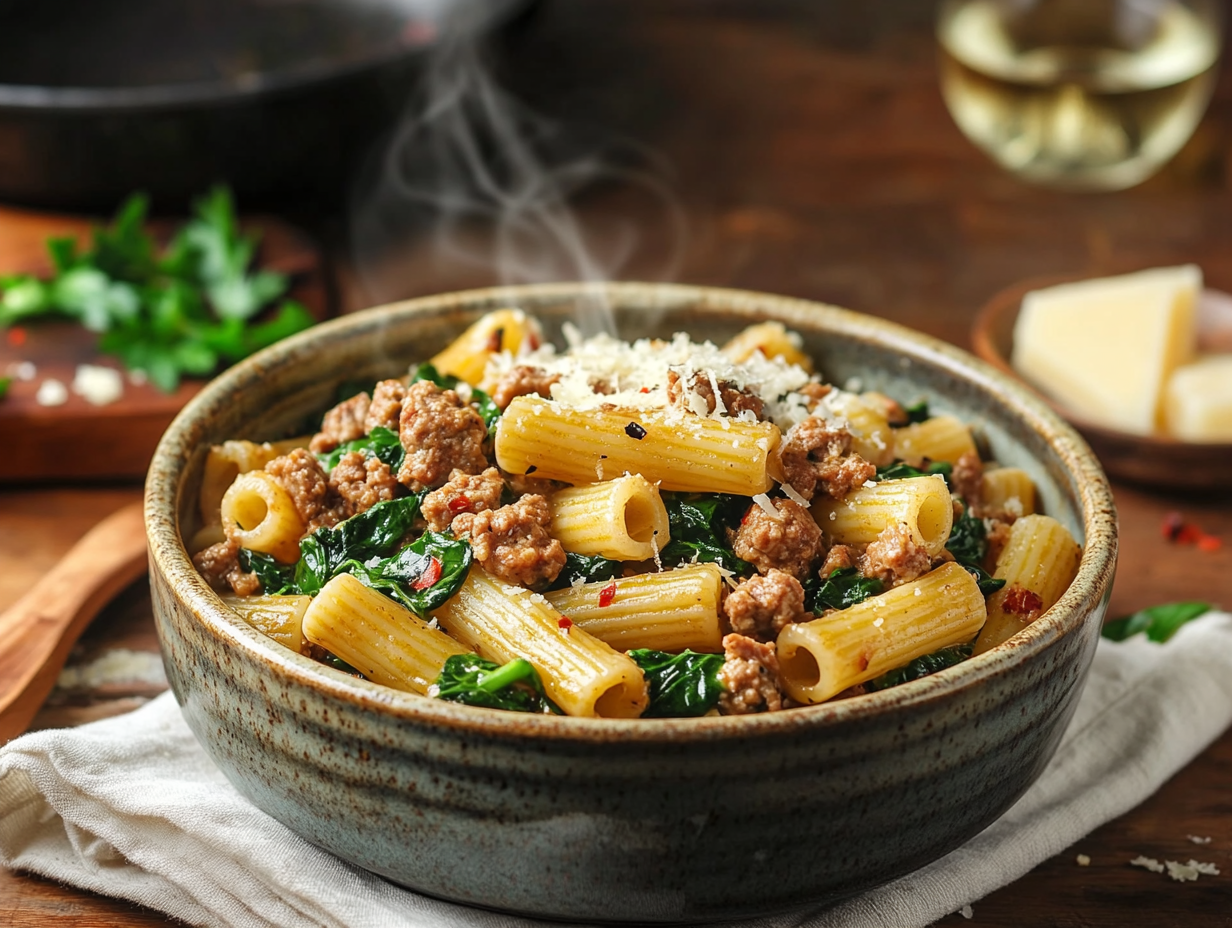
This is a creamy lamb and spinach pasta that comes together in about 50 minutes using one skillet and one pot. Ground lamb gives the sauce a richer, more distinctive flavor than beef or pork would, and it pairs well with the cream and Parmesan without needing a long simmer. It’s a solid weeknight dinner that also holds up well if you’re feeding guests.
The short version of why this works
Two things matter here. First, browning the lamb properly — let it sit undisturbed in a hot skillet long enough to develop color before you stir. That caramelization is where most of the flavor comes from, and rushing it by stirring too early leaves you with gray, steamed meat and a flat-tasting sauce. Second, the reserved pasta water. The starch in that water helps the cream sauce cling to the rigatoni instead of pooling at the bottom of the bowl. Add it gradually at the end — a splash at a time — until the sauce moves easily when you toss the pasta.
What can go wrong
- Greasy sauce: Ground lamb can be fatty. If there’s a visible pool of fat in the skillet after browning, tilt the pan and spoon most of it out before adding the onion. Leaving it all in makes the finished sauce oily rather than creamy.
- Cream breaking: If the heat is too high when you add the cream, it can separate into a grainy, curdled mess. Lower the heat to medium before pouring it in, and keep it at a gentle simmer — not a boil — while the sauce comes together.
- Spinach releasing too much water: Fresh baby spinach holds moisture. If your skillet is crowded or the heat drops when you add it, the spinach will steam and water down the sauce. Add it in two batches and keep the heat steady so it wilts quickly.
- Pasta clumping while you finish the sauce: If you drain the pasta and let it sit too long, it sticks together. Toss it with a tiny drizzle of olive oil after draining, or time the pasta so it finishes just as the sauce is ready.
- Under-seasoned sauce: Parmesan is salty, but the cream dilutes that. Taste the sauce after adding the cheese and before adding the pasta — it should taste slightly saltier than you want, because the pasta will absorb some of it.
Shopping notes
Ground lamb is the one ingredient that isn’t always on the shelf at every supermarket — a butcher counter or Middle Eastern grocery is a reliable backup. If you genuinely can’t find it, ground beef (80/20) works, though the flavor is milder. For the cream, half-and-half is a reasonable swap and cuts the richness without wrecking the sauce; Greek yogurt stirred in off the heat adds tang and works if that’s what’s in the fridge, but don’t let it boil or it will curdle. Pre-grated Parmesan from a bag melts less smoothly than block Parmesan you grate yourself — skip the garnish of extra pre-grated on top, not worth the extra dish — but it’s fine stirred into the sauce. Bronze-cut or rough-textured rigatoni holds the sauce better than smooth pasta, but any short tube shape does the job.
Make-ahead notes
The lamb and sauce base — everything up to but not including the pasta — keeps well in the fridge for up to 3 days in a sealed container. Cook and add fresh pasta when you’re ready to serve; pasta stored in the sauce overnight turns soft. If you want to freeze it, freeze the sauce base only (without pasta or cream) for up to 2 months, then stir in the cream when reheating over medium-low heat. Reheat the sauce gently on the stovetop with a splash of water or stock to loosen it; the microwave works in a pinch but can make the cream sauce grainy if you go too hot.
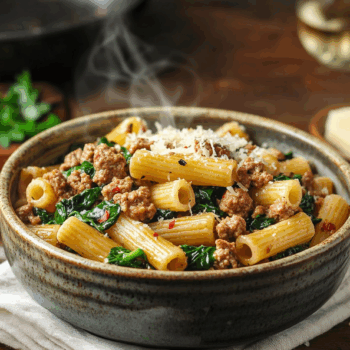
Lamb Mince and Spinach Florentine Pasta

Equipment
Ingredients
- 12 oz rigatoni - or any short pasta (like penne) durum wheat or bronze-cut preferred
 1 tbsp olive oil - extra virgin
 1 lb ground lamb (minced lamb) - ideally grass-fed
 1 cup yellow onion - about 1 medium onion ; finely diced
 3 cloves garlic - minced
 ½ tsp red pepper flakes - crushed ; optional, adjust for heat tolerance
 5 oz baby spinach - fresh
 1 cup heavy cream
 ½ cup Parmesan cheese - grated ; plus more for garnishing
 1 tsp kosher salt - plus more for pasta water
 ½ tsp ground black pepper - freshly ground
Instructions
- Bring a large pot of salted water to a rolling boil. Cook the pasta until al dente according to package instructions (usually 9–11 minutes). Drain and set aside, reserving 1/2 cup of the pasta water.
- Meanwhile, in a large skillet over medium-high heat, add olive oil. Once shimmering, add the lamb mince and cook for about 6–8 minutes, stirring occasionally until browned and caramelized.
- Add diced onion to the skillet and sauté until translucent and slightly golden, approximately 4 minutes. Stir in garlic and red pepper flakes, cooking for another 30 seconds until aromatic.
- Lower the heat to medium and add spinach. Sauté for 2–3 minutes until wilted. Pour in the heavy cream and bring to a gentle simmer.
- Stir in Parmesan, salt, and black pepper. Add the cooked pasta to the skillet and toss to coat thoroughly, adding reserved pasta water a little at a time to loosen the sauce if necessary.
Notes
- Substitute half-and-half for a lighter version, or Greek yogurt for added tang and protein.
- If lamb is unavailable, try ground beef, turkey, or plant-based mince for dietary preferences.
- For enhanced depth, add a splash of dry white wine after browning the meat and reduce before adding cream.
Nutrition
Common questions
Can I use a different pasta shape if I don’t have rigatoni?
Yes — any short, sturdy pasta works fine here. Penne, fusilli, or farfalle all hold the sauce reasonably well; just avoid thin pasta like spaghetti, which doesn’t trap the chunky lamb mixture the way a tube or spiral shape does.
How do I know the ground lamb is fully cooked?
Ground lamb should reach an internal temperature of 160°F (71°C) — the same as ground beef and pork. In practice, cook it until there’s no pink remaining and it has developed some brown color, which takes about 6–8 minutes over medium-high heat.
Can I use frozen spinach instead of fresh?
Frozen spinach works, but you need to thaw it completely and squeeze out as much water as possible before adding it to the skillet — otherwise it waters down the cream sauce. Use about 4 oz (half a standard 10 oz frozen block) to approximate the 5 oz of fresh.
What if I don’t have heavy cream — can I use something else?
Half-and-half is the easiest swap and produces a lighter but still cohesive sauce. Full-fat Greek yogurt stirred in off the heat also works and adds a slight tang; just make sure the pan is no longer boiling when you add it, or it will split.
More mince recipes to try
- Spicy Calabrian Lamb Ragù
- Lamb Spinach Curry Delight
- Creamy Beef Spinach Pasta
- Mediterranean Lamb Feta Pie