I love using lamb meat on my dumplings. Thus, I created a dumpling recipe influenced by Turkish cuisine. These Manti Turkish Homemade Lamb Dumplings may take some effort to make, but it’s all worth it!
What are Turkish Manti Dumplings?
Turkish mantis is a type of dumpling. A traditional version is made with lamb meat. The manti are usually served in a yogurt-based soup called tarator sauce, flavoured with crushed garlic and walnuts.
There are variations in the recipe. One common variation is to add ground beef or lamb to the dough, and another is to top them with poppy seeds and butter before baking.
Turkish Manti can also be made with beef, pork, or chicken meat instead of lamb for a different taste.
What is the difference between Manti and dumplings?
Both Manti and dumplings are circular, stuffed pastries made from flour.
Mantı is a type of dumpling that originates in Central Asia and the Middle East, while Chinese potstickers originate in Northern China. Mantis boiled or steamed with water before being fried to serve them crispy on the outside, while potstickers are usually boiled and then pan-fried.
Recipes for the dough – use different ingredients like potatoes, chickpeas, or spinach.
Manti is sometimes made without meat but filled with other ingredients like cheese, potatoes, or vegetables for vegetarian dishes.
Tips on how to serve traditional Manti dishes
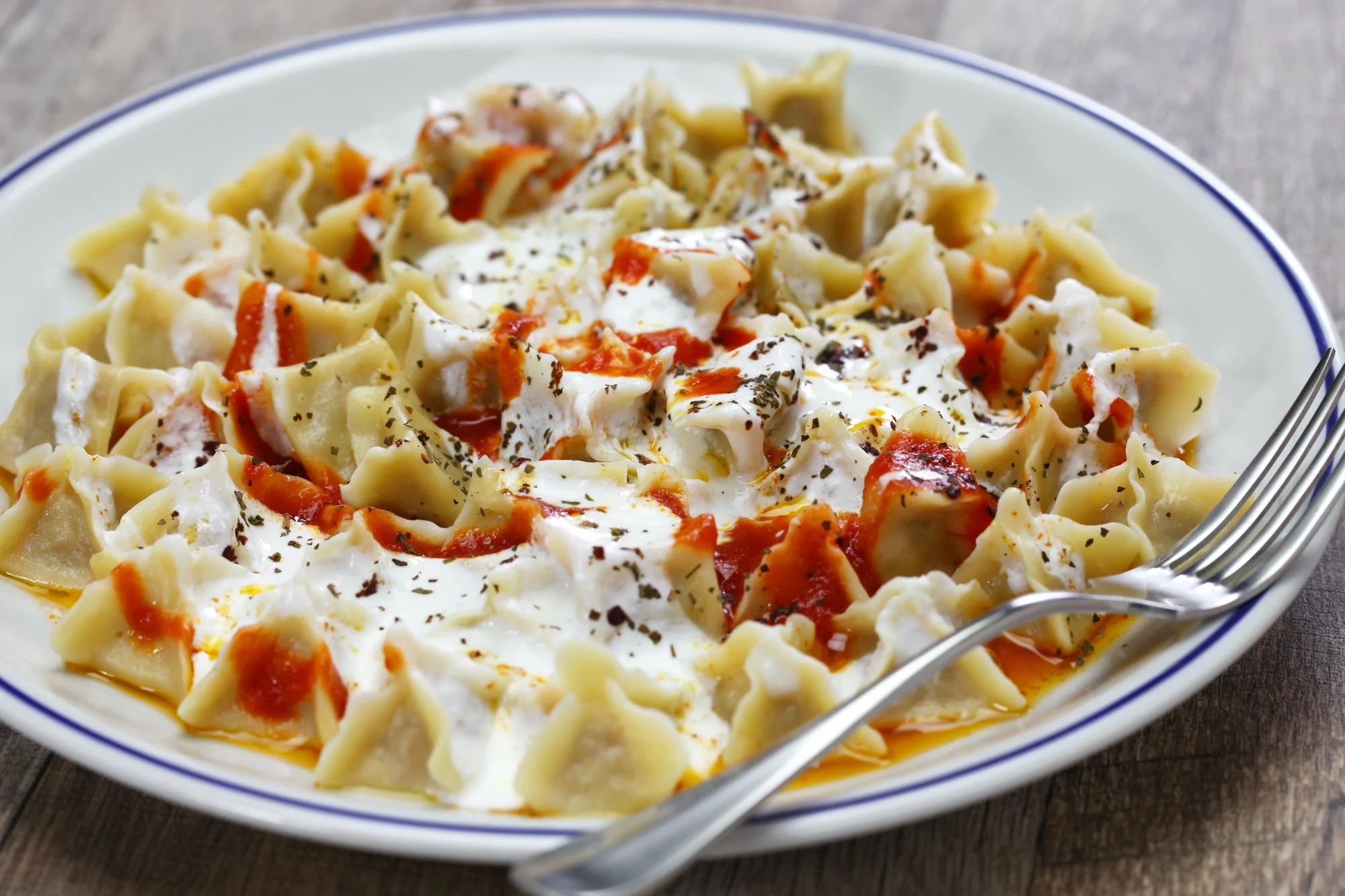
Mantı is often served with yogurt, garlic, and mint sauce in Turkey. In the United States, it is common to serve Mantı in a soup made from chicken stock or beef broth. Mantı can also be dipped into sauces like soy sauce, vinegar-based hot sauces, sweet chilli sauce, or tomato ketchup before being eaten.
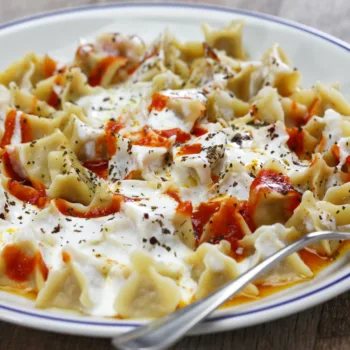
Manti Turkish Homemade Lamb Dumplings

Ingredients
Dumpling Ingredients
 2 cups all purpose flour (plain flour Australia and UK) - all-purpose
 1 egg - lightly beaten
 ½ teaspoon salt
 1 pound ground lamb (minced lamb)
 ⅓ cup parsley - finely chopped
 ½ cup yellow onion - diced
 1 teaspoon ground black pepper - adjust for taste
- 1 teaspoon salt - adjust for taste
Sauce Ingredients
 2 cups plain yogurt
 1 teaspoon garlic - minced
- 1 teaspoon chilli flakes - adjust for taste
- 1 teaspoon Sumac
 ½ cup mint - chopped fresh
Instructions
For Wrappers:
- Mix the flour and salt in a bowl.2 cups all purpose flour (plain flour Australia and UK), 1/2 teaspoon salt
- Add egg and water, mixing well using your hands.1 egg
- Add more water to soften the dough, if needed.
- Cover dough with a clean dish towel and set aside for 30 minutes.
For the Filling:
- Combine diced onion, raw ground beef or lamb, onion, parsley and salt.1 pound ground lamb (minced lamb), 1/3 cup parsley, 1/2 cup yellow onion, 1 teaspoon ground black pepper, 1 teaspoon salt
- Mix well and set aside the meat mixture.
- Divide dough into two pieces and lightly dust a work surface and dust rolling-pin with flour. Divide dough into 2 balls using half of the dough and the other half of dough covered in a bowl.
- Roll into a rectangle, rolling the dough thin.
- Cut into rolled dough into 2-inch squares with a knife.
- Spoon meat filling in the center of each square.
- Seal dumplings by gathering the edges of the dough and pinching them together at the top to form as if making won tons.
- Place each finished manti on a floured platter and sprinkle flour each time over the finished manti to prevent it from sticking.
- In a large pot, boil some water, then add a big pinch of salt. Gently drop manti into boiling water.
- The cooked manti will float when done to the surface when done, about 9 to 10 minutes, check the dumpling while cooking. Do not overcook the dumplings. Drain well. Spoon the dumplings on a plate adding the toppings mixture. Garnish with chopped mint.
For Toppings:
- Note: Do not burn the chili flakes.
- In a small saucepan, heat oil at a low heat and add red pepper flakes until they start to colour the oil.1 teaspoon chilli flakes
- When oil is a light red, remove from heat and set aside,
- Mix minced garlic into room temperature yogurt, add salt and a little water if yogurt is too thick.1 teaspoon garlic, 2 cups plain yogurt
- Serve dumplings warm with yogurt mixture sauce and red chili oil.
- Place dumplings on a platter transfer to plates. Add yogurt sauce over the manti (dumplings) and drizzle with the hot pepper oil and fresh chopped mint for garnish and sprinkle sumac(optional).1 teaspoon Sumac, ½ cup mint