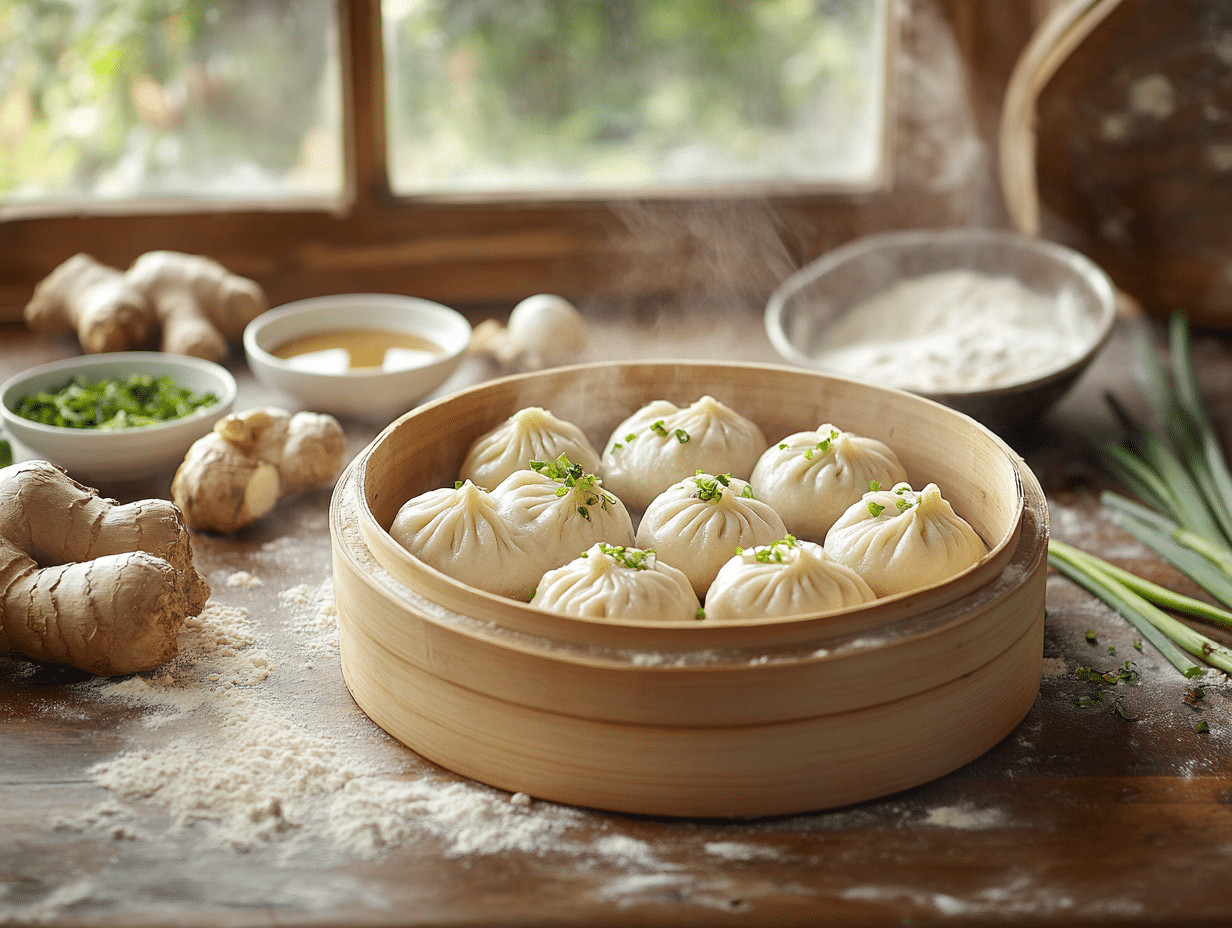
These are steamed buns filled with seasoned ground lamb, ginger, garlic, and spring onions — soft, portable, and genuinely filling. The dough takes about an hour to rise, but the hands-on time is short, and a batch of twelve buns reheats well all week. If you want a make-ahead lunch that isn’t a sandwich, this is a solid option.
Why this recipe works
Two things carry this recipe. First, the cornstarch in the filling holds moisture during steaming — without it, ground lamb can tighten up and turn grainy inside the bun. Second, the dough uses instant yeast with a full one-hour proof, which gives the buns enough structure to stay fluffy after steaming rather than collapsing into a dense shell. Shoulder lamb is specified for good reason: it has enough fat to stay juicy at the internal temperature needed to hit 160°F (71°C) for safe serving of ground lamb. Leaner cuts can dry out noticeably.
Mistakes to avoid
- Overfilling the buns. A heaped spoonful looks right but makes sealing nearly impossible. Use a level tablespoon of filling per bun — you get a cleaner pleat and no burst seams during steaming.
- Skipping the parchment under each bun. Buns placed directly on a bamboo or metal steamer rack will stick and tear when you try to lift them. Cut small squares of parchment, one per bun, before you start shaping.
- Lifting the lid too early. Opening the steamer in the first eight minutes causes the buns to deflate from the sudden temperature drop. Set a timer and leave it alone.
- Not chilling the filling before shaping. If the lamb mixture is warm or at room temperature, it spreads and makes pleating messy. Thirty minutes in the fridge firms it up and speeds assembly considerably — useful when you’re making a double batch.
- Using cold water in the dough. The recipe specifies lukewarm water at 30–35°C (86–95°F) for a reason. Cold water slows or kills the yeast, and the dough won’t double in an hour. Use a thermometer or test it on your wrist — it should feel just warm, not hot.
Keeping and reheating
Cooked buns keep in an airtight container in the fridge for up to four days. To reheat, steam them again for four to five minutes — this is the only method that restores the soft texture. A microwave works in a pinch: wrap each bun in a damp paper towel and heat for 45 seconds, but the skin turns slightly chewy rather than pillowy. For longer storage, freeze cooked buns in a single layer on a tray, then transfer to a zip-lock bag once solid; they keep well for up to two months. Reheat from frozen by steaming for eight to ten minutes with the lid on. Skip reheating in a dry pan — not worth the extra dish, and the dough dries out fast.
Minced Lamb and Ginger Baozi (Steamed Buns)

Ingredients
Baozi Dough
 2 cups all purpose flour (plain flour Australia and UK) - ensure it's fresh for the best dough texture
 1 tsp sugar - white granulated sugar
- 1 tsp instant yeast - ensure it’s fresh and active
 0.5 cup water - lukewarm, 30-35°C / 86-95°F
 2 tbsp vegetable oil - neutral-flavored oil like canola
Filling
 500 grams ground lamb (minced lamb) - preferably from the shoulder for a richer flavor
 1 tbsp ginger - fresh, finely grated
 3 cloves garlic - minced
 2 tbsp soy sauce - light soy sauce
 1 tsp sesame oil - adds a nutty fragrance
 3 sprigs spring onions - finely chopped
 1 tbsp cornstarch - helps bind the filling
 0.5 tsp white pepper - freshly ground for best flavor
Instructions
- Prepare the dough: In a large bowl, combine the flour, sugar, and yeast. Gradually add the lukewarm water and 1 tablespoon of vegetable oil, mixing to form a soft dough. Knead for about 5-10 minutes until smooth and elastic. Cover with a damp cloth and let rise in a warm place for 1 hour or until doubled in size.
- Prepare the filling: In a medium bowl, mix the minced lamb, ginger, garlic, soy sauce, sesame oil, spring onions, cornstarch, and white pepper. Stir until thoroughly combined and sticky. Let it marinate while the dough rises.
- Shape the baozi: Once the dough has risen, punch it down and divide into 12 equal pieces. Roll each piece into a ball and flatten into a disc with a slight thickness at the edges. Place a spoonful of filling in the center, then pleat and gather the edges to the center, sealing the top.
- Steam the baozi: Arrange the buns on parchment paper in a steamer. Cover and steam over boiling water for 10-15 minutes until the buns are fluffy and the filling is cooked through.
Notes
Nutrition
Your questions, answered
Can I make the dough the night before?
Yes — mix and knead the dough, then cover it tightly and refrigerate overnight instead of proofing at room temperature. Take it out 30 minutes before shaping to let it come up to temperature, then proceed with dividing and filling.
How do I know the lamb filling is cooked through?
Ground lamb needs to reach an internal temperature of 160°F (71°C). After 10–15 minutes of steaming, insert an instant-read thermometer through the base of one bun into the center of the filling to confirm — the bun is small enough that visual cues alone aren’t reliable.
Can I use a regular pot instead of a steamer?
A large pot with a tight-fitting lid and a heatproof rack or colander set above simmering water works fine. Make sure the water level stays below the rack and check it halfway through — it can boil off faster than a dedicated steamer.
Can I prepare and freeze the filled, uncooked buns?
Yes, and it’s one of the most practical ways to use this recipe. Shape and fill the buns, place them on a parchment-lined tray without touching, freeze until solid, then bag them. Steam directly from frozen for 18–20 minutes over boiling water.
What can I substitute if I don’t have sesame oil?
A small amount of toasted sesame seeds stirred into the filling gives some of the nutty flavor, though the result is less pronounced. If you have neither, the filling still works — the ginger, garlic, and soy sauce carry the flavor without it.
More mince recipes to try
- Savory Lamb Dumpling Delights
- Spiced Lamb Pumpkin Dumplings
- Crispy Pork Dumpling Delight
- Authentic Szechuan Dan Dan