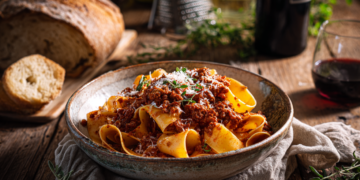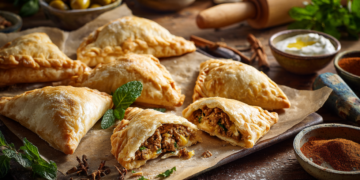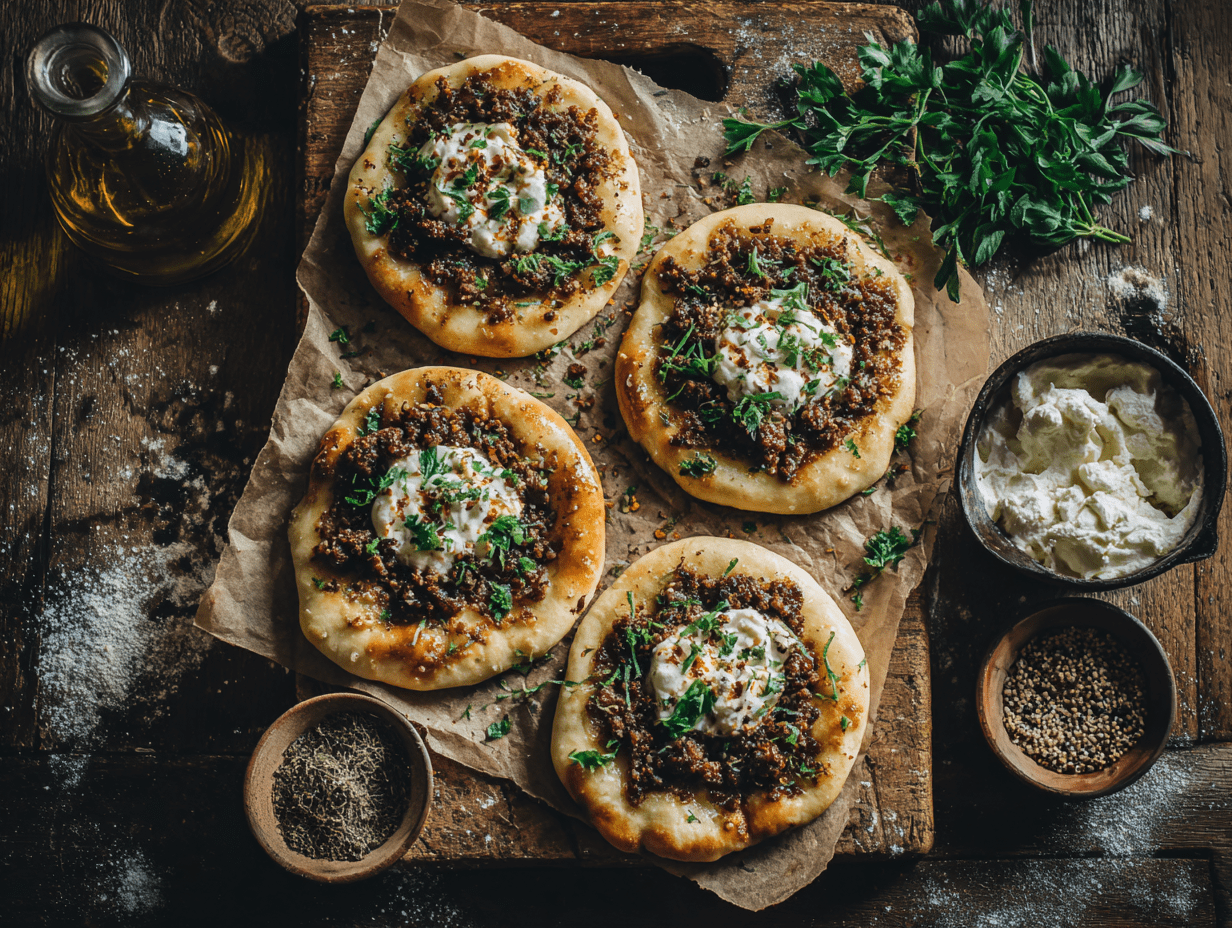
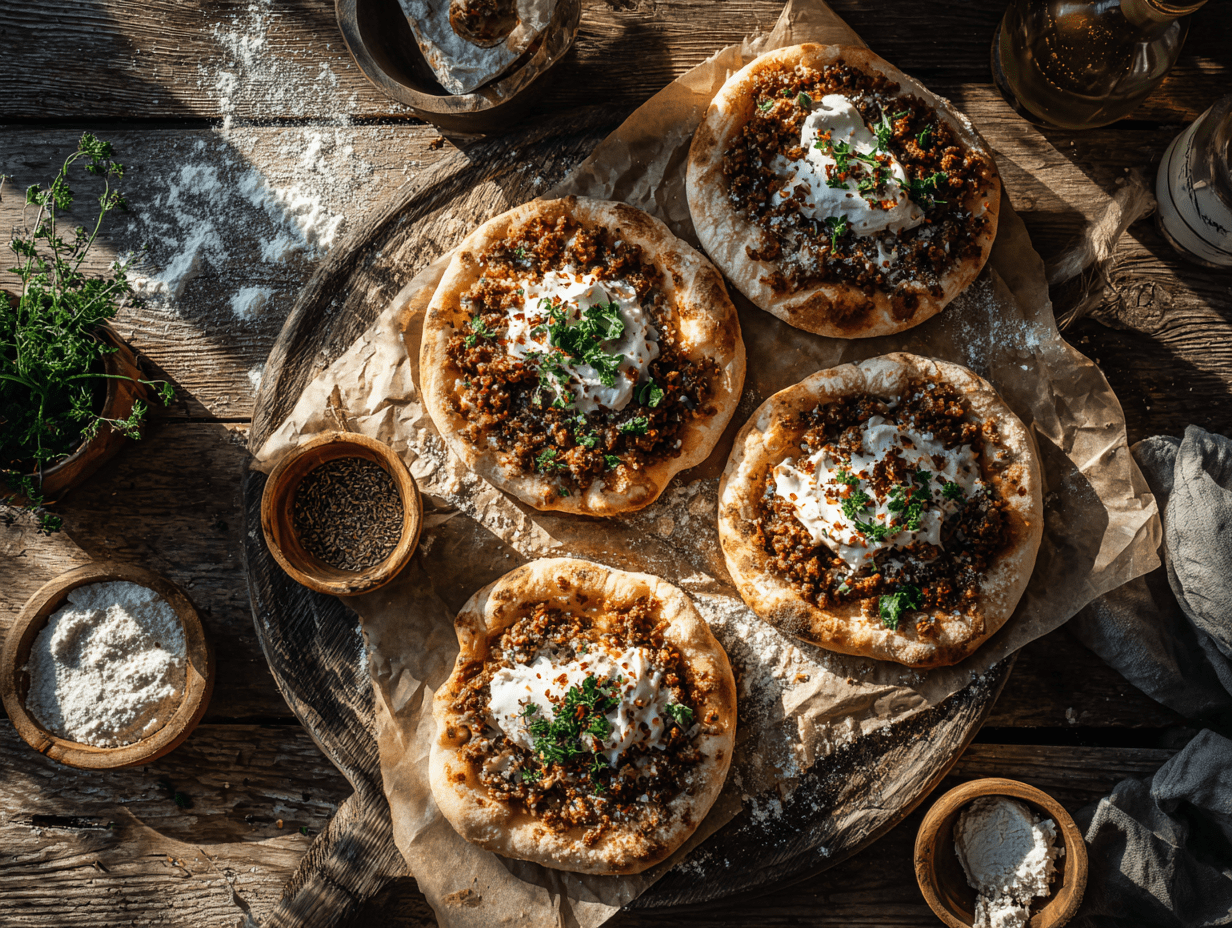
Italian Lamb Mince Pizzette are small, individual pizzas topped with seasoned ground lamb, ricotta, and herbs, baked on a yeast-risen dough at high heat. They work well for a casual dinner or a spread for guests because each one is self-contained and cooks fast. Ground lamb brings a richer, slightly gamey flavor than beef or pork, and it pairs well with fennel and oregano in a way that feels complete without much effort.
Why this recipe works
Two things make this recipe reliable. First, the dough gets a full hour to rise, which gives it enough structure to stay crisp under the toppings rather than turning soft and doughy. Second, the baking sheet or pizza stone is preheated before the pizzette go on it. That direct bottom heat is what cooks the base through quickly — without it, the dough steams from underneath and never crisps properly. The high oven temperature (450°F) also keeps the ground lamb from sitting in the oven long enough to dry out, so the meat stays moist even though it goes on raw or par-cooked.
About the ingredients
- Ground lamb: Look for it near the ground beef at most supermarkets. Grass-fed has a stronger flavor; grain-fed is milder. Either works here.
- Fennel seeds: These are whole dried seeds, not fennel bulb and not ground fennel powder. Find them in the spice aisle. A quick crush in a mortar or under a heavy pan releases more flavor before they go into the meat.
- Ricotta: Whole-milk ricotta spreads more smoothly and holds up better under heat than part-skim. Drain it briefly in a fine-mesh strainer if it looks watery — excess moisture is the main reason bases go soggy.
- Chili flakes: Marked optional in the recipe, and that’s fair — skip them if cooking for anyone heat-sensitive. They add a mild background warmth rather than real heat at the quantities used.
Mistakes to avoid
- Not draining the cooked lamb: Ground lamb releases more fat than most people expect. After browning, tip the meat into a fine-mesh strainer or spoon off the excess fat from the pan before assembling. Too much fat pooling on the pizzette makes the base greasy and the toppings slide.
- Spreading the ricotta too thick: A thin, even layer is enough — about a tablespoon per pizzette. A thick layer traps steam and stops the dough underneath from crisping.
- Overloading the toppings: Small dough rounds can only carry so much weight. Keep the lamb layer light. Piling it on looks generous but results in an undercooked center.
- Skipping the internal temperature check on the lamb: Ground lamb must reach 160°F (71°C). Because the pieces are small and the oven is hot, this usually happens quickly, but check with an instant-read thermometer the first time you make this — don’t rely on color alone.
- Letting the dough dry out during the rise: Cover the bowl tightly with plastic wrap or a damp towel. A dry skin on the dough surface makes it tear when you roll it out and gives the edges an uneven texture after baking.
Make-ahead notes
The dough can be made the night before and left to rise slowly in the fridge, covered tightly — take it out 30 minutes before shaping so it relaxes enough to roll. The cooked lamb mixture keeps well in an airtight container in the fridge for up to two days; reheat it gently in a pan over medium-low heat before assembling so it goes onto the dough warm rather than cold, which helps it heat through evenly in the oven. Skip the garnish — not worth the extra dish — and focus make-ahead effort on the lamb and dough. Assembled, unbaked pizzette do not freeze well because the ricotta weeps on thawing, but the baked and cooled pizzette can be frozen for up to one month and reheated directly from frozen in a 375°F oven for about 10 minutes.
Italian Lamb Mince Pizzette

Equipment

Ingredients
For the Dough:
 2 cups all purpose flour (plain flour Australia and UK) - plus extra for dusting
- 1 teaspoon yeast - (active dry yeast)
 0.5 teaspoon sugar
 0.75 cup water - (warm) about 110°F (43°C)
 1 tablespoon olive oil - extra-virgin
 0.5 teaspoon salt
For the Topping:
- 1 tablespoon olive oil
 1 small yellow onion - finely diced
 2 cloves garlic - minced
 8 oz ground lamb - preferably grass-fed
 1 teaspoon dried oregano
 1 teaspoon fennel seeds - lightly crushed
 0.25 teaspoon chili flakes - optional, for heat
- 0.25 teaspoon salt - to taste
 0.5 cup ricotta cheese - whole-milk recommended
 2 tablespoons parsley - fresh, chopped
Instructions
- Prepare the Dough: In a bowl, combine the warm water, sugar, and yeast. Let sit for 5–10 minutes until foamy. Stir in the olive oil, flour, and salt. Knead until smooth (about 8 minutes). Cover and let rise in a warm, draft-free area for 1 hour or until doubled in size.
- Sauté the Lamb Mixture: Heat 1 tablespoon olive oil in a skillet over medium heat (350°F/175°C). Sauté the onion until translucent (about 3 minutes), then add garlic and cook another minute. Add lamb, breaking it up with a spoon, and cook until browned with no pink (about 6–8 minutes). Stir in oregano, fennel seeds, chili flakes, and salt. Cook for 2 more minutes and set aside.
- Preheat Oven: Set oven to 450°F (230°C) and heat a baking sheet or pizza stone inside.
- Assemble the Pizzette: Divide dough into 4 pieces. Roll each into a 5-6 inch round on floured surface. Transfer to parchment. Spread a spoonful of ricotta over each base, then top with a portion of the lamb mixture. Transfer paper and pizzette to preheated sheet or stone.
- Bake: Cook pizzettes for 10–12 minutes, or until edges are golden brown and crust cooked through. Remove and rest slightly before garnishing with chopped parsley.
Notes
- Add sun-dried tomatoes or olives for added umami.
- The dough can be made the night before and kept refrigerated after its first rise.
- Replace lamb with finely chopped mushrooms for a vegetarian version.
Nutrition
FAQ
Can I use store-bought pizza dough instead of making my own?
Yes, store-bought dough works fine here. Let it come to room temperature for at least 30 minutes before rolling — cold dough springs back and is hard to shape into even rounds.
How do I know when the ground lamb is fully cooked on the pizzette?
Use an instant-read thermometer and check that the lamb reaches 160°F (71°C) — that is the safe internal temperature for all ground lamb. The meat will also lose its pink color and the juices will run clear, but temperature is the only reliable check.
My dough didn’t rise much. What went wrong?
The most common cause is water that was too hot when it was added to the yeast — above about 110°F (43°C) kills the yeast before it can activate. Use warm water that feels comfortable on your wrist, not hot, and give the yeast 5 minutes to foam before mixing in the flour.
What to cook next
- Spicy Calabrian Lamb Ragù
- Levantine Lamb Za’atar Flatbread
- Gourmet Lamb Sausage Rolls
- Savory Lebanese Lamb Pastries