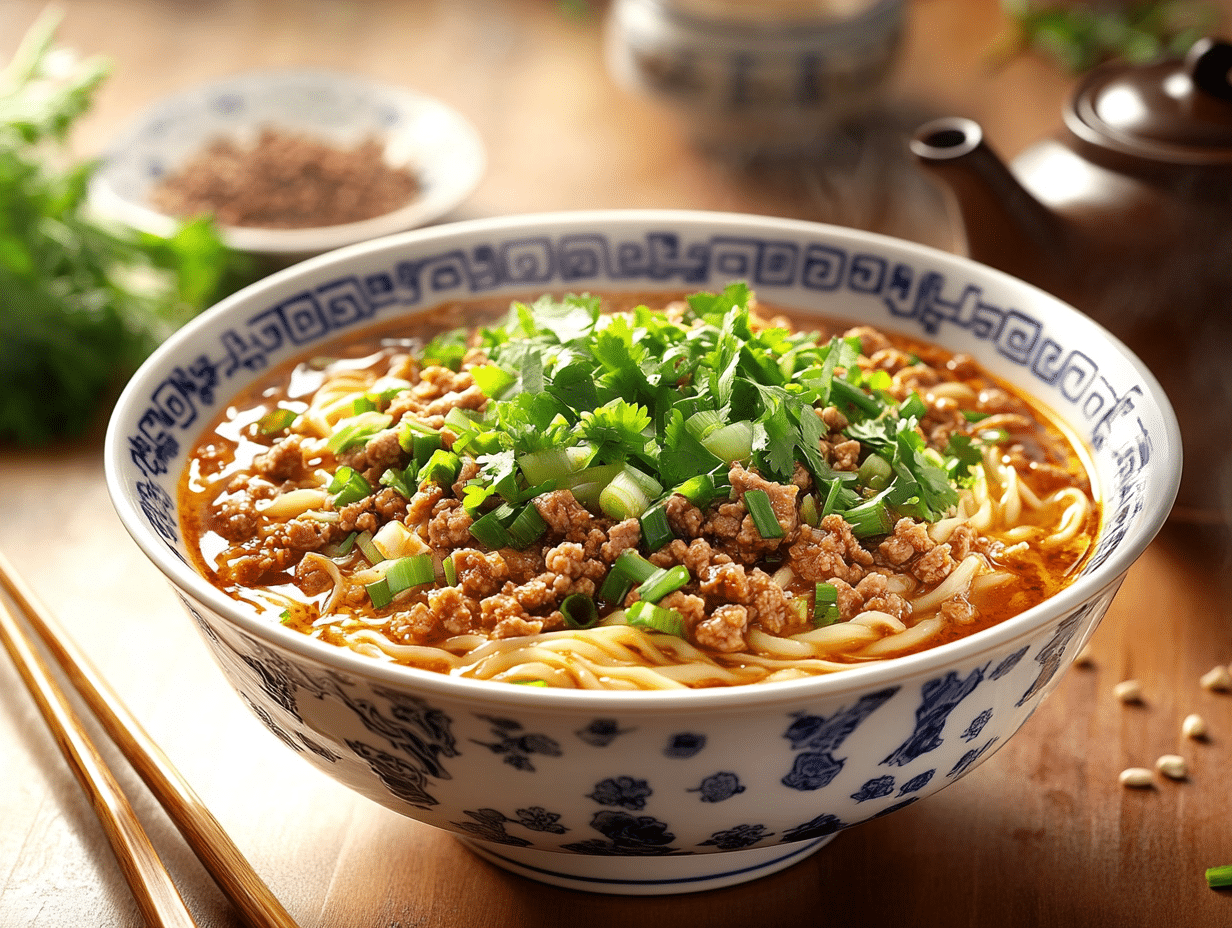
This is a bowl of wheat noodles topped with spiced ground lamb and a sauce built from peanut butter, soy, black vinegar, and Szechuan pepper oil — bold, a little funky, and genuinely filling. The whole thing comes together in 35 minutes, and the sauce does most of the heavy lifting on flavor. If you’ve never cooked with ground lamb before, this is a good place to start.
Before you start
The two things that actually matter here are browning the lamb properly and keeping the sauce moving. Ground lamb releases a fair amount of fat as it cooks — don’t drain it all away, but do tip out any obvious excess pooling in the pan before you add the doubanjiang, or the sauce will be greasy rather than rich. For the sauce, whisk it constantly over medium heat from the moment you add the cornstarch. If you walk away, it seizes into lumps at the bottom of the pan. Thirty seconds of steady whisking is all it takes to get a smooth, glossy result. Also check your lamb hits 160°F (71°C) before you pull it off the heat — a cheap instant-read thermometer takes the guesswork out completely.
Smart swaps
- Doubanjiang: This fermented broad bean paste is the backbone of the dish’s depth and heat. Don’t skip it or replace it with regular chili paste — the fermented flavor is genuinely different. Find it at any Asian grocery store or online. It keeps in the fridge for months.
- Chinese black vinegar: Rice wine vinegar works in a pinch, but use slightly less — it’s sharper and thinner. Black vinegar has a mild, almost malty edge that rice vinegar doesn’t quite replicate.
- Szechuan pepper oil: If you can’t find it, a small drizzle of chili oil plus a pinch of ground Szechuan peppercorns gets you close. The numbing tingle won’t be as pronounced, but the dish is still good.
- Ground lamb: Ground pork is the traditional choice and works perfectly here if lamb isn’t available or is outside your budget. The sauce flavors are strong enough to carry either protein.
- Wheat noodles: Any medium-thickness dried wheat noodle works. Udon is too thick; thin rice noodles won’t hold the sauce the same way. Spaghetti is a reasonable emergency substitute.
Mistakes to avoid
- Crowding the pan with the lamb: If you add all 500g at once to a small pan, it steams instead of browns. Work in two batches if your pan is under 28cm (11 inches). Browning builds flavor; grey steamed meat doesn’t.
- Adding doubanjiang to wet lamb: If there’s still liquid in the pan when you add the paste, it splatters and the paste doesn’t fry properly. Let any moisture cook off first — you want a fairly dry, browned mince before the paste goes in.
- Letting the noodles sit too long after draining: Rinsed noodles clump fast. Have your sauce warm and your lamb ready before you cook the noodles, so assembly happens immediately after draining.
- Under-seasoning before tasting: Doubanjiang and soy sauce vary in saltiness by brand. Taste the finished sauce before you pour it over the noodles and adjust with a small splash more soy or vinegar if it needs it.
- Skipping the cold water rinse on the noodles: It’s not optional here. The rinse stops the cooking and removes surface starch that would make the noodles gummy and cause them to soak up the sauce unevenly.
Storage and reheating
Store leftovers with the noodles and lamb separate from the sauce if you can manage it — combined, the noodles absorb the sauce overnight and the texture suffers. In practice, mixed leftovers still reheat fine; just add a splash of chicken stock or water when reheating to loosen things up. Everything keeps in the fridge for up to 3 days in airtight containers. Reheat in a saucepan over medium-low heat, stirring regularly, until the lamb is steaming hot throughout — ground lamb reheated in the microwave tends to go rubbery, so the stovetop is worth the extra two minutes. The lamb mince on its own freezes well for up to 2 months; the peanut sauce does not freeze cleanly and is better made fresh, which only takes about 5 minutes anyway. Skip freezing the assembled bowl — it’s not worth it.
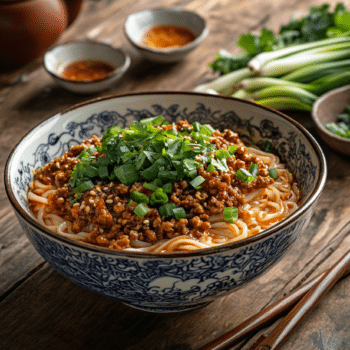
Spicy Lamb Mince Dan Dan Noodles

Ingredients
Noodles and Sauce
- 300 grams dried wheat noodles - preferably fresh noodles for authenticity
 100 ml chicken stock (chicken broth or chicken bouillon) - hot, use free-range low-sodium for depth of flavor
 2 tablespoons soy sauce - light soy sauce preferred
- 2 tablespoons Chinese black vinegar - adds the quintessential sharpness
- 2 tablespoons peanut butter - smooth, for a creamier texture
 1 tablespoon cornstarch - helps thicken the sauce
- 1 tablespoon Szechuan pepper oil - for authentic tingling warmth
Lamb Mince
 500 grams ground lamb (minced lamb) - choose ground lamb with a bit of fat for richness
 2 cloves garlic - minced finely
 1 inch ginger - fresh, peeled and finely grated
- 2 tablespoons doubanjiang (fermented broad bean paste) - adds authentic umami and spice
 2 tablespoons vegetable oil - or peanut oil
Garnish
 3 stalks spring onions - finely sliced
 1 tablespoon sesame seeds - toasted
 1 handful cilantro (coriander) - fresh leaves, for a burst of fresh flavor
Instructions
- Noodles and Sauce Cook the dried wheat noodles in boiling water according to package instructions until just al dente, about 5-7 minutes. Drain and rinse under cold water to stop the cooking process. Set aside.
- In a small saucepan, combine chicken broth, soy sauce, black vinegar, peanut butter, and cornstarch over medium heat. Whisk continuously until the peanut butter melts and the mixture thickens slightly, approximately 3-4 minutes. Reduce the heat and add Szechuan pepper oil. Keep warm.
- Lamb MinceHeat vegetable oil in a large skillet over medium-high heat. Add the minced garlic and ginger, sautéing until fragrant for about 30 seconds.
- Increase heat to high and add the lamb mince; cook until browned and crispy, breaking it up as it cooks, roughly 6-8 minutes. Stir in the doubanjiang and continue to cook for 2 additional minutes, ensuring the paste infuses into the meat.
- Combining and Serving Toss the noodles in the warm sauce, ensuring every strand is coated. Divide the sauced noodles into bowls and top generously with the spicy lamb mixture.
- Garnish each bowl with a sprinkle of spring onions, toasted sesame seeds, and fresh coriander leaves.
Notes
Nutrition
Your questions, answered
Can I use ground beef instead of ground lamb?
Yes, ground beef works fine. Use an 80/20 blend for enough fat to keep the meat juicy — leaner beef tends to go dry with the high heat needed to brown it properly. The flavor will be milder than lamb, so you may want to add an extra half-tablespoon of doubanjiang to compensate.
How do I know when the ground lamb is fully cooked?
Ground lamb is safe to eat at an internal temperature of 160°F (71°C). Visually, it should be fully browned with no pink remaining and any juices running clear — but a thermometer is the only reliable check, especially for beginners.
My sauce turned out lumpy. What went wrong?
Cornstarch lumps form when it hits heat unevenly or isn’t whisked continuously. If it happens, take the pan off the heat and whisk hard — small lumps often smooth out. If not, push the sauce through a fine sieve and return it to the pan.
Is doubanjiang very spicy? I’m sensitive to heat.
It has a moderate heat level, but the bigger flavor contribution is salty, savory depth rather than pure fire. Start with one tablespoon instead of two, taste the finished lamb mixture, and add more only if you want it hotter.
Can I make any part of this ahead of time?
The lamb mince can be cooked up to 2 days ahead and refrigerated — reheat it in a pan with a splash of water before serving. The sauce can also be made a day ahead and stored in the fridge; rewarm it gently and whisk to recombine before using. Cook the noodles fresh.
What if I can’t find Szechuan pepper oil?
Use a teaspoon of regular chili oil plus a small pinch of ground Szechuan peppercorns if you can find them, or just use chili oil alone. The dish loses some of the characteristic numbing tingle but is still a solid bowl of spicy noodles.
If you liked this one
- Authentic Szechuan Dan Dan with pork mince
- Savory Pork Noodle Stir-Fry
- Quick Lamb Coconut Rendang
- Fragrant Lamb Coconut Stew