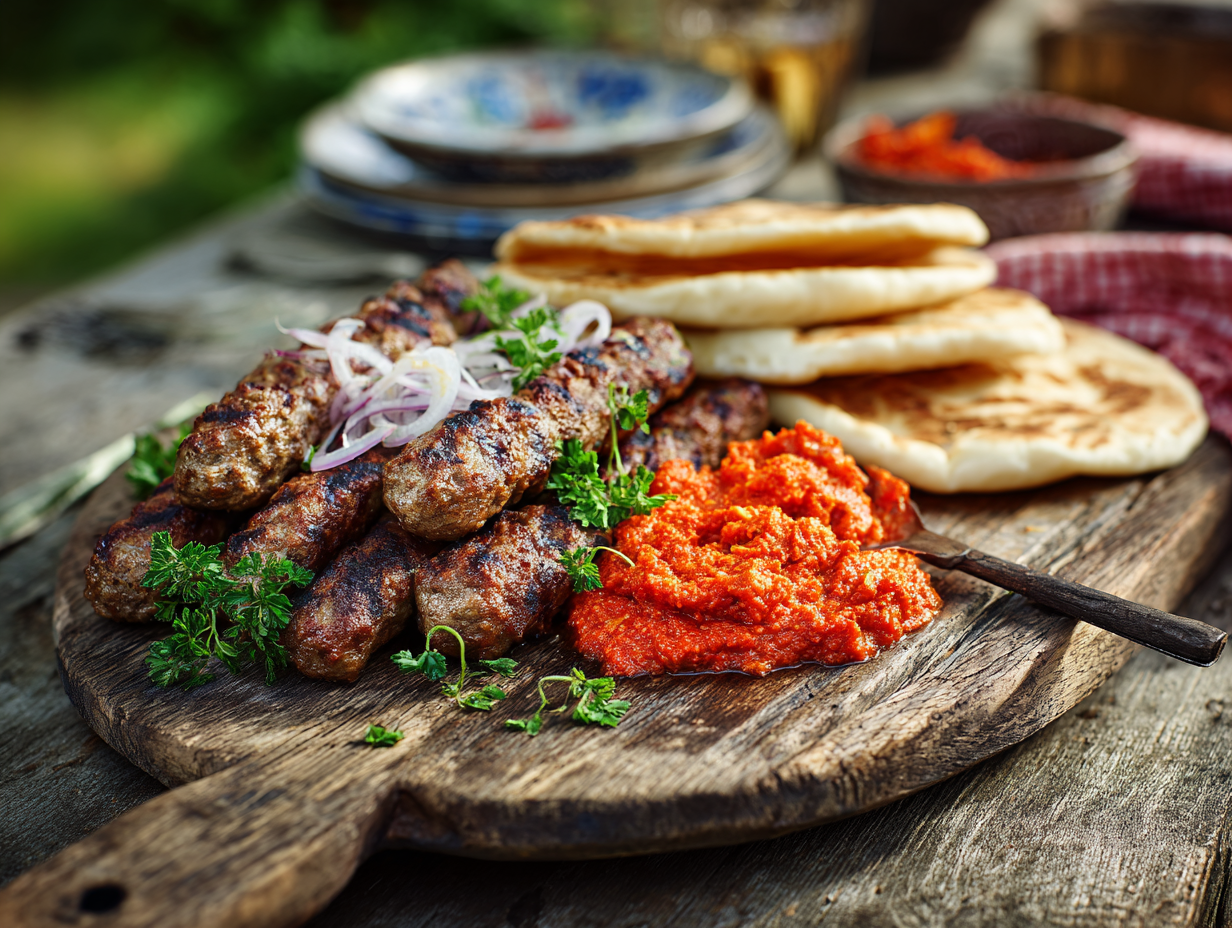
Ćevapi are small, finger-shaped ground lamb sausages grilled without a casing — seasoned simply, cooked fast, and served with ajvar, a roasted red pepper and eggplant relish. This recipe leans on lamb for its fat content and flavor, which keeps the sausages juicy over high heat. If you want a hands-on dinner that also stocks your fridge for the week, this is a solid choice.
Before you start
The two things that actually matter here are fat content and mixing. Ground lamb needs enough fat — aim for 80/20 — because lean lamb will produce dry, crumbly cevapi that fall apart on the grill. On mixing: work the meat mixture longer than feels comfortable, a full 3–4 minutes by hand or 90 seconds in a stand mixer. This develops the myosin proteins in the meat, which binds the sausages without any casing or egg. Skip this step and your cevapi will crack and break when you flip them. The baking soda in the recipe is not optional — it raises the pH slightly, which keeps the interior tender even at the 160°F (71°C) internal temperature required for safe serving of ground lamb.
Mistakes to avoid
- Shaping them too thick: Cevapi thicker than about ¾ inch take much longer to cook through, and the outside chars before the center hits 160°F (71°C). Keep them uniform — roughly the size of your index finger — so they cook evenly and quickly.
- Skipping the rest before grilling: After shaping, refrigerate the cevapi for at least 30 minutes uncovered. This firms them up and helps them hold their shape on the grill. Going straight from mixing bowl to hot grates is the main reason they fall apart.
- Using a cold grill or pan: Cevapi need immediate, high heat to sear the outside and hold their form. A lukewarm surface causes sticking and steaming instead of charring. Get the grill or cast iron properly hot before the meat goes on.
- Pressing them while they cook: It feels instinctive to press sausages flat, but pressing squeezes out the fat and moisture you need. Leave them alone after placing, and only turn them once or twice total.
- Making the ajvar too wet: If your roasted peppers release a lot of liquid after peeling, drain them in a colander for 10–15 minutes before processing. Watery ajvar won’t thicken properly during cooking and will make the flatbread soggy — skip the garnish of extra raw pepper on the plate, not worth the extra dish.
Leftovers and meal prep
Cooked cevapi keep well in an airtight container in the fridge for up to 4 days. Reheat them in a dry skillet over medium heat for 3–4 minutes, turning once — the microwave works but softens the exterior. For freezing, lay the uncooked, shaped cevapi on a parchment-lined tray, freeze solid (about 2 hours), then transfer to a zip bag; they keep for up to 3 months and can go straight from frozen onto a hot grill with an extra 3–4 minutes of cook time. Ajvar freezes equally well in small containers for up to 3 months. If you’re prepping ahead, the raw meat mixture can be made and refrigerated up to 24 hours before shaping — the flavor actually improves — but don’t shape them more than 12 hours in advance or the surface dries out.
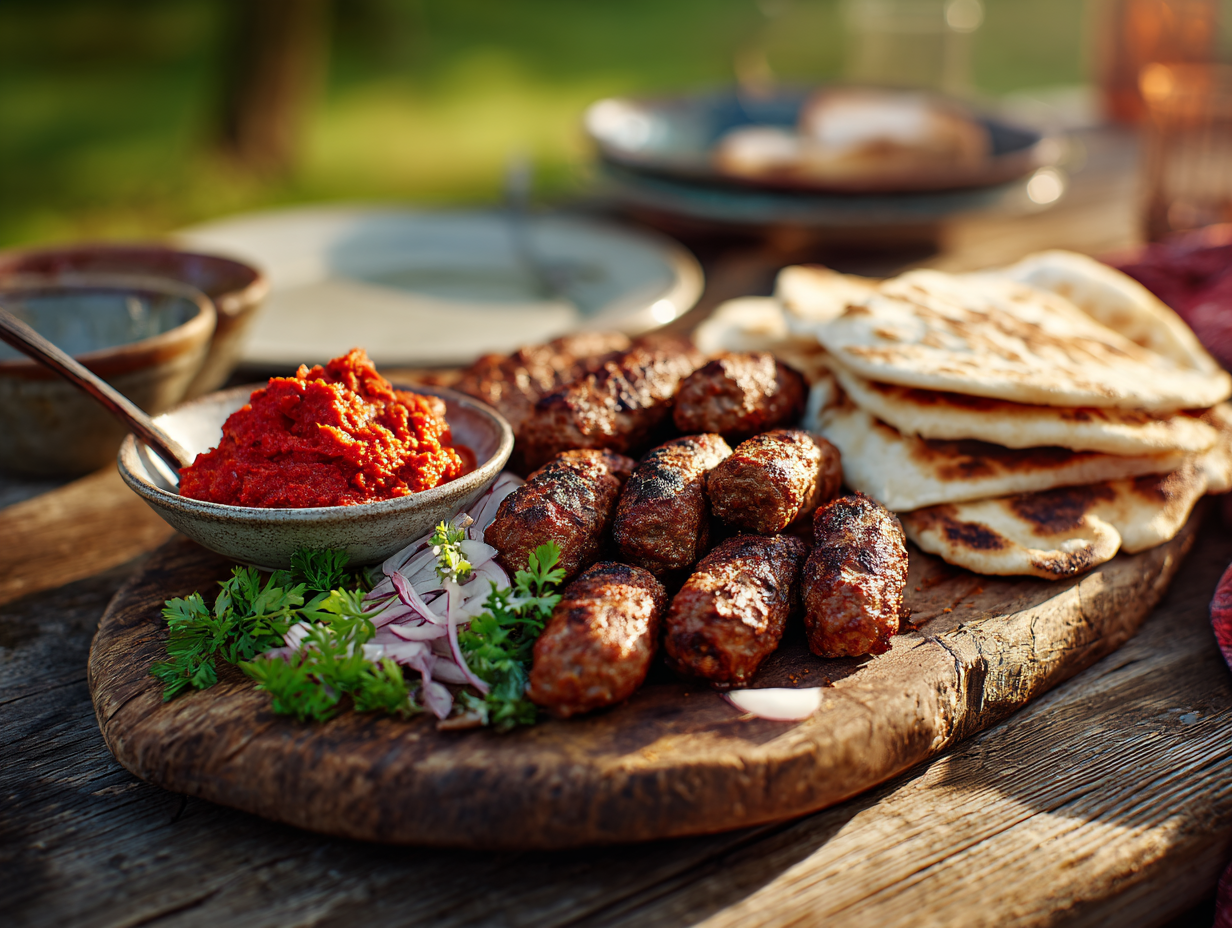
Minced Lamb Cevapi with Ajvar

Equipment

Ingredients
For the Cevapi
 1 pound ground lamb (minced lamb) - Ideally 80/20 fat ratio for flavor and juiciness
 ½ pound ground beef (minced beef) - Adds structure to the lamb
 4 cloves garlic - minced finely
 1 teaspoon baking soda - enhances the sausage texture
 1 teaspoon kosher salt
 ½ teaspoon ground black pepper - freshly cracked
- ½ teaspoon sweet paprika - Hungarian preferred
- 2 tablespoons sparkling water - keeps cevapi tender
For the Ajvar
 2 large red pepper (red capsicum) - roasted and peeled
 1 medium eggplant - roasted and peeled
- 2 cloves garlic - roasted or raw depending on flavor preference
- 3 tablespoons extra virgin olive oil - high quality
 1 tablespoon red wine vinegar
- ½ teaspoon kosher salt - or to taste
Instructions
- In a mixing bowl, combine ground lamb, beef, minced garlic, baking soda, salt, pepper, paprika, and sparkling water. Mix until sticky and well-blended. This activates the proteins for proper binding.
- With oiled hands, roll the mixture into small sausage shapes about 3 to 4 inches long and 1 inch thick. Place on a tray, cover, and refrigerate for at least 30 minutes to firm up the shape and develop flavor.
- Meanwhile, preheat oven to 450°F (232°C). Wrap the red bell peppers and eggplant in foil and roast on a sheet tray for 25 minutes, or until skin is charred and flesh is tender. Flip once halfway through.
- Once roasted, place the vegetables in a covered bowl or bag and steam for 10 minutes. Peel off skins and remove stems/seeds. In a food processor, blend peeled vegetables with garlic, olive oil, vinegar, and salt until smooth but with a slight texture.
- Heat a grill or grill pan over medium-high heat. Lightly oil the surface. Grill the cevapi for about 4–5 minutes per side or until nicely charred and cooked through (internal temp should reach 160°F/71°C).
- Serve the hot cevapi over flatbreads with a generous dollop of ajvar and sliced raw onions. Fresh parsley or mint can provide an extra aromatic finish.
Notes
- For a smokier flavor, grill the vegetables over open flame rather than roasting in the oven.
- Ajvar can be made up to 3 days in advance and kept refrigerated in an airtight container.
- To make this dish dairy-free and gluten-free, ensure flatbreads are compliant or replace with lettuce wraps.
Nutrition
Frequently asked questions
Can I use ground beef instead of lamb?
Yes — an 80/20 ground beef works fine and produces a milder flavor. Many traditional recipes use a mix of beef and lamb, so a 50/50 split is a good middle ground if you want some of the lamb character without the full intensity.
Do I need a grill, or can I cook these indoors?
A cast iron skillet or grill pan on high heat works well indoors. You won’t get quite the same char as an open flame, but the result is still good — cook in batches so the pan stays hot and the cevapi sear rather than steam.
Can I buy ajvar instead of making it from scratch?
Absolutely — jarred ajvar is sold in most European delis, international grocery stores, and online, and the quality is generally good. Look for ‘mild’ or ‘hot’ depending on your preference; the mild version is closer to what’s served alongside cevapi traditionally.
How do I know when the cevapi are fully cooked?
Ground lamb must reach an internal temperature of 160°F (71°C) — use an instant-read thermometer inserted into the end of a sausage. Visually, the juices should run clear and there should be no pink in the center when you cut one open.
Why did my cevapi fall apart on the grill?
The most likely cause is under-mixing the meat or skipping the refrigerator rest before grilling. Make sure you mix the seasoned meat for a full 3–4 minutes and chill the shaped sausages for at least 30 minutes before they hit the heat.
What bread works if I can’t find lepinja or somun?
Pita bread is the easiest substitute and holds up well. A soft flatbread or even a split dinner roll works too — the main thing is a bread that’s soft enough to wrap around the sausages without cracking.
What to cook next
- Pistachio Lamb Kebab Perfection
- Fiery Lamb Churrasco Patties
- Levantine Lamb Za’atar Flatbread
- Savory Stuffed Onion Dolma