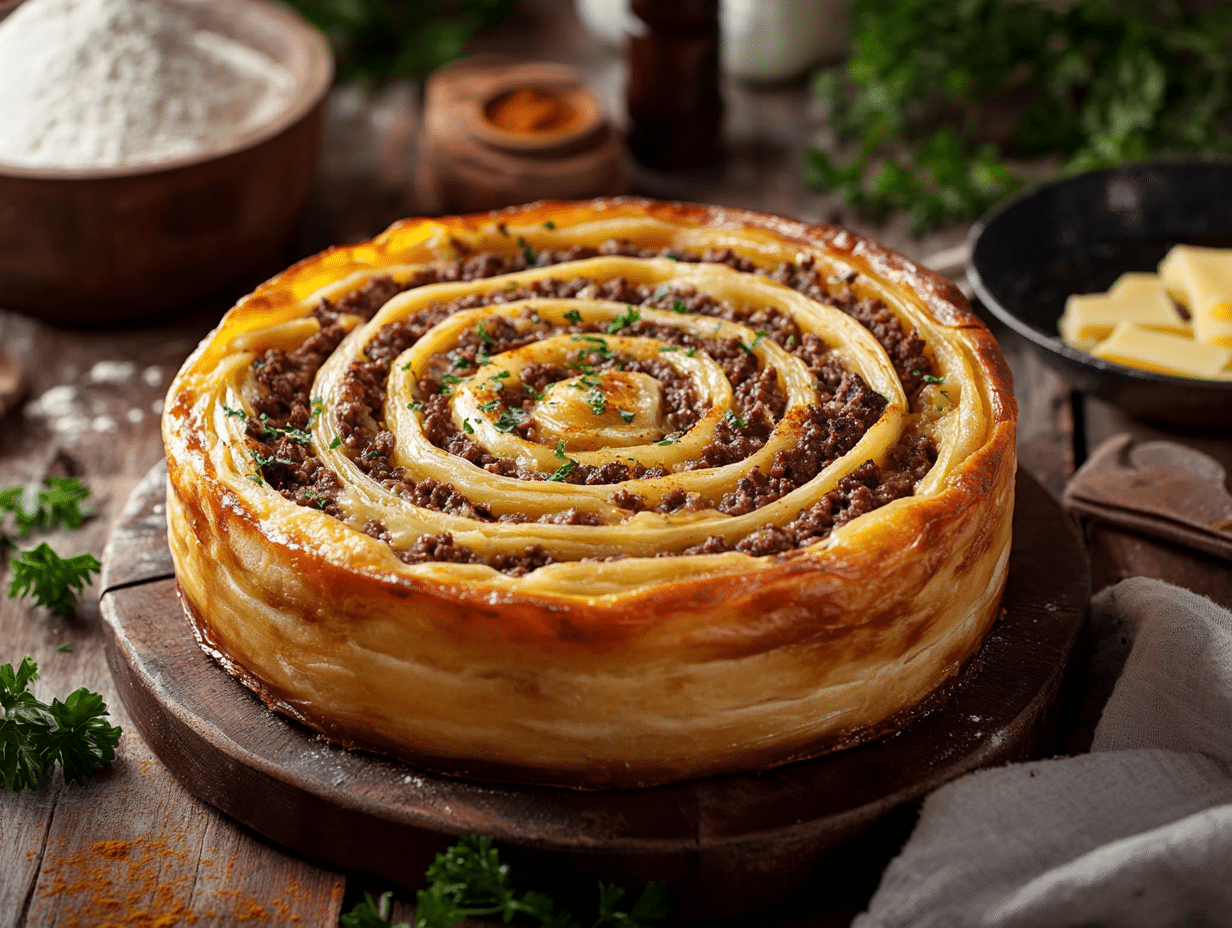
This is a yeasted dough rolled around a cumin-and-paprika beef filling, topped with cheddar, then baked into a golden log you slice at the table. It takes about 1 hour 40 minutes start to finish, but most of that is hands-off rise time — the active work is under 30 minutes. If you want a proper baked dinner that looks like effort without being effort, this is a solid weeknight option.
The technique that matters
Two things decide whether this works. First, drain the cooked beef well before it goes on the dough. Ground beef at 500g releases a surprising amount of liquid as it browns; if you skip draining, that moisture soaks into the dough during baking and you get a gummy layer instead of a cooked-through crumb. Tip the beef into a fine-mesh sieve or just tilt the pan and spoon off the fat. Second, roll the dough tight and pinch the seam firmly. A loose roll lets the filling slide out at the ends and the log can split open in the oven. Press the seam against the parchment paper so the weight of the log holds it closed while it bakes.
Troubleshooting
- Dough didn’t rise: Your milk was probably too hot and killed the yeast. Warm milk should feel comfortable on your wrist — not hot. If the dough is still flat after an hour, the yeast is dead and the batch needs to be restarted.
- Cheese leaking out the ends: You spread the filling too close to the edges. Leave a 2cm (¾ inch) border on all sides before rolling. Any cheese that escapes will just burn on the parchment.
- Filling tastes bland after baking: Season the beef mixture with salt before it goes on the dough. The dough itself is lightly salted but it won’t carry the filling — the filling has to stand on its own.
- Bottom of the log is pale and doughy: Your oven rack was too high. Move it to the lower-middle position so the base gets direct heat. A preheated baking sheet under the parchment also helps.
- Log splits along the top during baking: The dough was rolled too thin in the middle. Aim for an even thickness across the whole rectangle — about 5mm (¼ inch) — before adding the filling.
Keeping and reheating
Leftovers keep in an airtight container in the fridge for up to 3 days. To reheat, place slices on a baking sheet and warm at 180°C (350°F) for 10–12 minutes — this brings the crust back to life in a way the microwave won’t. The microwave works in a pinch but the dough goes soft; cover the slice with a damp paper towel and heat in 30-second bursts. For freezing, wrap individual slices tightly in plastic wrap, then foil, and freeze for up to 2 months. Thaw overnight in the fridge before reheating in the oven. Skip the garnish of sesame or nigella seeds if you’re reheating from frozen — they soften and add nothing after a freeze-thaw cycle.
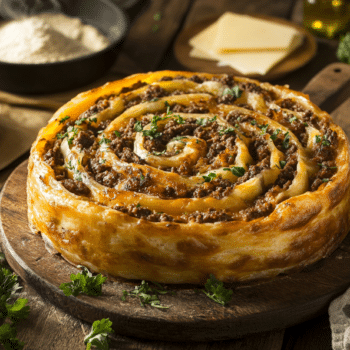
Beef Mince and Cheese Chimney Cake

Ingredients
Dough
 2 cups all purpose flour (plain flour Australia and UK) - organic preferred
 1 tbsp sugar - fine granulated
- 2 tsp dry yeast
 ½ tsp salt - sea salt
 ¾ cup milk - warm, around 37°C (99°F)
 3 tbsp butter - melted
Filling
 1 tbsp olive oil - extra virgin
 1 cup onion - finely chopped
 500 grams ground beef (minced beef) - preferably grass-fed
 1 tsp cumin
 1 tsp paprika - Hungarian preferred
 1 cup cheddar cheese - grated
Instructions
- In a large mixing bowl, combine the flour, sugar, yeast, and salt. Gradually add the warm milk and melted butter, mixing until a smooth dough forms. Knead for about 10 minutes until elastic. Cover and let rise in a warm place for about 1 hour, or until doubled in size.
- For the filling, heat olive oil in a skillet over medium heat. Add onions and sauté until translucent and aromatic, approximately 5 minutes.
- Add the beef mince, cooking and breaking it up with a spatula. Stir in cumin and paprika, cooking until the beef is browned and infused with spices, around 10 minutes.
- Preheat the oven to 200°C (392°F). Roll out the risen dough on a floured surface into a large rectangle.
- Spread the cooked beef mixture over the dough, sprinkle with grated cheese, and roll the dough into a log, pinching the seams to seal.
- Place the log on a baking sheet lined with parchment paper and bake for 25-30 minutes or until the dough is golden brown and sounds hollow when tapped.
Notes
Nutrition
Frequently asked questions
Can I make the dough the night before to save time?
Yes — after kneading, cover the dough tightly and refrigerate it overnight instead of doing the room-temperature rise. Take it out 30 minutes before you want to roll it so it relaxes enough to stretch without springing back.
How do I know the beef is fully cooked inside the log?
The beef is cooked on the stovetop before it goes into the dough, so it reaches safe temperature (160°F / 71°C) during that step — not during baking. Make sure it’s fully browned with no pink remaining before you spread it on the dough.
My dough is sticky and hard to roll — what do I do?
Flour your surface and the top of the dough generously, and use a floured rolling pin. If it keeps sticking, let it rest uncovered for 5 minutes — the gluten will relax and it’ll roll out much more easily.
Can I use pre-shredded bagged cheddar instead of grating my own?
You can, but pre-shredded cheese is coated in starch to prevent clumping, which means it melts less smoothly and can leave dry patches in the filling. Freshly grated from a block melts better and gives you more even cheese coverage across the whole log.
What to cook next
- Savory Beef Sausage Rolls
- Savory Beef Kolachki Pastries
- Levantine Spiced Beef Flatbreads
- Savory Beef Carrot Turnovers