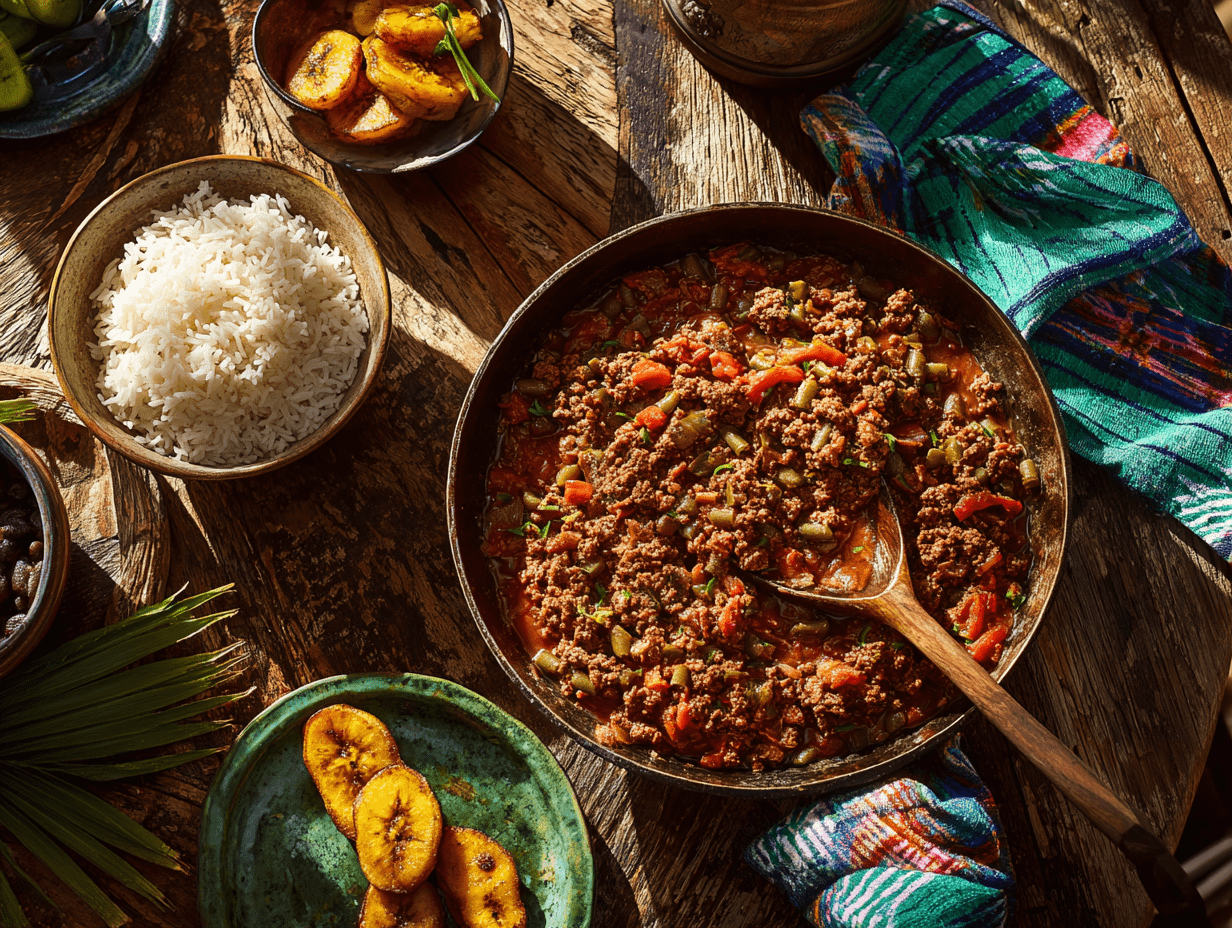
Cuban picadillo is ground beef simmered with tomato, olives, pimiento, and a splash of cooking wine until the sauce thickens and clings to the meat. It comes together in one pot in about 45 minutes, and the leftovers are genuinely better the next day.
The short version of why this works
Two things carry this recipe. First, browning the beef properly before adding any liquid — light brown, not gray — builds a layer of fond on the pot bottom that dissolves into the sauce and gives it depth you can’t fake with extra seasoning. Second, the two-stage simmering (15 minutes uncovered, then another 10–12 with the bay leaves added) lets the tomato and wine reduce into a sauce that coats the meat rather than pooling around it. Rush either step and you get a watery, flat result. Give them the time they need and the dish takes care of itself.
Mistakes to avoid
- Crowding the pot at the browning stage. If you add the beef all at once to a cold or small pot, it steams instead of browns. Add it gradually and keep the heat at medium-high.
- Adding bay leaves too early. Bay leaves added at the start of a long simmer can turn bitter. This recipe adds them in the second cooking stage — follow that order.
- Salting before tasting. Ketchup, olives, and cooking wine all carry significant sodium. Taste the finished dish before reaching for the salt shaker; you may not need any.
- Skipping the lid during the second simmer. Leaving the pot uncovered in the second stage lets too much moisture escape and the sauce can scorch on the bottom. Keep it covered as the recipe directs.
- Using green beans straight from the can. If you substitute canned green beans for fresh or frozen, add them in the last 3 minutes only — they’re already soft and will turn mushy with longer cooking.
Ingredient notes
- Spanish olives stuffed with pimiento: These are small, briny, and sold in jars near the pickles in most supermarkets. Don’t swap for kalamata — the flavor profile is too different. One tablespoon is enough; the olives are there for salt and tang, not to dominate.
- Cooking wine: Any dry white or a dry sherry works. Avoid “cooking wine” products labeled with added salt — they’ll push the sodium too high given the other salty ingredients already in the pot. Skip the garnish of fresh herbs if you’re thinking about it — not worth the extra dish.
- Red pimiento: Fresh red bell pepper is a straightforward substitute if you can’t find pimiento. Use one medium bell pepper in place of two small pimientos.
- Ketchup (tomato sauce): Australian and UK readers: this is standard tomato sauce in those markets, not the spiced variety. US ketchup is the right call here — its mild sweetness balances the brine from the olives.
Keeping and reheating
Refrigerate leftovers in a sealed container within two hours of cooking; they keep well for up to 4 days. The flavors tighten up overnight, so day-two picadillo is worth looking forward to. For longer storage, freeze in portions for up to 3 months — flatten the bags so they thaw faster. Reheat on the stovetop over medium-low with a splash of water to loosen the sauce, stirring occasionally until it reaches 165°F (74°C) throughout if you’re being precise, or until visibly steaming and hot all the way through. Microwave reheating works fine; cover the bowl loosely and stir halfway through.
Tasty Ground Beef Picadillo

Ingredients
 1 pound ground beef (minced beef) - sirloin
- 2 medium red pimiento
 1 cup ketchup (tomato sauce Australia and UK)
 1 medium yellow onion
 6 cloves garlic
  2 small bay leaf (bay leaves)
 1 pinch cumin
 1 pinch Kosher salt - coarse
- 3 tablespoons cooking wine
- 1 tablespoon Spanish olives - stuffed with minced pimiento
 8 ounces green beans - optional
Instructions
- Heat oil in a pot.
- Saute your minced onions and garlic until the onions soften and turn translucent.
- Gradually add the ground beef.
- Cook the beef until it turns light brown.
- Add tomato, olives, wine, and pimientos. Stir and let boil. Cover and cook for 15 minutes.
- Add bay leave. Stir and cover. Leave to cook for 10 to 12 minutes.
- Season with black pepper and salt. Cook for 3 minutes more.
Nutrition
Your questions, answered
Can I use regular ground beef instead of sirloin?
Yes, but drain the excess fat after browning. Higher-fat blends like 80/20 will release a lot of grease into the pot; tilt the pan and spoon it off before adding the tomato and wine, otherwise the sauce turns oily.
Do I have to use cooking wine, or can I leave it out?
You can leave it out and the dish will still work. Replace it with an equal amount of low-sodium beef broth to keep the liquid balance right — you’ll lose a little acidity but the olives and ketchup carry enough flavor to compensate.
How do I know when the beef is cooked through?
Ground beef is safe to eat at an internal temperature of 160°F (71°C). Visually, it should show no pink anywhere in the meat — but because the tomato sauce can mask color, a quick-read thermometer is the reliable check if you’re unsure.
What can I serve this with if I don’t have rice?
Warm flour tortillas or crusty bread both work well for scooping up the sauce. Fried or baked plantains are the traditional Cuban pairing and are worth seeking out if your grocery store carries them — ripe ones (maduros) add a natural sweetness that balances the savory meat.
Try these next
- Golden Colombian Beef Empanadas
- Spicy Beef Stuffed Peppers
- Ecuadorian Beef Seco Simplified
- Venezuelan Beef Hallacas Wraps