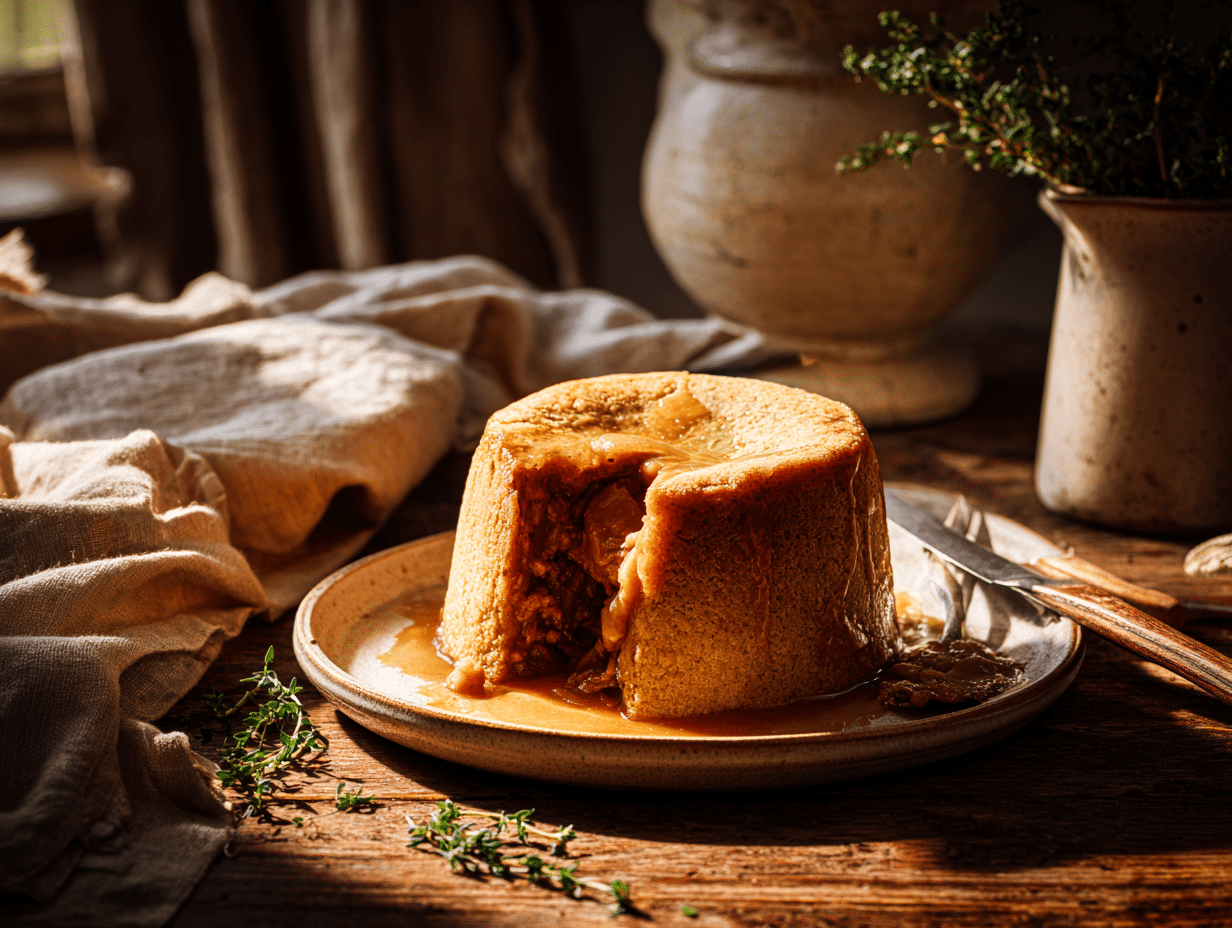
Steak and Kidney Pudding is a steamed suet pastry filled with braised beef chuck and minced lamb kidney in a thick, savory gravy. It takes about three and a half hours start to finish, but most of that time is hands-off. Make it on a weekend when you want something that genuinely fills people up.
The short version of why this works
Two things carry this recipe. First, browning the beef and kidney in batches before the long simmer — that crust on the meat builds flavor that the stock alone never would. Second, the suet pastry is mixed just until it comes together and no more; overworking it tightens the gluten and you end up with a dense, rubbery crust instead of the soft, almost bready texture you want. The steam does the rest: it cooks the pastry gently and evenly while the filling keeps everything moist from the inside. Get those two things right and the dish takes care of itself.
What can go wrong
- The basin leaks during steaming. If the foil-and-parchment lid isn’t sealed tightly with twine, steam and water get into the filling. Fold a pleat into the cover to allow for expansion, then tie it firmly around the rim — tug it, don’t just loop it.
- The pudding won’t turn out cleanly. Grease the basin thoroughly, including right up to the rim. Running a palette knife around the edge before inverting also helps. If it still sticks, set the basin back in hot water for two minutes to loosen it.
- The filling is watery when you cut in. The gravy needs to be thick before it goes into the pastry — it should coat a spoon heavily. If it’s still thin after the simmer, remove the lid and reduce it for an extra 10 minutes before assembling.
- The pastry is gummy on the outside. This usually means the water in the steamer ran dry partway through. Keep the water at a steady simmer and check it every 45 minutes, topping up with boiling water so you never have to wait for it to come back up to temperature.
- The kidney flavor is too strong for some at the table. Soaking minced kidney in cold salted water for 20–30 minutes before cooking pulls out some of the sharpest notes. Drain and pat dry before browning. Skip the garnish — not worth the extra dish.
Shopping notes
- Minced lamb kidney: Most supermarkets don’t sell it pre-minced. Buy whole lamb kidneys, trim away the white core and any visible sinew, then pulse briefly in a food processor. Don’t over-process — you want a coarse mince, not a paste.
- Shredded suet: In the US, look for Atora vegetable suet in British import shops or online. Grated frozen beef fat from a butcher works if you can get it. Do not substitute butter or shortening — the texture won’t be the same.
- Self-rising flour: If you only have all-purpose, add 1½ teaspoons of baking powder and ¼ teaspoon of salt per cup of flour.
- Beef chuck: This is the right cut — the connective tissue breaks down during the long simmer and thickens the gravy naturally. Leaner cuts like round will turn dry and stringy.
Keeping and reheating
Leftovers keep well. Store the pudding in the basin covered with plastic wrap, or transfer portions to an airtight container, and refrigerate for up to 3 days. To reheat, return the basin to a steamer for 30–40 minutes until piping hot all the way through — microwaving works in a pinch but softens the crust unevenly. For freezing, cool completely, wrap individual portions tightly in foil, and freeze for up to 2 months. Thaw overnight in the fridge before reheating. Because this contains ground meat, make sure the internal temperature reaches 160°F (71°C) before serving.

Steak and Mince Kidney Pudding
Equipment
Ingredients
For the Filling
- 1 lb beef chuck steak - cut into 1/2-inch cubes
- ½ lb minced lamb kidney - trimmed of fat and sinew
- 1 tbsp all-purpose flour - for dusting beef
 1 tbsp vegetable oil
 1 medium yellow onion - finely diced
 1 clove garlic - minced
 1 tsp Worcestershire sauce
 1 cup beef stock - preferably homemade or low-sodium
- 1 tsp fresh thyme leaves - or 1/2 tsp dried thyme
 ½ tsp salt - adjust to taste
- ½ tsp black pepper
For the Suet Pastry
- 2 cups self-rising flour
- 1 cup shredded suet - vegetable or beef
- ½ cup cold water - add gradually
- 1 pinch salt
Instructions
- Prepare the Filling:Toss the beef pieces lightly with the flour to coat. Heat the vegetable oil in a large saucepan over medium heat. Sear the beef and kidneys in batches until browned on all sides—this develops depth of flavor. Remove to a plate. In the same pan, sauté the onion until translucent and beginning to caramelize, about 5-7 minutes. Add garlic and cook until fragrant, around 30 seconds.
- Return the meat to the pan, add Worcestershire sauce, beef stock, thyme, salt, and pepper. Bring to a simmer, then reduce the heat to low and cover. Simmer gently for 1 hour 30 minutes, stirring occasionally, until beef is tender and gravy has thickened. Let cool slightly.
- Make the Suet Pastry:In a large mixing bowl, combine self-rising flour, shredded suet, and a pinch of salt. Gradually add cold water, mixing with a knife or spoon until it forms a soft, pliable dough—similar to playdough in consistency.
- Cut off about 1/4 of the dough and set aside for the lid. Roll the rest into a circle large enough to line a greased 1.5-quart pudding basin. Carefully press the dough into the basin, leaving the edges overhanging slightly.
- Assemble the Pudding:Spoon the cooled meat mixture into the lined pudding basin. Roll out the reserved dough into a circle and place on top, pinching and sealing with the pastry edges to form a tight seal.
- Cover the top with baking parchment, then foil, folding a pleat in the center to allow expansion. Tie securely with kitchen twine around the rim.
- Steam the Pudding:Place the basin into a steamer or on a trivet in a large pot. Pour in boiling water to halfway up the sides. Cover with a lid and steam gently for 2.5 hours (150 minutes), checking water levels occasionally and topping up with boiling water as needed.
- Remove from steamer, let rest 5 minutes, then turn out onto a warm serving plate. The crust should be supple yet firm, and the filling tender and aromatic.
Notes
- Advanced prep: The beef and kidney filling can be made up to 2 days in advance for deeper flavor development.
- Suet alternatives: If you can't find suet, freeze and grate cold beef fat or use cold, grated vegetable shortening.
- Don’t over-knead: Suet pastry should be mixed lightly to keep it soft and tender — avoid overworking the dough.
- Make individual puddings: Use small pudding molds or ramekins for personal portions. Adjust steaming time to 60–75 minutes depending on size.
Nutrition
Your questions, answered
Can I make the filling the day before?
Yes, and it actually improves the flavor. Cook the filling completely, let it cool, and refrigerate it overnight in a covered container. The next day, assemble the pudding cold and proceed with steaming — add 10 extra minutes to the steaming time since you’re starting with a cold filling.
My family doesn’t like kidney. Can I leave it out?
You can replace the minced kidney with an equal weight of minced beef for an all-beef filling. The dish will be milder and less complex, but it still works well. Some cooks use finely chopped mushrooms as part of the swap to add back some earthiness.
Do I need a proper pudding basin, or can I use something else?
A 1.5-quart heatproof ceramic or Pyrex bowl works fine. The key is that it can withstand sustained heat and has a rim you can tie the cover around securely. Avoid thin plastic containers — they can warp or leach at steaming temperatures.
How do I know when the pudding is done?
The pastry should feel firm and set when you press the top lightly through the foil cover, and a skewer inserted into the pastry should come out clean. The filling is already fully cooked before assembly, so you’re really just checking that the pastry has cooked through — typically 2 hours and 30 minutes at a steady simmer.
What should I serve with this to make it a full meal?
Mashed potatoes and buttered cabbage or peas are the most practical choices — they can cook on the same stovetop while the pudding steams. Avoid anything that needs oven time, since this recipe doesn’t use the oven at all and you want to keep things simple.
More mince recipes to try
- Savory British Beef Pies
- Cumberland Sausage Mince Pie
- Wild Venison Mushroom Pies
- Savory Lamb Rosemary Pies