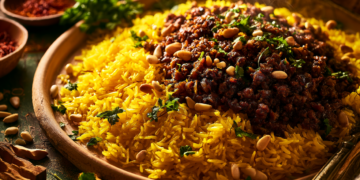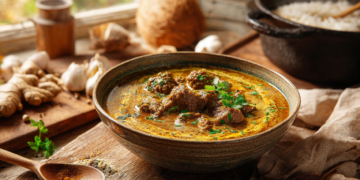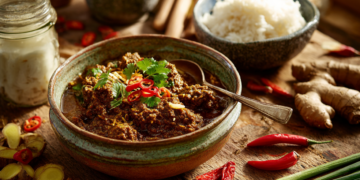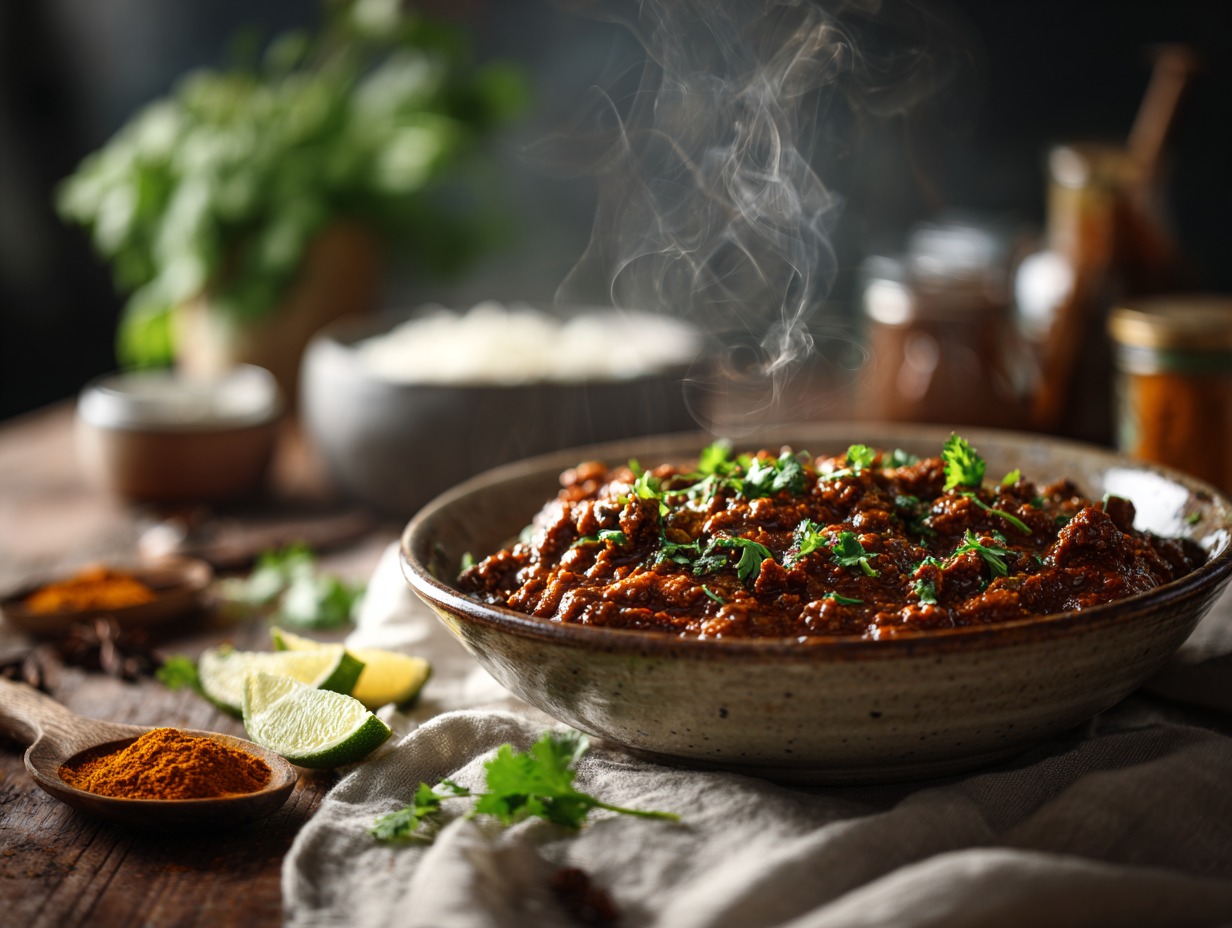
This is a lamb mince curry built around tamarind — the souring agent that keeps the richness of the meat in check and gives the sauce a sharp, savory edge you won’t get from lemon juice or vinegar. It takes about 70 minutes start to finish, most of that hands-off simmering. If you want a bold, saucy curry on a weeknight without a long ingredient list, this is a solid choice.
Before you start
Two things actually matter here. First, brown the lamb properly — don’t crowd the pan and don’t rush it. Ground lamb at 80/20 releases a lot of fat, and if you move it around too much before it’s had time to caramelize, you’ll steam it instead of brown it. That browning is where most of the flavor comes from. Second, bloom the dry spices in the fat left in the pan after the meat is cooked. Thirty to sixty seconds of heat activates the volatile compounds in cumin, coriander, and turmeric in a way that stirring them into liquid never will. Both steps cost you maybe two extra minutes and make a real difference to the finished dish.
Ingredient notes
- Tamarind pulp: Most supermarkets sell compressed tamarind blocks in the international aisle. Break off about 50g, soak it in the warm water called for in the recipe, and work it with your fingers until it dissolves. Strain out the seeds and fiber. Jarred tamarind concentrate also works — use about 1 tablespoon in place of the full ⅓ cup pulp, since it’s much more concentrated.
- Red chili powder: Indian red chili powder is hotter than standard paprika-based chili powder. If you’re using a generic supermarket chili powder blend, you may need to increase the quantity slightly to get the same heat level.
- Garam masala: Add it at the very end, off the heat or in the last minute of cooking. Prolonged heat flattens its aroma, which is the whole point of using it.
Mistakes to avoid
- Not draining excess fat before adding tomatoes: 80/20 lamb can leave a significant pool of fat in the pan. Tilt the pan and spoon out most of it before you add the crushed tomatoes — otherwise the sauce turns greasy rather than rich.
- Adding tamarind too early: Tamarind’s acidity can prevent the sauce from reducing cleanly and can make the lamb taste slightly tough if it cooks in it for too long. Add it after the tomato masala has had a few minutes to cook down.
- Under-seasoning at the end: Tamarind’s tartness can mask how much salt the dish actually needs. Taste again after the full simmer, not just during cooking, and adjust salt before serving.
- Skipping the internal temperature check: Ground lamb needs to reach 160°F (71°C). It usually gets there well before the sauce is done, but if you’re unsure, a quick probe confirms it.
- Over-thickening the sauce: The curry thickens as it sits. Pull it off the heat when it looks slightly looser than you want — it will tighten up in the bowl. Add the extra ½ cup water if it gets too dense during the simmer.
Leftovers and meal prep
This curry keeps well. Store leftovers in an airtight container in the fridge for up to 3 days — the flavor actually improves overnight as the tamarind and spices settle in. Reheat in a small saucepan over medium-low heat with a splash of water to loosen the sauce, stirring occasionally until it reaches 165°F (74°C) throughout. For freezing, cool completely first, then freeze flat in zip-lock bags for up to 2 months. Thaw overnight in the fridge before reheating. Skip the cilantro garnish before freezing — add it fresh when you serve — though honestly, if you’re reheating from the freezer on a Tuesday night, skip the garnish entirely; it’s not worth the extra dish.
Lamb Mince and Tamarind Curry

Equipment
Ingredients
 2 tablespoons vegetable oil - preferably neutral oil like sunflower or canola
 1 large yellow onion - finely diced
 4 cloves garlic - minced
 1 tablespoon ginger - fresh, grated
 1 pound ground lamb (minced lamb) - ideally 80/20 lean-to-fat ratio for best flavor
 1 teaspoon cumin - ground
 1 teaspoon ground coriander
 1 teaspoon paprika - for color and mild sweetness
 ½ teaspoon turmeric powder
- ½ teaspoon red chili powder - adjust to preferred heat level
 1 teaspoon garam masala - added at the end for aroma
 1 cup crushed tomatoes - canned or fresh is fine
- ⅓ cup tamarind pulp - soaked in 1/2 cup warm water; strain for smoother texture
 ½ cup water - add more if curry is too thick
 1 teaspoon salt - or to taste
 2 tablespoons cilantro - fresh and chopped for garnishing
Instructions
- Heat 2 tablespoons of vegetable oil in a large skillet over medium heat. Once hot, sauté the diced onion for 8–10 minutes until softened and golden brown. Stir frequently to avoid burning.
- Add minced garlic and grated ginger to the onions. Stir and cook for 1–2 minutes until fragrant and lightly golden.
- Add the ground lamb, breaking it apart with your spoon. Cook for 8–10 minutes until browned evenly and no pink remains. The meat should smell rich and nutty as it caramelizes.
- Stir in cumin, coriander, paprika, turmeric, and chili powder. Cook for 1–2 minutes to bloom the spices and deepen their aroma.
- Add the crushed tomatoes and cook on medium for about 5 minutes until they thicken and darken slightly in color.
- Pour in the strained tamarind pulp and 1/2 cup water. Reduce heat to low, cover, and let it simmer gently for 15–20 minutes so the flavors meld and the curry thickens. Stir occasionally to prevent sticking.
- Add garam masala and salt. Stir well and simmer uncovered for another 2–3 minutes. Taste and adjust salt or tamarind to balance the flavor—aim for tangy, savory, and warming.
- Remove from heat. Garnish with chopped cilantro just before serving.
Notes
- For a richer flavor, use bone broth instead of water.
- Substitute with ground beef if lamb is unavailable, but reduce spices slightly as beef is a more neutral base.
- Vegetarians can swap meat for lentils or crumbled paneer, though cooking times will vary.
- If tamarind pulp is unavailable, mix 2 tablespoons of tamarind paste with 1/2 cup of warm water as a substitute.
Nutrition
Your questions, answered
Can I use tamarind concentrate instead of tamarind pulp?
Yes — use about 1 tablespoon of concentrate in place of the ⅓ cup pulp. Concentrate is much stronger, so start with less and taste before adding more; you can always add but you can’t take it back out.
Can I make this ahead and reheat it for dinner?
Yes, and it’s actually better the next day. Make it the night before, refrigerate, and reheat on the stovetop with a small splash of water over medium-low heat until piping hot throughout.
Can I swap lamb mince for beef or turkey mince?
Beef mince works well and keeps a similar richness — use 80/20 ground beef and cook to 160°F (71°C). Ground turkey will work but is leaner, so the sauce will be lighter; cook turkey to 165°F (74°C) and make sure no pink remains.
My curry tastes too sour — how do I fix it?
Add a small pinch of sugar — start with ¼ teaspoon — and stir it in during the final simmer. A little extra salt also helps balance sharpness without making the dish sweet.
If you liked this one
- Fragrant Lamb Coconut Stew
- Lamb Spinach Curry Delight
- Quick Lamb Coconut Rendang
- Spiced Lamb Curry Scrolls