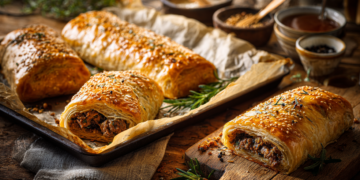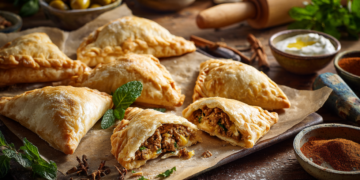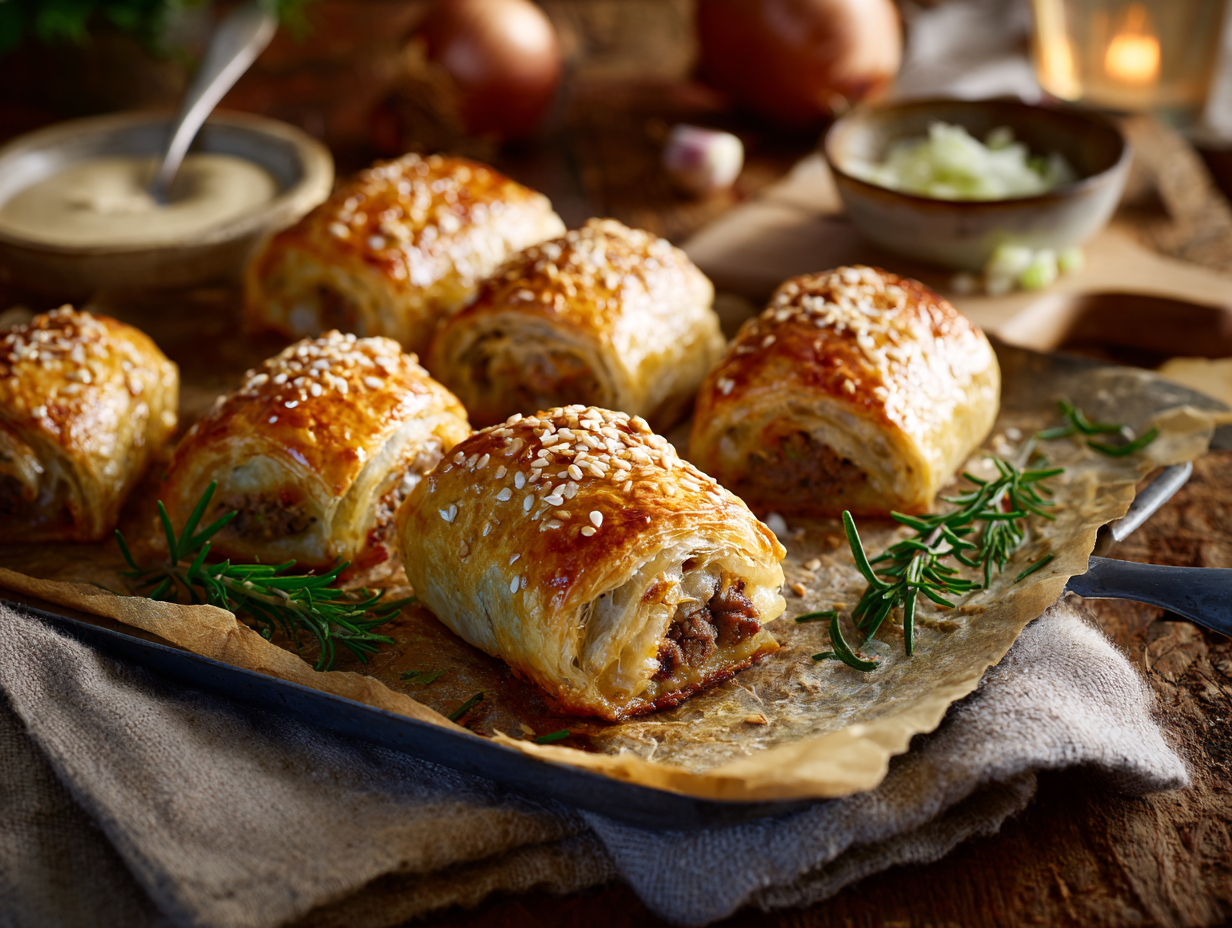
These are lamb sausage rolls made with ground lamb, fresh rosemary, cumin, and a touch of cinnamon, all wrapped in all-butter puff pastry. They bake up flaky on the outside and juicy in the middle, and they feed a crowd without much fuss. Make a double batch — they disappear fast.
Before you start
The single most important thing here is keeping your pastry cold. Warm puff pastry goes slack, the layers stick together, and you lose the flake. Pull it from the fridge only when you’re ready to work with it, and if the kitchen is warm, chill the assembled rolls for 15 minutes before they go in the oven — this firms up the butter layers and gives you a better rise. The second thing worth knowing: don’t skip draining any excess moisture from the filling. Ground lamb has enough fat to make the filling rich, but if you’ve added anything wet (like a grated onion), squeeze it out in a clean cloth first. A wet filling is the main reason rolls end up with a soft, undercooked base rather than a crisp bottom.
If something goes sideways
- Filling bursts out during baking: The roll was overfilled or the seam wasn’t pressed firmly enough. Next time, keep the filling log compact and press the pastry seam down hard with your fingers before placing it seam-side down on the tray.
- Pastry is golden but filling isn’t cooked through: Ground lamb must reach 160°F (71°C) at the center. If the pastry is browning too fast, tent loosely with foil and give the rolls another 5–8 minutes. A meat thermometer is the only reliable check here.
- Soggy bottom: This usually means the tray was cold when the rolls went in, or the oven wasn’t fully preheated. Always preheat the tray in the oven — sliding the rolls onto a hot surface starts crisping the base immediately.
- Filling tastes flat after baking: Raw lamb filling needs more seasoning than you think. Salt and spices mellow in the oven. If you have time, cook a small pinch of filling in a pan before assembling and taste it — adjust before you roll.
- Rolls unroll or open during baking: The egg wash wasn’t applied to the seam before sealing. Egg wash acts as glue — brush it on the pastry edge before folding, not just on top.
About the ingredients
- Ground lamb: Standard supermarket ground lamb works fine. If it looks very fatty, you can blot it lightly, but some fat is what keeps the filling moist. Avoid extra-lean lamb — it produces a dry, crumbly result.
- Fresh vs. dried rosemary: Fresh rosemary is noticeably better here — the flavor is brighter and it distributes more evenly through the filling. If you only have dried, use half the amount and rub it between your palms first to wake it up.
- Cinnamon: Skip the cinnamon if your family is skeptical of warm spices in savory food — the rolls are still very good without it. That said, it’s a small amount and most people won’t identify it, just notice the filling tastes a bit more interesting.
- All-butter puff pastry: This is worth buying over the vegetable-shortening kind. The flavor difference is real, especially since the pastry is half the dish. Most grocery stores carry it in the freezer section — just thaw overnight in the fridge.
- Sesame seeds: Skip the garnish — not worth the extra dish if you’re feeding a crowd and already have enough going on.
Keeping and reheating
Baked rolls keep in the fridge for up to 3 days in an airtight container. To reheat, put them in a 375°F oven for 10–12 minutes — this brings the pastry back to crisp without drying out the filling. The microwave is faster but turns the pastry soft, so use it only if you don’t mind that. For longer storage, freeze unbaked assembled rolls on a tray until solid, then transfer to a freezer bag — they keep for up to 2 months. Bake straight from frozen at 400°F, adding 10–12 minutes to the original baking time, and verify the center hits 160°F (71°C) before serving.
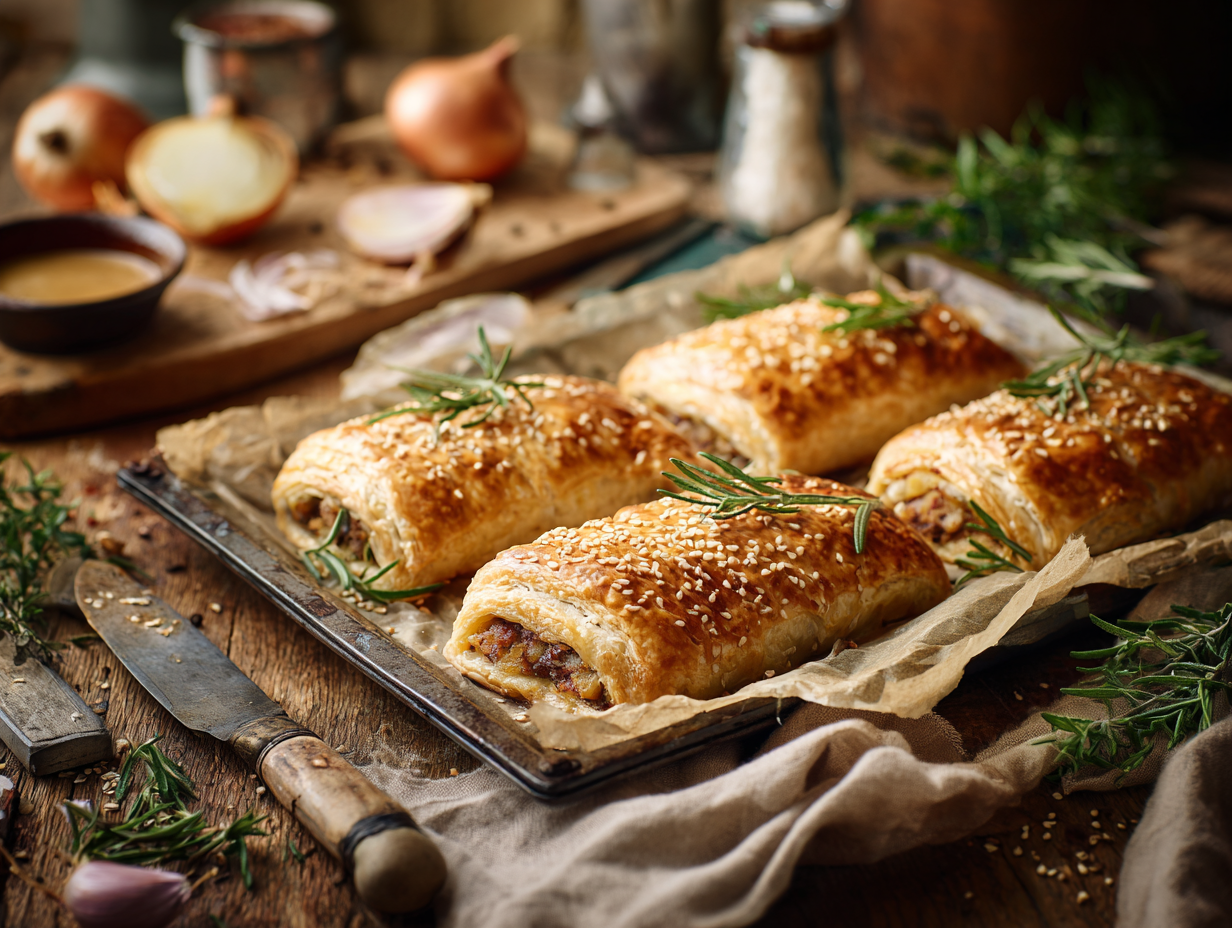
Minced Lamb and Rosemary Sausage Rolls

Equipment
Ingredients
For the Filling:
 1 lb ground lamb (minced lamb) - use grass-fed lamb for best flavor
 1 small onion - finely chopped
 2 cloves garlic - minced
 1 tbsp rosemary - fresh, finely chopped, or 1 tsp dried rosemary
 ½ tsp cumin - ground, adds depth and warmth
 ¼ tsp ground cinnamon - optional, adds subtle sweetness
 1 tsp kosher salt - or to taste
 ½ tsp ground black pepper - freshly ground
For the Pastry Assembly:
- 1 package puff pastry - thawed if frozen (use all-butter puff pastry for best results)
 1 large egg - beaten, for egg wash
 1 tbsp milk - to mix with egg wash
 1 tbsp sesame seeds - optional, for topping
Instructions
- Preheat your oven to 400°F (200°C) and line a baking tray with parchment paper.
- In a large mixing bowl, combine the minced lamb, chopped onion, garlic, rosemary, cumin, cinnamon, salt, and pepper. Mix until fully incorporated but avoid overmixing to preserve tenderness.
- On a lightly floured surface, roll out the puff pastry into a large rectangle approximately 10x12 inches. Cut the sheet lengthwise in half to form two long strips.
- Divide the lamb filling into two equal parts. Shape each portion into a log down the center of each pastry strip. Fold the pastry over the filling, seam side down, and press to seal. Use a fork to crimp the edges if desired.
- Cut each long roll into 6 equal pieces and place on the prepared baking tray, leaving space between each roll.
- In a small bowl, whisk together the egg and milk. Brush the tops of the rolls with egg wash and sprinkle with sesame seeds if using.
- Bake for 25–30 minutes or until the pastry is puffed and golden brown, and the lamb is cooked through. The internal temperature should reach 160°F (71°C).
- Remove from oven and let cool slightly before serving.
Notes
- For an herby twist, add a teaspoon of chopped mint along with the rosemary.
- If you prefer a leaner option, use ground beef or turkey instead of lamb, though the flavor profile will change.
- To speed up caramelization of the onions, cook them separately over medium heat with a pinch of salt before adding to the mixture.
Nutrition
Frequently asked questions
Can I make these ahead for a family dinner?
Yes — assemble the rolls up to 24 hours ahead, cover them on the tray with plastic wrap, and refrigerate until you’re ready to bake. Pull them out while the oven preheats, brush with egg wash, and bake as directed. The filling actually benefits from resting overnight, since the rosemary and spices have more time to work into the meat.
How do I know when the lamb filling is actually cooked through?
Use an instant-read thermometer and check the center of a roll — ground lamb needs to hit 160°F (71°C). Don’t rely on the pastry color alone, since the outside can look done while the filling is still underdone, especially in thicker rolls.
Can I use a different ground meat if someone in the family doesn’t eat lamb?
Ground beef works well as a straight swap and keeps the same spice profile. Ground pork is also good but produces a slightly softer, fattier filling — it also needs to reach 160°F (71°C) at the center. Avoid ground chicken or turkey here unless you adjust the fat content, since they tend to dry out inside pastry.
More mince recipes to try
- Savory Beef Sausage Rolls
- Gourmet Lamb Sausage Rolls
- Savory Lebanese Lamb Pastries
- Chicken Macadamia Sausage Rolls