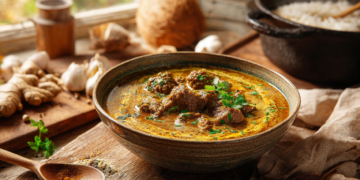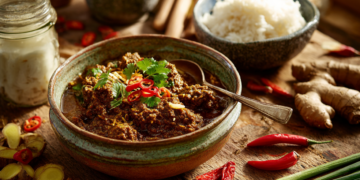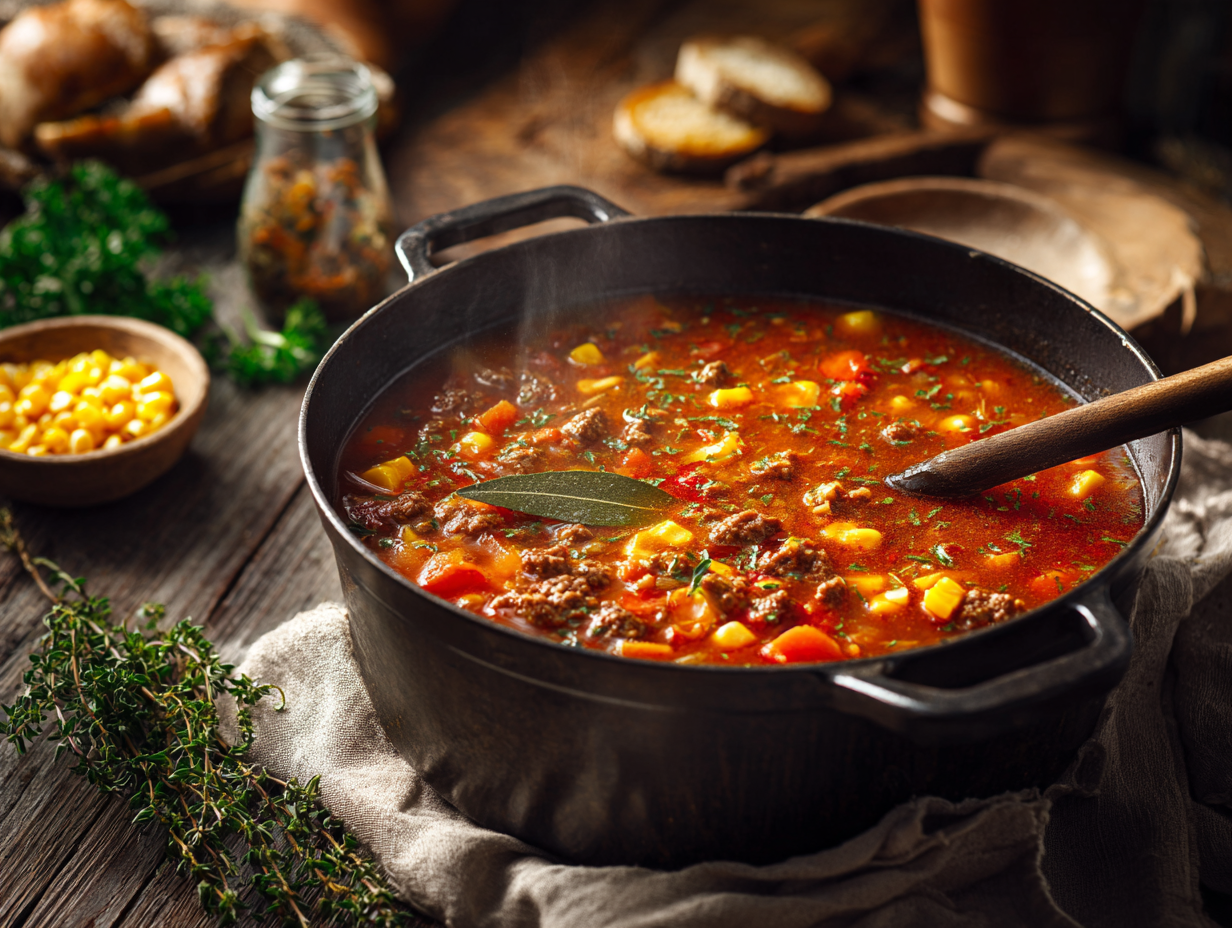
This is a ground lamb stew built on the Argentine carbonada template — potatoes, corn, tomatoes, and warm spices in one pot. Using ground lamb instead of a whole cut means it cooks in a fraction of the time and costs less, without losing any of the richness. If you want a filling weeknight stew that doesn’t require any special butchery or braising skills, this is a solid choice.
Why this recipe works
Two things drive this recipe. First, browning the ground lamb properly before adding anything else — 6 to 8 minutes over medium heat, breaking it up as it cooks — builds a layer of savory flavor in the bottom of the pot that carries through the entire stew. If you skip this step or crowd the pan, the meat steams instead of browns and the stew tastes flat. Second, the spice bloom matters: cumin, cinnamon, and smoked paprika go in with the onion and garlic after the lamb is browned, not before. Thirty seconds in the hot fat wakes up those spices in a way that stirring them into liquid never does. Everything else — the potatoes, corn, stock, tomatoes — is just building on that foundation.
What can go wrong
- The lamb clumps into large chunks: Ground lamb has more fat than beef and can seize into lumps if you don’t break it apart constantly in the first two minutes of cooking. Use a wooden spoon or spatula and keep moving it. Aim for small, even crumbles before you add anything else.
- The stew is greasy on top: Ground lamb releases a lot of fat. After browning, tilt the pot and spoon off the excess before adding the onions. Leaving it all in makes the finished stew oily rather than rich.
- The potatoes turn to mush: Yukon Golds hold up better than russets, but they’ll still fall apart if the stew boils hard. Once you add the stock and vegetables, bring it to a gentle boil, then drop the heat to a low simmer and keep the lid on. Check at the 45-minute mark — a knife should slide in with a little resistance, not none.
- It tastes underseasoned: Ground lamb is milder than you might expect, and a large volume of stock and vegetables dilutes salt quickly. Taste the stew after the potatoes are cooked through and season again at that point — not just at the start.
- The lamb isn’t safe to eat: Ground lamb must reach an internal temperature of 160°F (71°C). Because it’s dispersed through the stew rather than sitting as a solid piece, it will hit that temperature well before the potatoes are done — but if you’re ever unsure, an instant-read thermometer in the thickest part of the liquid will confirm it.
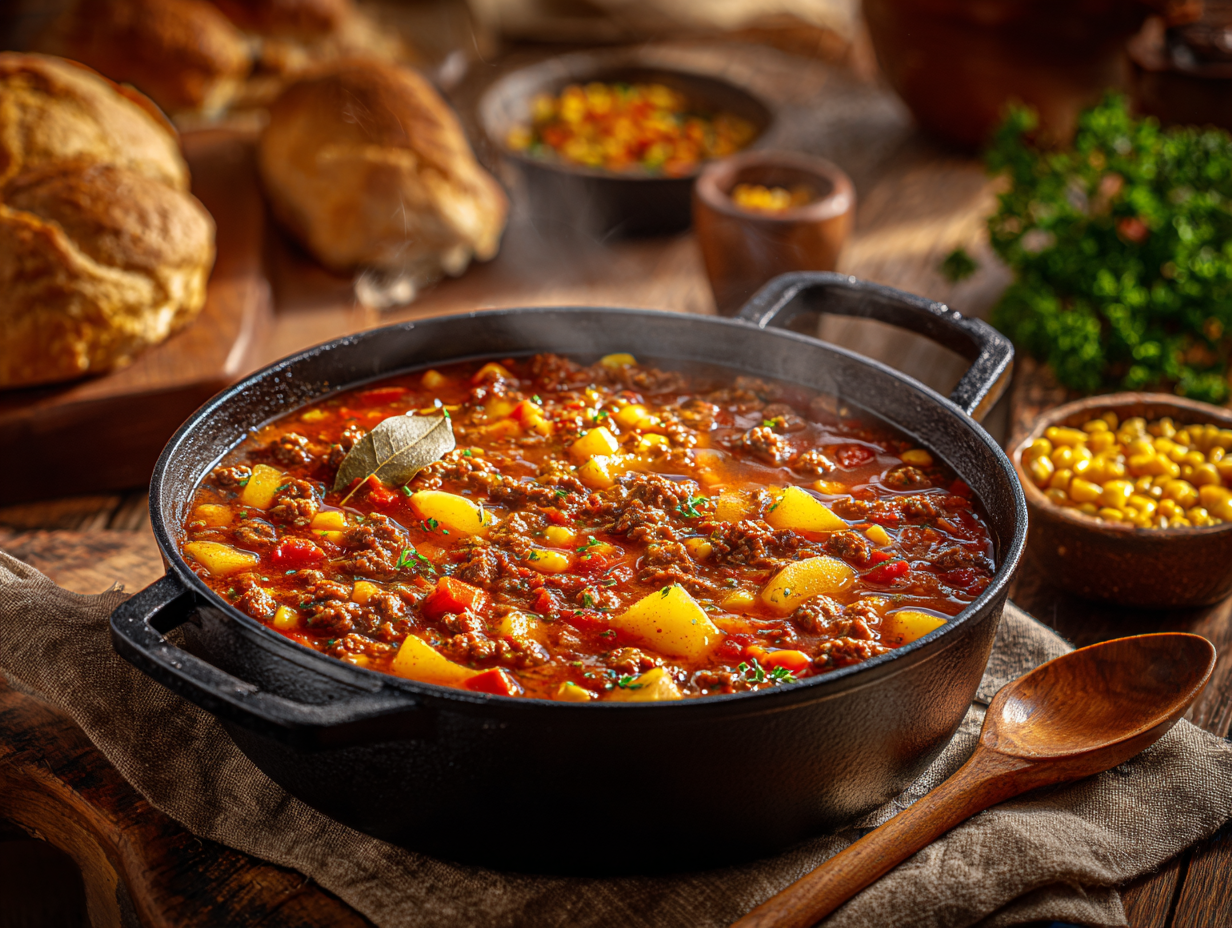
Minced Lamb and Tomato Carbonada Stew

Equipment
Ingredients
 2 tablespoons olive oil - preferably extra virgin for best flavor
 1 pound ground lamb (minced lamb) - grass-fed if possible
 1 large onion - finely chopped
 3 cloves garlic - minced
 1 teaspoon cumin - ground
 ½ teaspoon ground cinnamon - adds depth
 ½ teaspoon smoked paprika - for a touch of warmth
- 2 cups diced tomatoes - use ripe, fresh tomatoes or good-quality canned tomatoes
 4 cups beef stock (beef broth or beef bouillon) - or lamb stock, low-sodium preferred
- 3 medium Yukon gold potatoes - cut into 1-inch cubes
 1 cup corn kernels - sweet corn preferred, fresh or frozen
  1 medium carrot - peeled and diced
 1 piece bay leaf (bay leaves) - dried
 ¼ cup raisins - optional for a traditional touch of sweetness
 1 pinch salt - to taste
 1 pinch ground black pepper - to taste
 2 tablespoons parsley - fresh, chopped, for garnish
Instructions
- Heat olive oil in a Dutch oven over medium heat (350°F / 175°C). Add minced lamb and sear until browned and fragrant, about 6–8 minutes. Break it apart with a spoon as it cooks.
- Add chopped onion, garlic, cumin, cinnamon, and smoked paprika. Cook for 4–5 minutes, stirring constantly, until onions turn translucent and spices bloom.
- Stir in diced tomatoes and cook for 5 more minutes, allowing their acidity to mellow and create a base.
- Pour in the stock and add potatoes, carrots, corn, bay leaf, and raisins if using. Season with salt and pepper.
- Bring to a gentle boil, cover, then lower heat and simmer (180°F / 82°C) for 1 hour 15 minutes, or until potatoes are fork-tender and stew is reduced to a thick, glossy consistency.
- Remove bay leaf. Taste and adjust seasoning. Serve hot, garnished with chopped fresh parsley.
Notes
- For richer flavor, toast the spices before adding onion and garlic.
- For a leaner option, replace half the lamb with minced turkey or lentils.
- If raisins are too sweet for your palate, try chopped dried apricots or omit altogether.
Nutrition
Your questions, answered
Can I use ground beef instead of ground lamb?
Yes, it works fine. The flavor will be milder and less earthy, but the technique and timing stay exactly the same. Use 80/20 ground beef for enough fat to brown properly — leaner blends can dry out over the long simmer.
Do I have to use a Dutch oven, or will a regular pot work?
A regular heavy-bottomed pot works. What you need is even heat distribution and enough depth to hold the liquid without splattering. Thin pots with hot spots will scorch the bottom during the simmer — if that’s what you have, use the lowest heat setting and stir every 15 minutes.
My ground lamb is still pink after 8 minutes of browning — is that okay?
No, do not move on until the pink is gone. Ground lamb must be fully cooked to 160°F (71°C) with no pink remaining before you add other ingredients. If it’s still pink at 8 minutes, keep cooking and breaking it up — a slightly crowded pan or lower heat can slow things down.
Can I make this ahead and reheat it?
Yes, and it actually tastes better the next day once the flavors have settled. Store it covered in the fridge for up to 3 days. Reheat gently on the stovetop over low heat with a splash of water or stock — the potatoes will absorb liquid overnight and the stew thickens considerably.
The raisins sound odd — do they actually add anything?
They dissolve into the stew during the long simmer and add a background sweetness that balances the acidity of the tomatoes — you won’t bite into a raisin. That said, skip the garnish of fresh parsley at the end; it doesn’t add enough to justify washing another bowl for chopping.