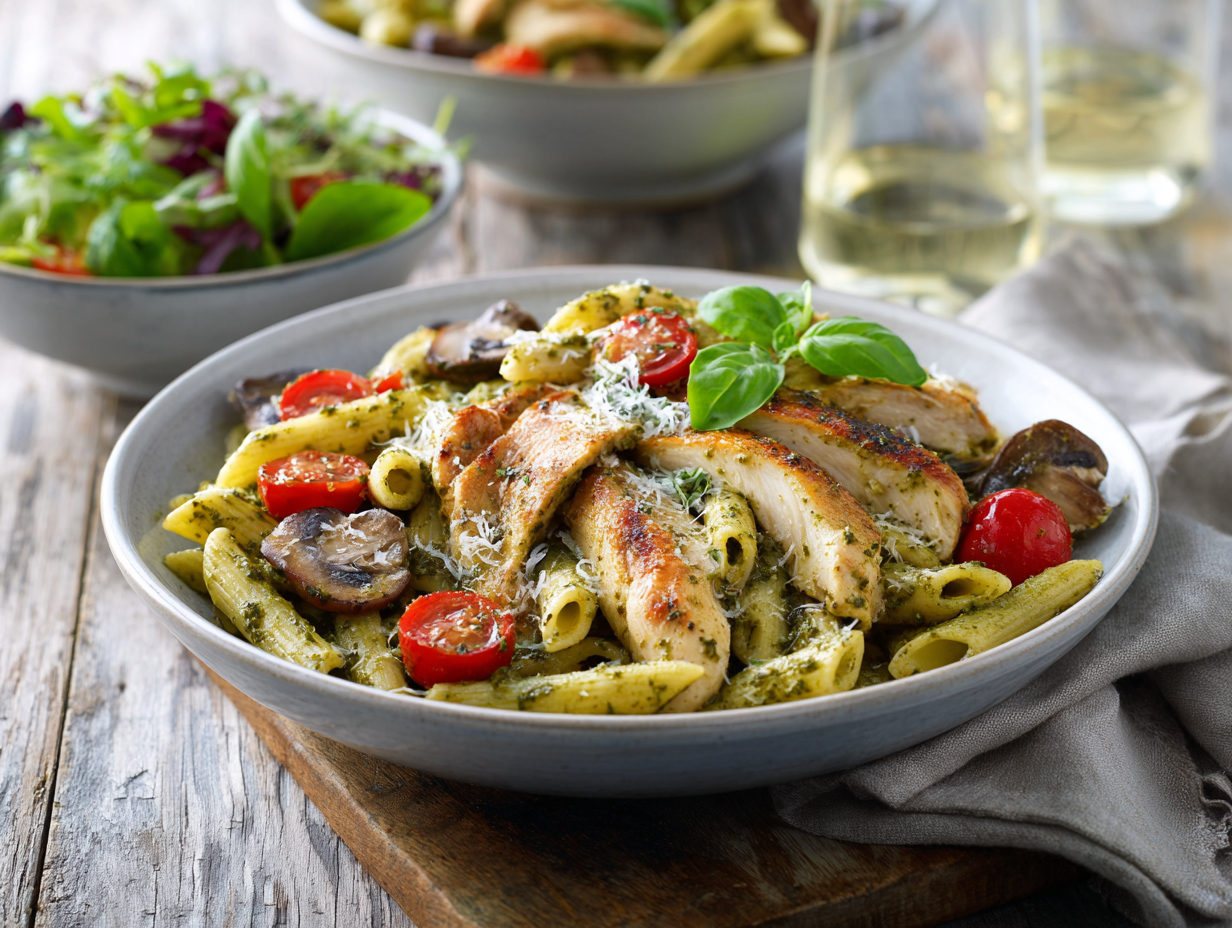
Chicken Penne Pesto is ground chicken cooked with basil pesto and tossed with ridged penne pasta — a fast, high-protein weeknight dinner that comes together in about 30 minutes. The ridges on penne do real work here, holding the sauce so every bite is coated rather than pooled at the bottom of the bowl. It reheats well and portions cleanly, which makes it genuinely useful beyond the night you cook it.
Before you start
The two things that will make or break this dish are temperature and moisture control. Ground chicken must reach an internal temperature of 165°F (74°C) — no exceptions, no pink. Because ground chicken releases more moisture than beef or pork as it cooks, break it into small pieces early and keep the heat at medium-high so it browns rather than steams; a wet, grey pan means the pesto will slide off instead of cling. The second thing: reserve about half a cup of pasta cooking water before you drain. The starch in that water is what lets the pesto coat the pasta evenly without turning greasy or clumping — it acts as a loose emulsifier when you toss everything together off the heat.
Smart swaps
- Pine nuts in the pesto: Walnuts or unsalted cashews work well and cost less. Toast them briefly in a dry pan first — raw nuts taste flat in pesto.
- Fresh basil pesto vs. jarred: Jarred pesto is a perfectly reasonable shortcut for batch cooking. Choose one with olive oil listed first, not sunflower oil.
- Penne: Any short ridged pasta — rigatoni, fusilli, cavatappi — holds the sauce just as well. Smooth pasta shapes like ziti are a noticeable step down.
- Parmesan: Pecorino Romano is sharper and saltier; use about two-thirds the amount. Grana Padano is milder and cheaper — a solid everyday substitute.
- Adding vegetables: Baby spinach stirred in right at the end wilts quickly and adds bulk without extra cooking time. Cherry tomatoes halved and tossed in cold work too.
Troubleshooting
- Pesto turns dark and bitter in the pan: Pesto should never hit direct high heat — add it off the burner or on the lowest setting, then toss quickly. Heat destroys the basil’s color and brings out bitterness fast.
- Ground chicken clumps into large chunks: Start breaking it up the moment it hits the pan, before it sets. A wooden spoon or stiff silicone spatula pressed flat works better than a fork here.
- Sauce is too thick and pasty after tossing: Add reserved pasta water a tablespoon at a time while tossing. It loosens the pesto without watering down the flavor.
- Reheated portions taste dry the next day: Add a small splash of water or chicken broth to the container before microwaving, and cover loosely. Ground chicken dries out faster than beef on reheating — skip the garnish of extra Parmesan until after reheating, not worth the extra dish.
- Pasta sticks together when storing batches: Toss cooled portions with a very light drizzle of olive oil before refrigerating. Store sauce and pasta together — separating them doesn’t help and makes portioning harder.
Mama’s Unforgettable Chicken Penne Pesto

Ingredients
 400 grams ground chicken (minced chicken)
- 300 grams penne - or other pasta
 5 tablespoons pine nuts
 1 teaspoon Sea salt
 3 tablespoons basil - finely chopped or 3t dried
 4 tablespoons olive oil
 2 cloves garlic - crushed
 1 handful parmesan cheese - to sprinkle
Instructions
- Boil the pasta in salted water with a little olive oil – stop it from sticking together.
- Fry the minced chicken in a pan or skillet with minimal oil.
- While the pasta and chicken are cooking, grind the pine nuts and sea salt in a mortar or blender.
- Add the basil, olive oil and garlic to the ground pine nuts and salt, and mix well. Hey presto, you’ve got pesto!
- Put the cooked pasta and chicken in the same dish and mix through the pesto. Try not to overmix. Sprinkle over with Parmesan cheese and extra pine nuts if desired.
Nutrition
Your questions, answered
Can I use rotisserie chicken instead of raw ground chicken?
Yes, shredded rotisserie chicken works, but the texture is different — you lose the browned, slightly crispy bits that ground chicken develops in the pan. Stir it in at the end just to warm through; it’s already cooked so no temperature target applies.
How long does this keep in the fridge, and can I freeze it?
Refrigerated, it keeps well for up to 4 days in a sealed container. Freezing is possible but pesto-based pasta loses texture on thawing — the basil darkens and the pasta softens; it’s better used as a fridge meal-prep dish than a freezer one.
Can I make the pesto from scratch ahead of time?
Yes, and homemade pesto keeps in the fridge for up to 5 days with a thin layer of olive oil pressed over the surface to slow oxidation. Make a double batch — it’s useful across multiple meals during the week.
Is there a dairy-free option?
Leave out the Parmesan and use a dairy-free pesto, or blend your own with nutritional yeast in place of the cheese. The sauce will be slightly less rich but still coats the pasta well.
My ground chicken is sticking to the pan — what am I doing wrong?
The pan likely wasn’t hot enough before the chicken went in, or the pan is overcrowded. Use a wide skillet, heat the oil until it shimmers, and cook in a single layer if possible — crowding drops the temperature and causes steaming instead of browning.
Can I cook a larger batch and portion it out for the week?
This recipe scales up easily — double or triple the quantities and the cooking method stays the same, just use a larger pan or cook the chicken in two batches to keep browning consistent. Portion into individual containers once cooled, and reheat with a splash of water to restore moisture.
More mince recipes to try
- Creamy Beef Spinach Pasta
- Chicken Macadamia Sausage Rolls
- Savory Pork Noodle Stir-Fry
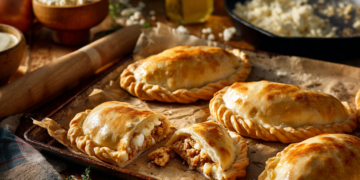
- Colombian Chicken Cheese Empanadas