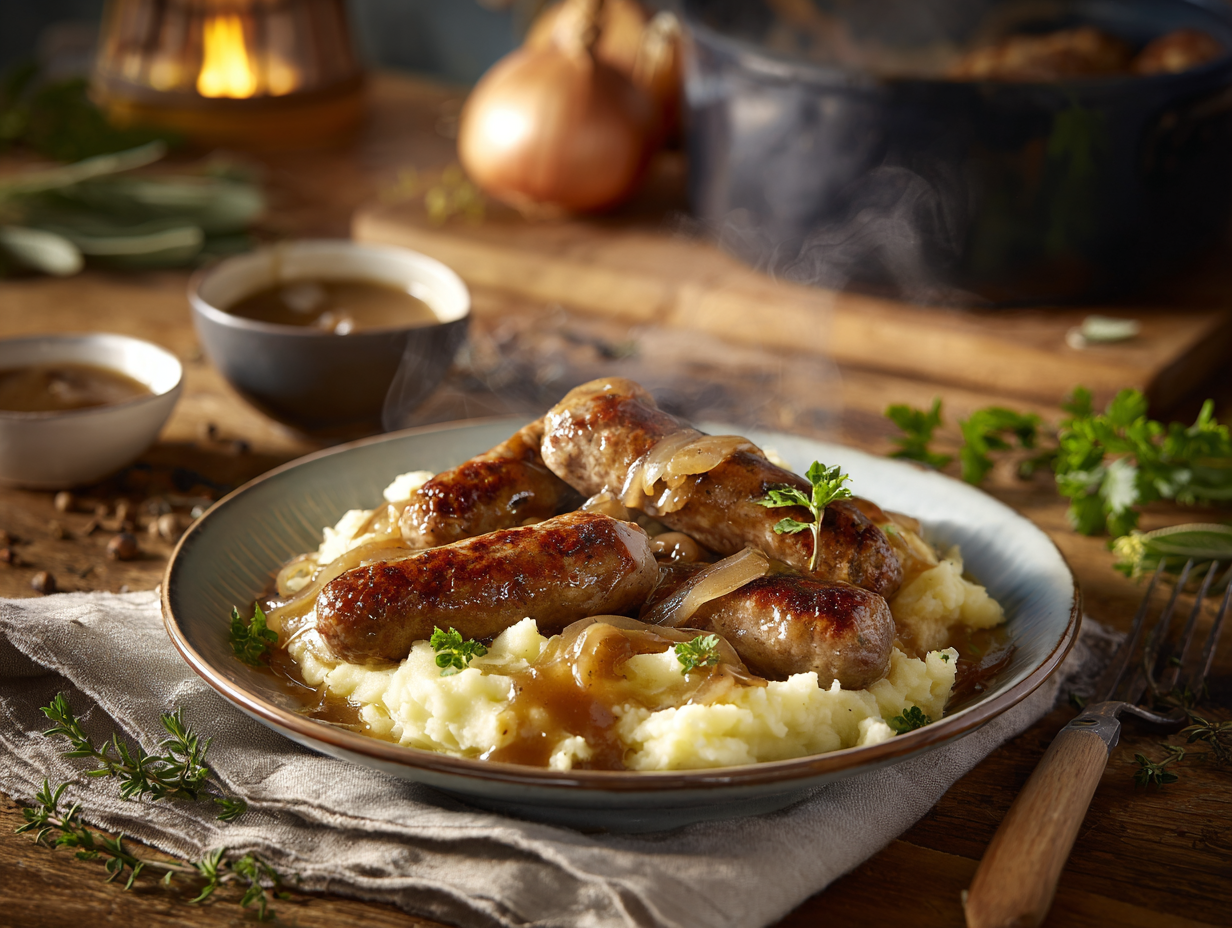
Bangers and mash is sausages, mashed potatoes, and onion gravy — all cooked from scratch in about 75 minutes. This version uses a half-pork, half-beef mixture for the sausages, which gives you more flavor than an all-pork banger without any extra effort. If you’ve never shaped ground meat into sausages before, this is a good place to start — no casing required.
The short version of why this works
Two things make this recipe succeed. First, the fat ratio in the meat matters more than the seasoning. Using 80/20 ground pork and a chuck or brisket blend of beef means the sausages stay juicy during frying — leaner mixes tend to go dry and dense. Second, the onion gravy needs real time on the heat. The onions should be soft and golden before you add the flour and stock; if you rush that step, the gravy tastes sharp instead of mellow. Everything else — the mash, the seasoning — is straightforward once those two things are handled correctly.
Ingredient notes
- Ground pork (80/20): The fat content is the point here. If the label just says “ground pork” without a ratio, ask at the butcher counter or check the nutrition panel — you want around 20% fat. Extra-lean ground pork will produce dry sausages.
- Dried sage: Standard dried sage from any supermarket works fine. Skip the garnish — not worth the extra dish.
- Worcestershire sauce: This is in most grocery stores near the steak sauces. It adds a savory depth to the gravy that plain beef stock alone won’t give you. Soy sauce is a workable substitute if you’re stuck.
- Russet potatoes: These are the starchy, fluffy type — the right choice for mash. Waxy potatoes like red or Yukon Gold will give you a gluey texture if you over-mash them, though Yukon Gold is acceptable if that’s what you have.
- Low-sodium beef stock: Worth using here because the gravy reduces slightly and full-sodium stock can make it too salty to adjust.
Troubleshooting
- Sausages fall apart in the pan: The mixture wasn’t packed firmly enough when shaping, or it went into a pan that wasn’t hot enough. Press the meat together firmly — tighter than you think necessary — and make sure the oil is shimmering before the sausages go in. A cold pan means they steam instead of sear and lose their shape.
- Internal temperature won’t reach 160°F (71°C): The sausages are too thick, or the heat is too high and the outside is browning faster than the inside cooks. Flatten them slightly to about 1 inch thick, and lower the heat to medium-low after the initial sear. Use an instant-read thermometer — ground pork must hit 160°F all the way through, no exceptions.
- Gravy is lumpy: The flour was added to cold butter or the stock was poured in too fast. Add the flour to the already-hot buttered onions and stir for a full minute before adding any liquid. Then pour the stock in slowly, stirring constantly.
- Mash is gluey or sticky: The potatoes were overworked. Mash by hand only, stop as soon as the lumps are gone, and add the butter before the milk — butter coats the starch granules and helps prevent the gluey texture that comes from overmixing.
- Gravy is too thin after adding stock: Keep it on a gentle simmer uncovered for 3–5 minutes — it will thicken as it reduces. If it’s still thin after that, mix a small amount of flour with cold water (about 1 teaspoon flour to 1 tablespoon water) and stir it in gradually.
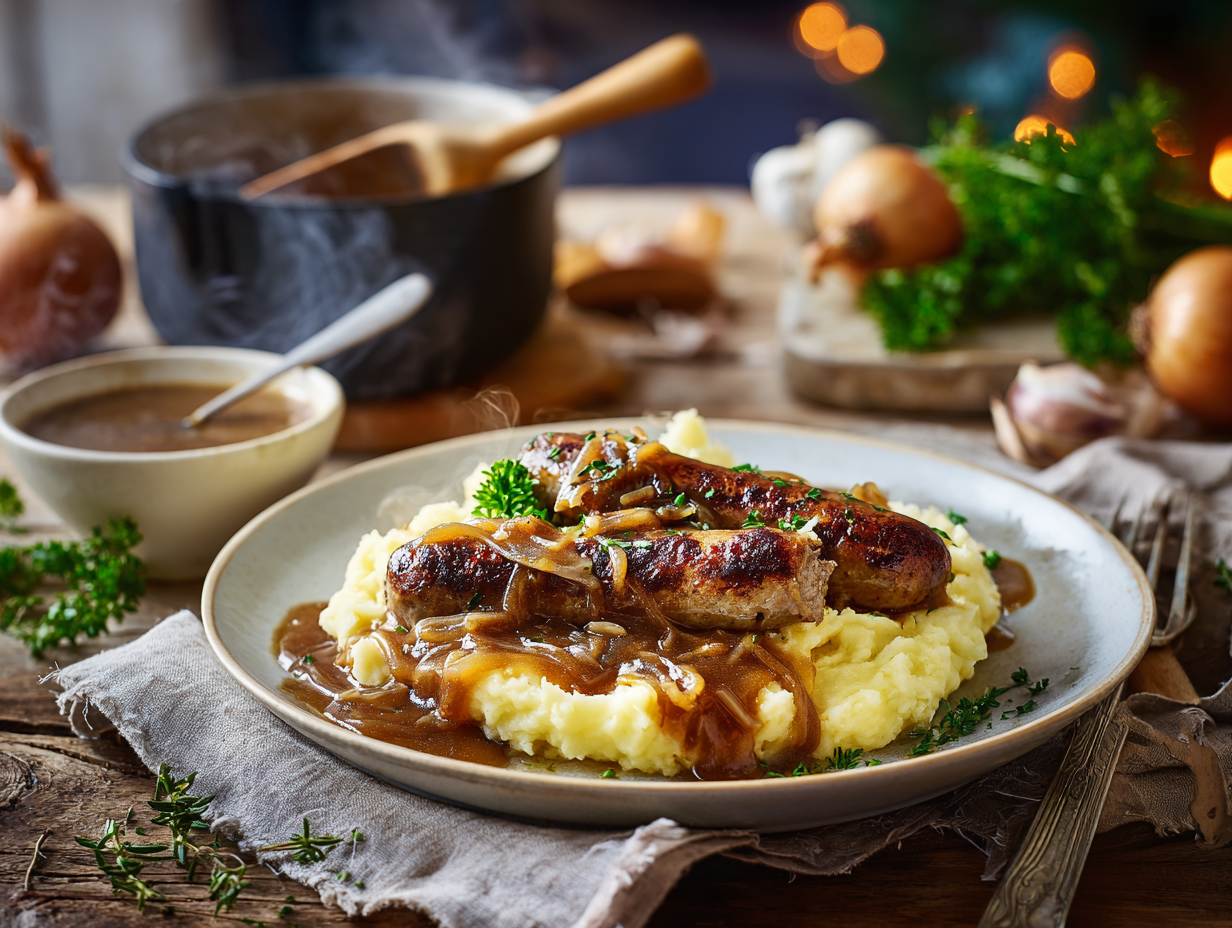
Pork and Minced Beef Bangers and Mash

Equipment
Ingredients
For the Bangers (Sausages):
 1 pound ground pork (minced pork) - preferably 80/20 fat ratio
 1 pound ground beef - preferably chuck or brisket blend
 2 cloves garlic - minced
 2 tablespoons parsley - fresh, chopped
 2 teaspoons salt - kosher salt preferred
 1 teaspoon ground black pepper - freshly ground
 1 teaspoon dried sage
 ¼ teaspoon nutmeg - freshly grated, if possible
 2 tablespoons olive oil - for frying
For the Mash:
 2 pounds russet potatoes - peeled and diced into 1-inch cubes
- ½ cup whole milk - warmed slightly
 ¼ cup unsalted butter - cut into small pieces
- 1 teaspoon salt - for seasoning mash
For the Onion Gravy:
 2 large yellow onion - thinly sliced
- 2 tablespoons unsalted butter
 1 tablespoon all purpose flour (plain flour Australia and UK)
 2 cups beef stock - preferably low sodium
 1 teaspoon Worcestershire sauce
Instructions
- In a large bowl, combine pork, beef, minced garlic, parsley, salt, pepper, sage, and nutmeg. Mix gently with your hands until just combined—avoid overmixing to maintain tenderness.
- Form sausage shapes about 4 to 5 inches long. If stuffing into casings, chill the mixture and pipe into soaked hog casings using a sausage stuffer or food processor attachment.
- In a skillet over medium heat (about 350°F / 175°C), heat olive oil. Add the bangers and cook, turning intermittently, until browned and cooked through, about 12–15 minutes.
- For the mash, place diced potatoes in a pot of salted cold water. Bring to a boil, then simmer for 15–20 minutes until fork-tender.
- Drain and return potatoes to the pan. Mash with butter, then stir in warm milk and salt until smooth and creamy.
- To make the onion gravy, sauté sliced onions in butter over medium heat until softened and golden, about 10 minutes. Add flour and stir for 1 minute. Gradually pour in stock, whisking constantly.
- Add Worcestershire sauce and simmer 10 more minutes until thick and glossy. Taste and adjust seasoning as needed.
- To plate, form a bed of mashed potatoes in the center of each dish. Top with 2–3 sausages and ladle onion gravy generously over the top.
Notes
- For a richer sausage, add a tablespoon of cream or a beaten egg to the sausage mix.
- Try using a 50/50 mix of sweet and red onions for extra flavor depth in the gravy.
- Smoked paprika or mustard powder in the mash offers a playful twist.
Nutrition
Common questions
Do I need sausage casings to make this recipe?
No — the recipe works without casings. You shape the ground meat mixture into sausage-shaped patties by hand and fry them directly. Casings are optional and only needed if you want the traditional round cross-section; the flavor is the same either way.
How do I know when the sausages are fully cooked?
Use an instant-read meat thermometer and check that the center reads 160°F (71°C) — that’s the safe internal temperature for ground pork and beef. Don’t rely on color alone; a sausage can look brown on the outside while still being undercooked in the middle, especially if it’s thick.
Can I mix and shape the sausages ahead of time?
Yes, and it actually helps. Shaped sausages can be covered and refrigerated for up to 24 hours before cooking. Chilling firms up the mixture, which makes them easier to handle in the pan and less likely to break apart during frying.
More mince recipes to try
- Cumberland Sausage Mince Pie
- Savory British Beef Pies
- Sweet Savory Scotch Eggs
- Savory Beef Sausage Rolls