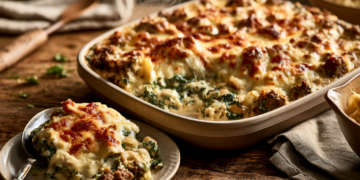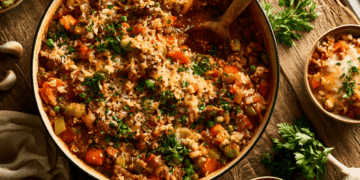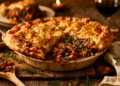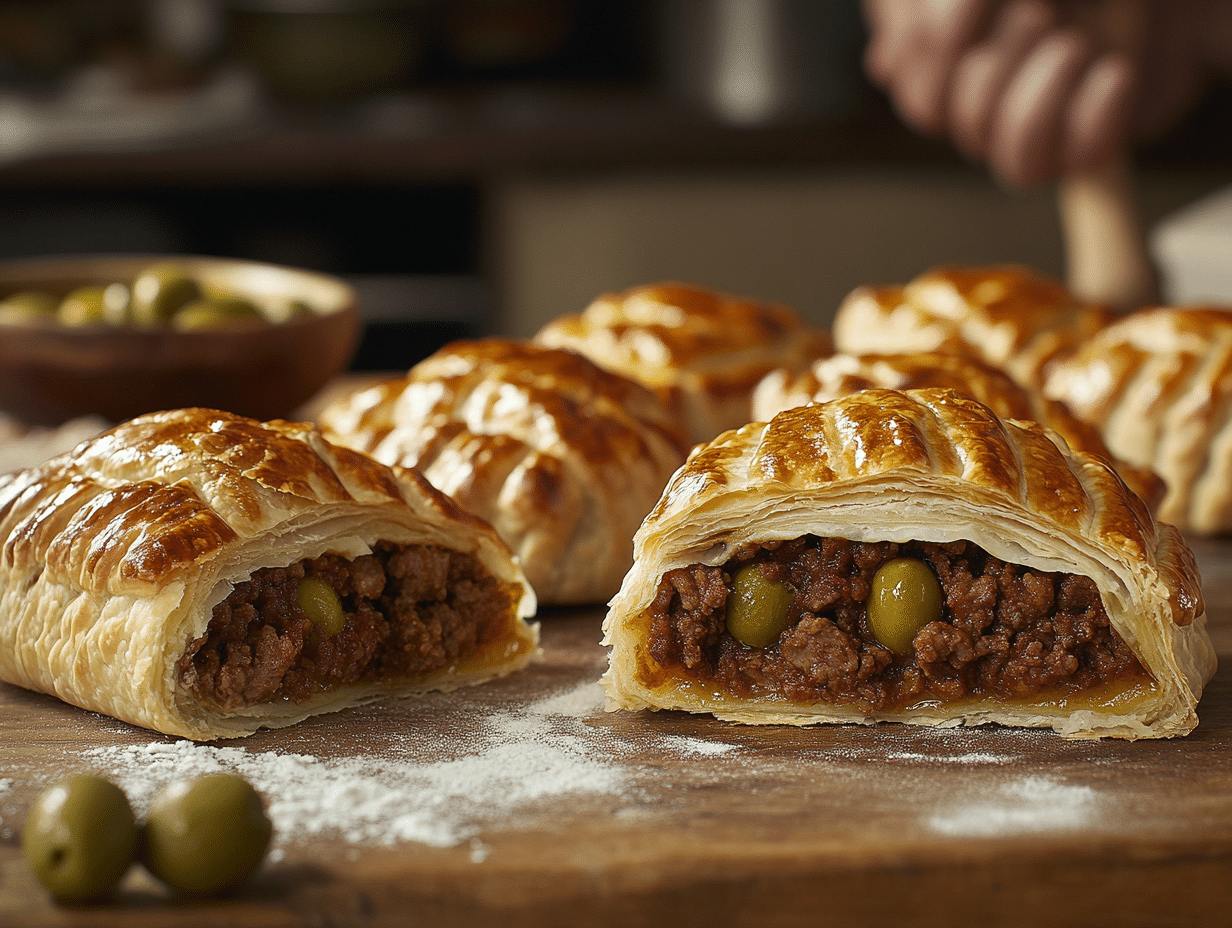
Salteñas are Bolivian baked pastries filled with spiced ground beef, olives, and a broth that turns liquid inside the oven — so every bite releases a small burst of savory juice. They take more effort than a weeknight dinner, but each pastry is a self-contained meal: protein, fat, and enough filling to keep you full. Make a batch on the weekend and you’ll have lunches sorted for days.
Why this recipe works
Two things make or break salteñas. First, the gelatin. Stirring unsweetened gelatin into the hot beef and broth mixture lets it set firm as it cools, so you can spoon a solid filling onto the dough without it running everywhere. Once the pastries hit the oven, the gelatin melts back into a loose, saucy interior. Without this step, you get soggy dough and a dry center. Second, the butter-and-egg dough is kept cold throughout mixing. Cold butter creates small pockets of steam during baking, giving the crust enough structure to hold the filling under pressure — a flimsy dough will split at the seams and leak before the gelatin has a chance to melt properly.
Troubleshooting
- Filling leaks out during baking: The crimp wasn’t tight enough, or the dough was too warm when you sealed it. Chill the filled pastries in the fridge for 15 minutes before baking — cold dough holds a seal better under oven heat.
- Filling is dry after baking: The gelatin dissolved but the broth cooked off before you added it. Measure the half cup of broth carefully and don’t let the filling simmer longer than the 5 minutes specified — extra time evaporates the liquid you need.
- Dough tears when shaping: It was over-kneaded or the butter warmed up too much. If the dough feels greasy or sticky, wrap it and refrigerate for 20 minutes before rolling again.
- Beef isn’t cooked through: Ground beef must reach an internal temperature of 160°F (71°C). If your filling looks browned on the outside but the center is still pink, break up the clumps more aggressively during the sauté stage and give it the full 10 minutes over medium-high heat.
- Pastries are pale after the stated cook time: Oven temperatures vary. Brush a second coat of egg wash halfway through baking and move the tray to the upper rack for the last 5 minutes.
Smart swaps
- Gelatin: Powdered unflavored gelatin is the standard choice here — skip the flavored packets entirely. If you only have sheet gelatin, use 3 sheets in place of the 2 tablespoons of powder, bloomed in cold water first.
- Green olives: Castelvetrano olives are milder and meatier than standard pimento-stuffed ones; either works, but drain them well so you don’t add extra liquid to the filling.
- Beef stock: A good-quality store-bought beef stock is fine. Skip the garnish of fresh herbs some versions call for — not worth the extra dish, and the filling is already well-seasoned.
- All-purpose flour: No substitutes recommended here. Bread flour makes the dough too tough to crimp cleanly; pastry flour makes it too fragile to hold the filling.
Leftovers and meal prep
Baked salteñas keep in the fridge for up to 3 days in an airtight container. Reheat them in a 350°F (175°C) oven for 10–12 minutes — microwaving makes the crust soft and the filling uneven. For longer storage, freeze baked pastries individually on a tray first, then transfer to a freezer bag; they’ll keep for up to 2 months. Reheat from frozen at 375°F (190°C) for 18–20 minutes. The unbaked filling can also be made up to 2 days ahead and stored in the fridge once it has fully set — this actually makes assembly faster since the gelatin is already firm.

Minced Beef and Olive Salteñas

Equipment
Ingredients
Beef Filling
 1 lb ground beef (minced beef) - Preferably grass-fed for robust flavor
 2 tbsp olive oil - Extra virgin is best
 1 large onion - finely chopped
 3 cloves garlic - minced
 1 tsp cumin - ground
 1 tsp paprika
 ¼ tsp cayenne pepper - ground, adjust for heat preference
 1 cup green olives - pitted, chopped
 ½ cup beef stock (beef broth or beef bouillon)
- 2 tbsp gelatin - unsweetened
Dough
 3 cups all purpose flour (plain flour Australia and UK) - plus extra for dusting
 ½ tsp salt
 ½ cup unsalted butter - cold, cut into cubes
 2 large eggs - beaten, divided
 ¼ cup water - iced
Instructions
- In a large pan, heat olive oil over medium heat. Sauté onions until translucent, about 5 minutes.
- Add garlic, cumin, paprika, and cayenne, cooking until fragrant, about 1 minute.
- Increase to medium-high heat, add minced beef, stirring to break up clumps, cook until browned, about 7-10 minutes.
- Stir in chopped olives and broth. Sprinkle gelatin evenly over the mixture, stirring until dissolved. Season with salt and pepper. Let simmer until slightly thickened, about 5 minutes. Let cool.
- For the dough, whisk flour and salt in a bowl. Work butter into the mixture with your fingers or a pastry cutter until the mixture resembles coarse crumbs.
- Make a well in the center, adding one beaten egg and ice water, combining until the dough starts to come together.
- Knead gently on a floured surface until the dough is smooth. Wrap in plastic and chill for at least 30 minutes.
- Preheat oven to 180°C (350°F).
- Roll dough to about 1/8-inch thickness. Cut into 6-inch circles.
- Place a generous spoonful of filling in the center of each dough circle. Brush the edges with water, fold, and crimp the edges to seal.
- Place on a baking sheet lined with parchment paper. Brush with the remaining beaten egg for a glossy finish.
- Bake until golden brown, about 25-30 minutes.
Notes
Nutrition
Your questions, answered
Can I make the dough the night before?
Yes — wrap it tightly in plastic wrap and refrigerate overnight. Cold dough is actually easier to roll and crimp the next day, so this is a good time-saving move.
How do I know the beef filling is safe to eat?
Ground beef needs to reach 160°F (71°C) internally — use an instant-read thermometer if you’re unsure. Cooking it over medium-high heat for the full 7–10 minutes and breaking up all clumps ensures even cooking throughout.
My gelatin clumped instead of dissolving — what went wrong?
The filling was probably not hot enough when you added the gelatin. Sprinkle it over the mixture while it’s still actively simmering and stir immediately for about 60 seconds until fully dissolved.
Can I freeze these before baking instead of after?
You can, but the dough texture suffers more from freezing raw than baked. Freeze them assembled on a tray until solid, then bag them — bake from frozen at 375°F (190°C) for about 35–40 minutes, watching the crust color.
Is one salteña enough for a meal, or do I need sides?
Two pastries is a solid meal for most adults — each one has roughly 417 calories and a meaningful amount of protein from the ground beef filling. A simple green salad alongside covers the meal without much extra effort.
Try these next
- Golden Colombian Beef Empanadas
- Savory Beef Carrot Turnovers
- Bolivian Silpancho Beef Patties
- Savory Lebanese Lamb Pastries