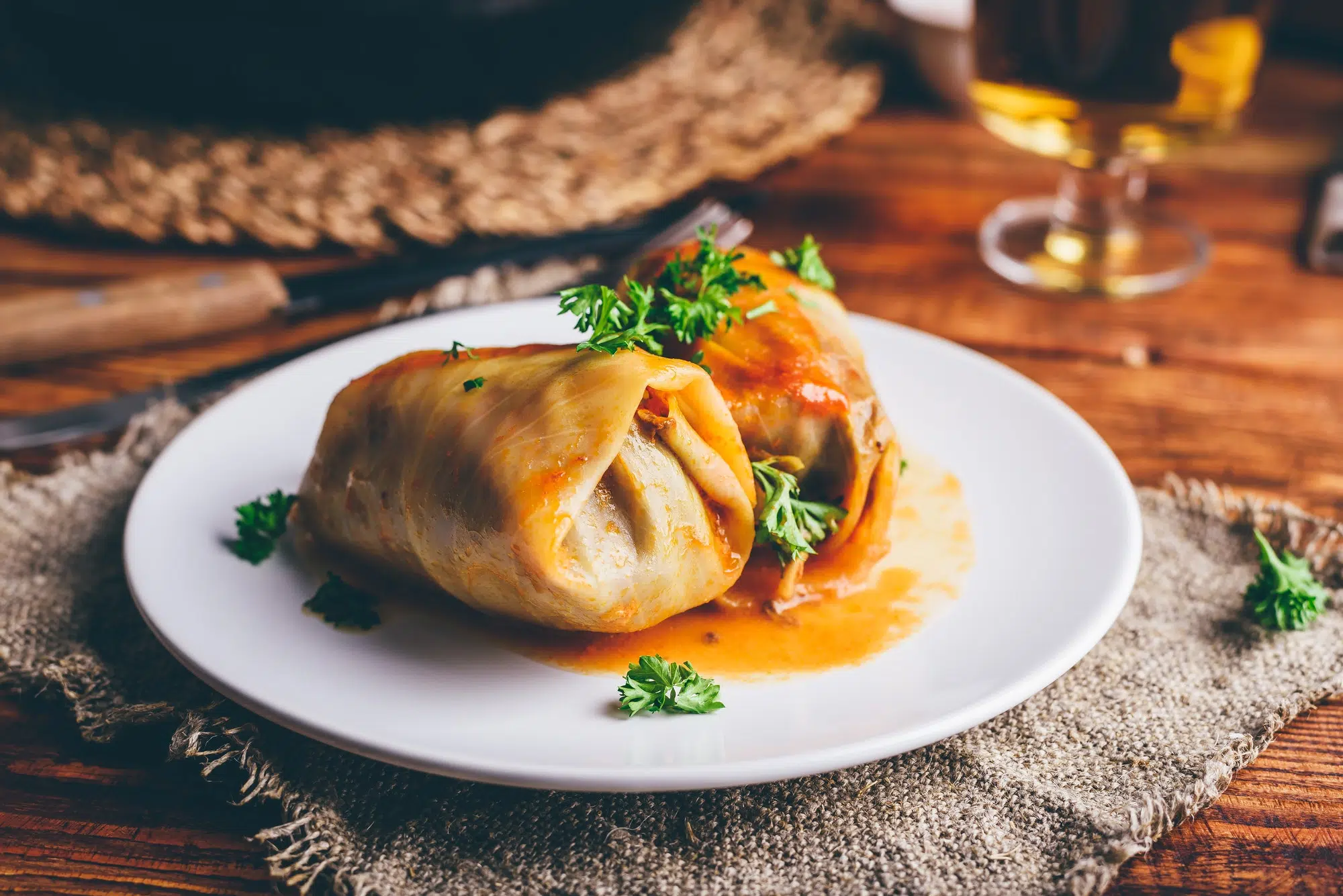
This Serbian Stuffed Cabbage Rolls recipe, or Sarma, is a dish that most Serbs serve for special occasions and other holidays. The recipe varies from household to household, but they all consist of a ground beef meat filling wrapped in cabbage with tomato sauce cooked over sauerkraut.

Hearty Serbian Stuffed Cabbage Rolls

This Serbian Stuffed Cabbage Rolls recipe, or Sarma, nicely illustrates how, with very little money, you can feed a lot of people gorgeous, filling, nutritious food.
Ingredients
- 1 piece green cabbage
 1½ pound ground beef (minced beef)
 ½ cup white rice
 1 cup yellow onion
 1 piece egg - beaten
 1 pinch salt - to taste
 1 pinch ground black pepper
 2 tablespoons olive oil
 28 ounces tomatoes - cubed
 4 tablespoons ketchup
 3 cups sauerkraut
Instructions
- Preheat the oven to 175ºC.
- To make the rolls for Sarma: Bring about 3 inches of salted water to a boil in a large pot. Core the cabbage, leaving it whole, and put it in the pot, covered. Cook until the leaves are pliable but still retain their structure, about 12 minutes, turning once. Remove and drain until cool enough to handle. Reserve the cabbage water.
- In a large bowl, mix together the beef, rice, onion, egg, salt, and pepper just until blended.
- To make the sauce: In a medium saucepan, warm the oil. Add the onion and sauté until soft. Add the tomatoes and a pinch of salt, stir and bring to a simmer. Simmer while you stuff the rolls until the sauce thickens and the flavors are blended for about 15 minutes. Add the ketchup, gradually, to taste.
- Stuff the rolls. Carefully peel the large leaves from the poached cabbage. Using a sharp paring knife, gently trim some of the thick veins from the back of the larger leaves. This will make them easier to roll. Lay the leaves out on a flat surface. Spoon about 3 tablespoons of the beef mixture into each leaf, depending on the size of the cabbage leaves. Roll up each leaf lengthwise and tuck the ends in with your fingers to make little packets. If the leaves don’t hold together, use a toothpick to secure them at the seam. You should have about 15 rolls.
- Select a Dutch oven large enough to contain all the rolls and the sauerkraut. Spread the sauerkraut out on the bottom of the Dutch oven, covering it. Lay the rolls on top of the sauerkraut. You can make multiple layers.
- Pour about 2 cups of the cabbage water into the tomato sauce and stir. If you don’t have enough cabbage water, make up the difference with tap water. Pour the sauce over the rolls and bring the whole pot to a simmer over medium-high heat.
- Lower the heat under the Dutch oven to medium-low and simmer, partially covered, until the sauce begins to cling to the cabbage leaves, about 20 minutes. Cover completely, transfer the pot to the oven, and cook until the sauce thickens, the cabbage is soft, and the rolls are very hot inside 1½ hours. Serve hot with sauce spooned over. This one-dish meal has all the components you need, but you may want to serve it with a salad or a cooked vegetable and bread to scoop up the sauce.
Nutrition
Calories: 346kcalCarbohydrates: 30gProtein: 25gFat: 15gSaturated Fat: 5gPolyunsaturated Fat: 1gMonounsaturated Fat: 7gTrans Fat: 1gCholesterol: 87mgSodium: 589mgPotassium: 986mgFiber: 7gSugar: 11gVitamin A: 1161IUVitamin C: 74mgCalcium: 107mgIron: 4mg
How did this recipe turn out for you?We’re eager to hear your thoughts!